
Best Amplifier for Digital Piano: Top Picks for Practice and Performance
The best amplifier for a digital piano depends on your practice space, performance needs, and connectivity options. This guide highlights five reliable options that pair well with keyboards, digital pianos, and electronic drums. It helps you choose by considering power, speaker configuration, inputs, and portability. The buyers most likely to benefit are home players needing balanced sound, teachers conducting small lessons, and performers seeking venue-ready amplification.
| Product | Best For | Key Benefit |
|---|---|---|
| Coolmusic DM20 20W Bluetooth Personal Monitor | Home practice, keyboard players | Bluetooth/USB playback with dual EQ for precise tone |
| Coolmusic Drum Amplifier 20W (Orange) | Compact practice spaces | Two-speaker setup with Bluetooth for backing tracks |
| Donner DKA-20 Keyboard Amplifier | Two-channel versatility | Two inputs with separate gain and tone controls |
| Coolmusic Keyboard AMP 30W | Small gigs and rehearsals | 3-band EQ, AUX in, DI output for external systems |
| Roland KC-600 200W | Stage and larger rooms | High power, redesigned amp and two-way speaker system |
Coolmusic DM20 20W Bluetooth Personal Monitor Amplifier
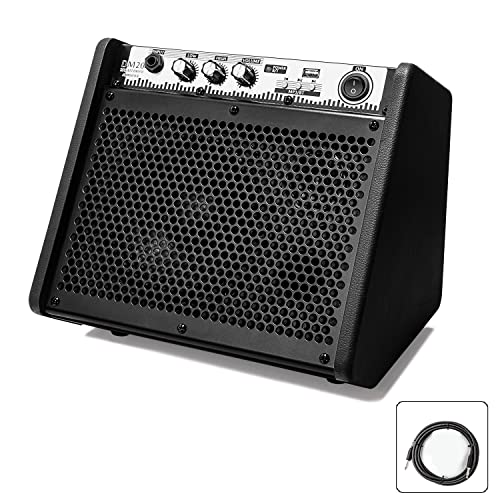
Features include built-in Bluetooth and USB for multimedia playback, plus dual EQ with separate low and high controls. A 6.5-inch woofer and 2.5-inch tweeter deliver balanced sound suitable for electronic drums and keyboards. The instrument input supports home lessons and small rehearsals with clear treble and punchy bass. Best for: individuals who want convenient wireless playback and straightforward tone shaping in a compact room.
Caution: Bluetooth playback and USB reading may auto-disconnect when switching sources; plan your workflow accordingly to avoid interruptions during practice.
Coolmusic Drum Amplifier 20W (Orange)

Two-speaker setup with a 6.5-inch woofer and 2-inch tweeter provides fuller bass and clearer highs. Bluetooth enables streaming backing tracks for solo practice. Best for: users who want a compact, colorful option that handles electronic drums, keyboards, or other instruments with simple Bluetooth connectivity.
Limitation: Designed primarily for practice and small rooms; may not deliver high-volume stage sound for larger venues.
Donner DKA-20 Keyboard Amplifier 20W

Two-channel amplifier with an 8-inch woofer and a 2-inch tweeter. Separate volume controls for each channel plus gain, boost, and 3-band EQ provide versatile tone shaping. Best for: players who need flexibility for practice, street performances, or small gigs, with easy access to different instrument inputs.
Caution: The data notes a broad frequency range; verify your specific keyboard or drum kit impedance compatibility in practice to avoid impedance issues.
Coolmusic Keyboard AMP 30W Electric Drum Amplifier

Multipurpose 30W amplifier with two channels, separate gain for each. Features a three-band EQ, AUX input with gain control, headphone output for silent practice, and DI out for external speakers. Best for: players needing a compact stage setup with direct connection to PA systems.
Limitation: While versatile, the device is best suited for small ensembles or practice rooms rather than large venues without additional amplification.
Roland KC-600 4-Channel 200W Keyboard Amplifier

High-power 200W amplifier with a redesigned power amp and universal power supply. A custom two-way speaker system integrates a 15-inch woofer and a horn tweeter for robust bass and clear highs. Best for: performers or venues that require strong stage presence and reliable bass reproduction.
Limitation: Higher weight and price; best used where substantial volume is needed and transport is feasible.
Buying Guide
- Power needs: For home practice, 20–30W amplifiers are typically sufficient. For small gigs or rehearsal spaces, a 50–100W option can balance volume and portability. For larger stages, consider 200W or higher like the Roland KC-600.
- Speaker configuration: One- or two-way systems affect tone. Two-speaker setups (woofer + tweeter) offer fuller sound for electronic drums and keyboards.
- Inputs and outputs: Look for instrument inputs, AUX, DI outputs, and headphone jacks. DI outputs are useful for connecting to PA systems; headphones enable silent practice.
- Connectivity: Bluetooth or USB playback helps with backing tracks and multimedia practice. Consider auto-disconnect behavior if you rely on multiple sources.
- portability and weight: Lighter units are easier to move for gigging or classroom use; heavier models often offer higher power and more robust sound.
- Durability and warranty: For frequent transport, choose models with durable casings and reliable component layouts. Check warranty terms if you plan extended use.
- Best-for guidance:
– Best for compact spaces: the 20W to 30W units with Bluetooth and AUX inputs.
– Best for multi-instrument setups: two-channel amps with separate gain and EQ controls.
– Best for stage use: high-power amps with robust bass, such as Roland KC-600.
FAQ
- What is the main difference between a keyboard amplifier and a guitar amplifier?
– Keyboard amps typically offer full-range frequency response, built-in EQ tailored for keyboards, and inputs for multiple devices, whereas guitar amps emphasize distorted or specific guitar tones. - Is Bluetooth playback enough for practice?
– It is convenient for backing tracks, but you may still want a device with a dedicated instrument input and DI output for more flexible setups. - Do I need two channels on my keyboard amp?
– Two channels with separate gain controls are useful when you want to mix a keyboard with another instrument or microphone, or to route different tones. - When should I choose a high-wattage amplifier?
– Choose higher wattage for larger venues, outdoor performances, or when you need substantial headroom to avoid distortion. - What is a DI output used for?
– DI outputs send a balanced signal to a PA system or recording interface, enabling clearer amplification in larger spaces. - Can I use a drum amplifier for keyboards?
– Some drum amps can work, but keyboards benefit from a full-range, flat or adjustable EQ and multiple inputs. Verify impedance compatibility and input options first.