
Best Guitar Amplifiers for Electric Guitars: Clear Tones for Practice, Jams, and Performances
Answering the common buyer question: which guitar amp best fits my practice needs and skill level? This guide highlights five solid options across portable practice amps, beginner-friendly models, and compact studio- or stage-ready units. Each pick targets a specific user—home players, beginners, travelers, or casual performers—helping you choose with clear pros and a practical limitation for comparison.
| Product | Best For | Key Benefit |
|---|---|---|
| 10W Mini Guitar Amp, Rechargeable Electric Guitar Amplifier | Travelers and quiet practice | Analog tone with 10W output and dual modes |
| Fender Frontman 10G | Beginner home players | Simple controls and classic Fender tone |
| Demusea 20W Guitar Amp | Bedroom practice and jam sessions | Portable 20W with aux and headphone options |
| CXLWZ 20W Portable Amp | Practice and small gigs | Gain, bass, treble, and volume controls |
| LEKATO Mini 5W | On-the-go practice and Bluetooth backing tracks | Built-in effects and compact design |
The following sections detail five top picks, each with a concise rationale, best-use notes, and a practical caution to help you compare quickly.
10W Mini Guitar Amp: Portable Analog Power

Best for: travelers, students, and street performers who need a compact amp with real analog tone. This model uses full analog technology with a 100Hz–20kHz frequency response for natural sound and a 10W output that projects to larger spaces than typical mini amps.
Why selected: It combines dual tone modes (CLEAN and DRIVE) with gain and tone controls for flexible shaping. The 3.5mm headphone jack and AUX input add practice versatility, letting you play along with tracks or quietly rehearse.
Limitation: No built-in rechargeable battery life details are provided; expect to rely on power or a compatible battery pack if you move frequently without outlets.
Fender Frontman 10G Electric Guitar Amplifier

Best for: beginners seeking reliable Fender tone in a compact package. The 10-watt amp includes a 6-inch speaker with a tone stack that covers blues to metal styles via gain and overdrive options.
Why selected: The Frontman 10G emphasizes a straightforward control set—gain, volume, treble, bass—paired with a rugged build and familiar Fender voice, making it an accessible first amp for practice rooms or small jams.
Limitation: Smaller 10W output may limit live-stage headroom for loud environments or larger venues.
Demusea 20W Electric Guitar Amplifier

Best for: bedroom practice and small jams where more volume and a versatile input set are helpful. The 20W power with a 6.5-inch speaker delivers clearer, richer tones for practicing chords and riffs.
Why selected: It offers guitar input, AUX for playback, and a headphone jack for silent practice, making it flexible for late-night sessions without disturbing others.
Limitation: The data doesn’t specify built-in effects, so you may need separate pedals for tone variety.
CXLWZ 20W Compact Amplifier

Best for: practice and light-performance scenarios where a simple, robust control layout matters. This model emphasizes a substantial 20W output with a 6.35mm instrument input and a practical gain, bass, treble, and volume control set.
Why selected: The inclusion of a noise-reduction-capable build and a universal 6.35mm input helps players dial in a usable sound quickly for rehearsals or small gigs.
Limitation: The description notes general features without specific effects or advanced power options, which may be a trade-off for straightforward use.
LEKATO Mini 5W Guitar Amp

Best for: on-the-go practice and Bluetooth-enabled backing tracks. The compact 5W design with built-in effects makes it a strong travel-friendly option for quick sessions.
Why selected: Built-in effects (clean, distortion, overdrive, reverb) provide tonal variety without extra gear, and the rechargeable design supports portable use.
Limitation: The smaller 5W output may struggle in larger spaces or band rehearsals without amplification support.
Fender Mustang LT25

Best for: beginners who want a feature-rich, easy-to-use practice amp with a trusted brand name. The 25-watt combo has an 8″ speaker and a color display for quick presets.
Why selected: The Mustang LT25 combines user-friendly presets with Fender tone, making it a solid mid-range choice for learning and experimenting across styles.
Limitation: It may be more than some beginners need; consider whether you will use programmable presets regularly.
Leo Jaymz 20W Amp
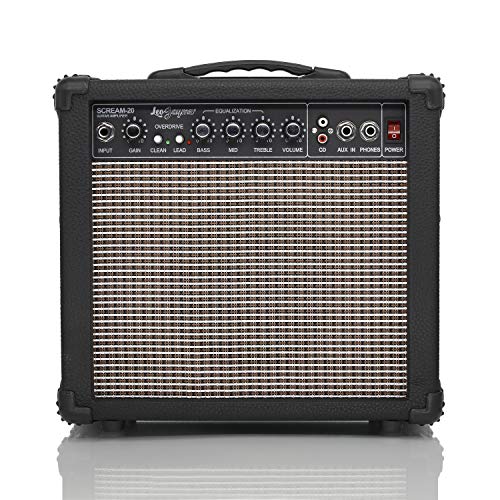
Best for: studio and practice rooms requiring a clean and distort-friendly setup with a simple 3-band EQ and CD line input. This model suits players who want tight control over tone.
Why selected: The 3-band EQ and auxiliary inputs support recording and practice integration, which helps users craft distinct tonal profiles for different songs.
Limitation: The listing does not specify built-in effects, so tone shaping relies on external pedals or amps.
JOYO Mini Amp 5W with Effects

Best for: casual players seeking a compact, plug-in practice solution with Bluetooth backing tracks. The 5W output with built-in effects covers basic practice needs and portability.
Why selected: Built-in effects (Clean, Overdrive, Distortion, Reverb) and Bluetooth playback simplify practice setups without extra gear, while its small size supports travel and dorm room use.
Limitation: It lacks a dedicated headphone jack, which limits silent practice options for late-night sessions.
Buying Guide: Key Considerations For Choosing An Electric Guitar Amp
- Power needs: Determine if you need portable practice power (5–20W) or something with more headroom for small gigs (25–50W+).
- Sound character: Decide between classic clean tones, high-gain distortion, or versatile EQ with onboard effects.
- Portability: Consider size, weight, and battery or power needs for practice on the go.
- Connectivity: Look for aux input, headphone jack, and Bluetooth options for practice with backing tracks or silent sessions.
- Controls: Simple setups suit beginners, while more knobs (gain, bass, mids, treble, volume) help tone shaping for experienced players.
- Durability and warranty: For frequent travel or practice spaces, a sturdy cabinet and reliable support are valuable.
FAQ
- What is the best beginner guitar amp? A compact model with simple controls and a trusted brand is ideal for new players, such as a 10–25W option with basic tone controls.
- Do I need built-in effects? Built-in effects are convenient for practice and style variety, but you can achieve the same with external pedals.
- Is Bluetooth useful on guitar amps? Yes, for playing along with backing tracks or practice tracks without extra cables.
- Should I buy a 20W amp or a 5W amp? Choose 20W if you expect to practice with others or perform small gigs; 5W is best for late-night practice and portability.
- What is headroom in an amp? Headroom is the amount of loudness above your average playing level; higher wattage provides clearer tone at higher volumes.