Best Analog Speakers for Record Players to Upgrade Your Turntable Sound
The right analog speakers can dramatically improve the warmth, detail, and depth of vinyl playback. This guide highlights five bookshelf speakers that pair well with turntables, offering options for both entry-level setups and more refined listening rooms. Best for beginners who want easy setup, mid-range listeners seeking fuller bass, and enthusiasts aiming for stereo balance and flexible inputs. The table below compares key features to help you decide which model suits your needs.
| Product | Best For | Key Benefit |
|---|---|---|
| Electrohome Huntley EB10 | Turntable lovers seeking built-in amplification | All-in-one powered option with Bluetooth and multiple inputs |
| Edifier R1280T | Budget-conscious listeners with dual inputs | Classic wooden enclosure; easy front-panel controls |
| Saiyin Bluetooth Bookshelf Speakers | Wireless flexibility with downstream subwoofer | Bluetooth 5.3, sub out, multiple inputs |
| RIOWOIS Powered Bookshelf Speakers | Turntables without an external amp | No receiver required; multiple wired inputs |
| Elimavi 30W X 2 | Wall-mounted or compact room setups | Full frequency with 3.5mm/RCA inputs and mounting options |
Below is a closer look at each option, including who it’s best for, why it stands out, and any practical caveats to consider before you buy.
Electrohome Huntley EB10 Powered Speakers

Best For: Turntable-focused listeners who want an all-in-one setup. The EB10 combines built-in amplification with 3-inch drivers to deliver warm, natural sound without needing a separate receiver. It’s convenient for small rooms or desks where space is at a premium.
Why selected: Compact powered speakers with versatile connectivity, including Bluetooth 5 and RCA/Aux inputs, enable quick pairing with turntables, TVs, PCs, or mobile devices.
Caution: If you crave deep sub-bass, you may want a subwoofer, as the built-in drivers emphasize midrange and warmth over deep extension.
Edifier R1280T Powered Bookshelf Speakers
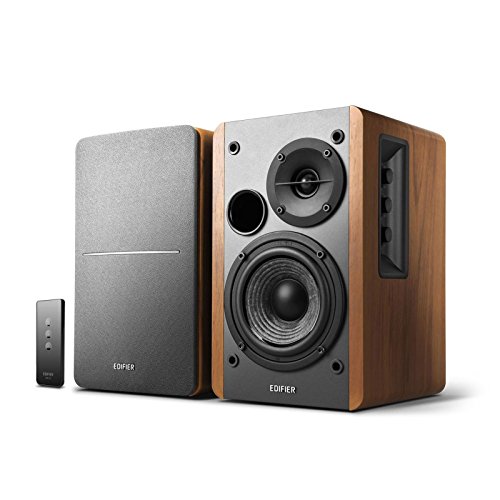
Best For: Budget-minded listeners who want dual inputs and easy tonal adjustment. The natural, balanced sound comes from a 13mm silk-dome tweeter and a 4-inch woofer, with convenient front-facing bass and treble adjustments.
Why selected: Versatile inputs (AUX and RCA) with a compact wood cabinet provide reliable performance for turntables and computers alike, making them a strong all-around choice.
Caution: The built-in controls are labeled on the side; if desk space is tight, consider placement that keeps access convenient without obstructing the drivers.
Saiyin Bluetooth Bookshelf Speakers

Best For: Settings where wireless streaming and subwoofer expansion are desirable. The Saiyin setup delivers 40W x 2, a 4-inch woofer, and a dedicated sub-out, allowing a more immersive home theater or living room vinyl experience.
Why selected: The package supports Bluetooth streaming from phones and tablets and includes multiple wired inputs for flexible connections to turntables and TVs.
Caution: Bluetooth-enabled turntables require a transmitter; verify that your turntable has Bluetooth output or plan to use a wired path for best fidelity from vinyl.
RIOWOIS Powered Bluetooth Bookshelf Speakers

Best For: Turntable users who want a simple, receiver-free setup with multiple wired inputs. These speakers offer Bluetooth 5.3 and several connection options, making it easy to switch between devices.
Why selected: No separate amplifier is required, which simplifies installation and reduces clutter—ideal for smaller spaces or streaming-first setups.
Caution: If your vinyl source is phono-only, you may still need a preamp to optimize signal levels before these powered speakers.
Elimavi 30W X 2 Powered Bookshelf Speakers

Best For: Rooms where wall mounting saves space or a clean, low-profile aesthetic is desired. The 3.5mm/RCA inputs offer broad compatibility with record players and TVs.
Why selected: Full-frequency stereo output with adjustable tone controls and included mounting clips for flexible placement in living rooms, offices, or study areas.
Caution: As with many powered bookshelves, placement near walls can affect bass response; experiment with距 distance from corners to optimize soundstage.
Buying Guide
What matters most when choosing analog speakers for a record player?
- Power vs. room size: Larger rooms benefit from higher wattage and larger drivers, while small spaces do well with compact, efficient designs.
- Inputs and compatibility: Look for RCA, AUX, optical, or Bluetooth inputs that match your turntable and playback devices. If your turntable has only a phono output, plan for a preamp or an integrated amp.
- Sound signature: If you prefer warmth and natural mids, prioritize speakers with good midrange performance and controlled high frequencies. Avoid overly bright designs that can fatigue ears on long listening sessions.
- Placement: Bookshelf speakers typically perform best when placed away from walls and at ear level. Some models offer wall-mount options for compact rooms.
- Upgrade path: If you expect to add a subwoofer later, choose speakers with a dedicated sub out or a strong low-end foundation that can integrate well with a sub.
Frequently Asked Questions
- Do I need a separate amplifier for powered speakers?
- Can I connect a turntable directly to powered speakers?
- Is Bluetooth quality good enough for vinyl?
- Should I buy two matching speakers or mix brands?
- Do these speakers require stands?
No. Powered speakers have built-in amplifiers, making them simpler to set up with most turntables and playback devices.
Many models support direct connection but check that your turntable’s output matches the speaker inputs. Some turntables require a phono preamp for optimal signal strength.
Bluetooth is convenient but can introduce compression. For maximum fidelity, use analog wired connections when possible, or a high-quality Bluetooth option with aptX support.
Matching speakers typically provide a cohesive soundstage. If mixing brands, ensure similar tonal balance to avoid an uneven stereo image.
Stands or proper isolation help minimize desk vibrations and improve imaging, especially for near-field listening at a computer desk or small living area.