
Best Anti-Static Solutions for Vinyl Records to Protect Your LPs
Direct answer: If you’re aiming to minimize static and dust on vinyl, choose products that dissipate charge at the source, remove surface contaminants, and protect both sleeves and records. This guide highlights five effective options for different needs, from inner and outer sleeves to dedicated anti-static tools. Best-for buyers include collectors protecting vintage pressings, casual listeners seeking smoother play, and tech-minded fans who want hands-on control over static. The selections balance ease of use, effectiveness, and practicality for American vinyl enthusiasts.
| Product | Best For | Key Benefit |
|---|---|---|
| Hudson Hi-Fi Inner Sleeves (50) | Collectors seeking anti-static protection from inside | Dissipates static at the source |
| HumminGuru Orbit Static Remover | Hands-on static neutralization | 360° rotation with balanced ion discharge |
| Boundless Audio Brush | Dust and static removal during play | Carbon fiber bristles, self-cleaning |
| Milty Zerostat | Non-contact static control | Battery-free, piezo-electric technology |
| Audio-Technica AT6011 Brush | On-record cleaning and static reduction | Conductive fibers for static dissipation |
Hudson Hi-Fi Inner Sleeves: Anti-Static 50-Pack

This inner sleeve set is designed to protect vinyl from scratches, dust, and static. The sleeves are described as thick and durable, with an emphasis on anti-static rice paper construction. Best for serious LP collectors who store vintage and modern pressings from the inside out. The 3mm exterior polyethylene layer provides additional protection while the inner rice paper helps dissipate static. A potential limitation is that some users may prefer additional outer-sleeve protection as part of a complete storage system.
Who it’s for: vinyl enthusiasts who want internal protection plus static control without sacrificing artwork visibility. Why selected: the anti-static rice paper approach targets the source of static, helping protect both vinyl and stylus over time.
HumminGuru Orbit Static Remover

The Orbit Static Remover uses a rotating mechanism to emit both positive and negative ions, delivering consistent static neutralization as the record spins. It claims to distribute ions evenly at a fixed distance to maximize effectiveness. Best for listeners who want an in-device solution to reduce static during playback or handling. Limitation: the device is a specialized tool and requires setup and operation during cleaning sessions, which may not suit all users.
Who it’s for: vinyl lovers who prefer an electrophysical approach to static control and want continuous neutralization during use. Why selected: its dual-ion emission and rotating design aim to address static comprehensively rather than patching symptoms.
Boundless Audio Carbon Fiber Anti-Static Brush

This cleaning brush uses dual-row carbon fiber bristles to lift dust and dirt while reducing static charges that attract further debris. No liquids are required, and its rounded design helps prevent scratches. Best for daily or pre-play cleaning to minimize surface noise and static buildup. Limitation: effectiveness relies on regular use; it may be less effective against deeply embedded grime without additional cleaning steps.
Who it’s for: listeners seeking a simple, low-maintenance way to clean and reduce static. Why selected: its anti-static action is built into the brushing action, helping prevent static from re-depositing dust.
Milty Zerostat Anti-Static Device
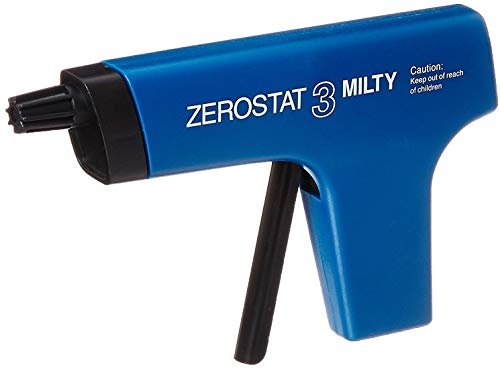
This classic, battery-free device uses piezo-electric crystal technology to neutralize static on vinyl records and CDs. It avoids sprays or liquids and is known for a hands-on approach to static management. Best for users who favor a non-electrical, disposable-item experience and want to control static without adding moisture. Limitation: effectiveness can depend on technique and distance from the surface, which may require practice for consistent results.
Who it’s for: those who prefer a traditional, non-liquid method of static control. Why selected: proven, durable design that works without batteries or liquids, suitable for regular use.
Audio-Technica AT6011 Anti-Static Brush

The AT6011 brush uses conductive synthetic fibers to dissipate static and remove surface contaminants, thereby potentially extending cartridge life and improving listening clarity. Best for users who want an integrated approach to reduce static and dust during playback. Limitation: effectiveness depends on brushing technique and may need follow-up cleaning with a dry or carbon brush for optimal results.
Buying Guide: Key Purchase Considerations
- What kind of anti-static solution do you prefer? Non-contact devices (like Zerostat or Orbit) vs. contact tools (brushes, inner sleeves) serve different goals. Choose based on whether you want ongoing action during playback or preventive care during storage.
- Is storage protection part of your plan? Inner sleeves with anti-static properties can reduce static at the source, while outer sleeves protect jackets from wear and dust.
- How often do you handle records? Frequent handling benefits from easier-to-use inner sleeves and self-cleaning brushes, reducing friction and scratches during removal.
- Material and compatibility? Opt for archival-grade materials that are acid-free and anti-static to preserve artwork and vinyl longevity.
- Ease of use and maintenance? Tools like carbon-bristle brushes are simple and require minimal upkeep, while ionizing devices may need careful handling and regular operation to stay effective.
Framing Your Choice: Quick Decision Scenarios
- Best for total storage protection: Inner sleeves with anti-static properties plus clear outer sleeves for jackets.
- Best for hands-on static control: Orbit Static Remover or Zerostat for direct neutralization while handling records.
- Best for routine cleaning: Carbon fiber anti-static brushes to lift dust and reduce static before playback.
- Best for a compact setup: A single anti-static brush to combine cleaning with static reduction.
FAQ
- Do anti-static sleeves prevent all static? They reduce static at the source, but handling and environment can still generate charges. Regular use helps maintain lower levels of static.
- Are anti-static devices safe for vintage records? Yes, when used as directed. Archival-quality materials and careful handling help protect delicate pressings.
- Which tool is best for beginners? A carbon fiber anti-static brush (like Boundless Audio) paired with anti-static inner sleeves provides straightforward, immediate benefits.
- Can I use multiple products together? Yes—combining inner anti-static sleeves with a cleaning brush and occasional static neutralizer can offer layered protection.
- Will these products affect sound quality? Reducing static and dust typically reduces surface noise and improves playback clarity, especially on older pressings.
- Is battery-free the Zerostat a good choice? It is battery-free and reusable, offering a simple, non-liquid method; technique matters for effectiveness.