
Best 16-Input Audio Interfaces for Studio Setups
Whether you’re recording bands, streaming, or producing multilayered tracks, a 16-input audio interface offers the flexibility to handle multiple mics, instruments, and line-level gear at once. This guide highlights five robust options, detailing who they’re best for and what to watch out for. The top picks range from classic USB-C interfaces to Dante-enabled systems and digital snakes for expanding I/O in live or studio environments.
Buying quick reference (summary table):
| Product | Best For | Key Benefit | Notable Limitation |
|---|---|---|---|
| Fender Quantum LT 16 | Hybrid studios needing many mic pres | Eight MAX-HD mic preamps and 14 line inputs | Mobile USB-C workflow; may require Fender software |
| Tascam US-16×08 | Affordable multi-mic tracking | 16 inputs, clear preamps, easy routing | Software can be less intuitive for beginners |
| Focusrite Scarlett 16i16 (4th Gen) | Pro-grade recording with Windows/macOS | 24-bit/192kHz, high dynamic range | USB-C cable not always included in some bundles |
| Yamaha RUio16-D | Needing Dante/USB flexibility | 16-in/16-out, Dante-enabled | Higher price, Dante network setup needed |
| Behringer S16 | Stage/rigs needing digital snake I/O | 16-channel digital snake, KLARK TEKNIK SuperMAC | Digital networking may require extra gear for full sync |
Fender Quantum LT 16 – 16-in 8-out USB-C Interface

Features include fully expanded I/O with 16 inputs and 8 outputs, eight MAX-HD mic preamps, and fourteen total line inputs for versatile routing. The device supports low-latency drivers and loopback for streaming or virtual collaboration. Best for hybrid studios that mix guitars, drums, and keyboards with outboard gear.
Best for: Musicians and producers who need a large mic pool and ample line connections in one USB-C box. This unit excels when you’re routing multiple mics for drums, choirs, or live-in-studio sessions.
Caution: The Fender Studio app and model-specific FX may require activation steps; ensure compatible software on your workstation before purchase.
Tascam US-16×08 Rackmount USB Audio Interface
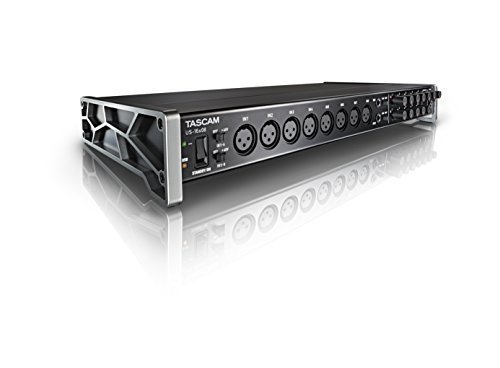
Captures 16 mic and line inputs with eight Ultra-HDDA microphone pres and up to 56 dB of gain, plus eight line inputs (two switchable to instrument level). This makes it well-suited for larger ensembles or multi-mic drum kits that require clear preamps and straightforward routing.
Best for: Home studios and project studios that need ample mic preamps and simple playback/monitor routing without overcomplication.
Caution: The included software may not be as modern as some newer interfaces; consider additional driver updates or host compatibility checks before upgrading your setup.
Behringer ADA8200 – 8 In/8 Out ADAT with MIDAS Preamps

Behringer ADA8200 provides eight MIDAS-designed mic preamps and ADAT optical outputs, expanding 8 additional analog inputs to an existing setup. It’s a strong choice for expanding a smaller interface into a 16-channel system when paired with a compatible converter chain.
Best for: Budget-conscious studios looking to extend their input count without replacing their main interface, especially when a dedicated ADAT path suits the workflow.
Caution: It adds more cables and another device in the signal chain; ensure clocking and latency management are planned to avoid sync issues.
Yamaha RUio16-D Dante/USB Audio Interface

Yamaha RUio16-D offers 16-in/16-out Dante and USB audio with a Dante network ecosystem for flexible routing across studios or large rehearsal spaces. It ships with VST Rack Pro software and supports a wide array of plug-ins for macOS and Windows. This is ideal for users who need networked multi-room or large-scale studios while still maintaining local USB connectivity.
Best for: Studios that rely on Dante networking, remote collaboration, or expanding across multiple rooms with high-grade audio fidelity.
Caution: Dante requires network planning; ensure your network gear supports stable multi-channel audio distribution and consider training on Dante control software.
Focusrite Scarlett 16i16 4th Gen

Focusrite Scarlett 16i16 provides a robust 16-in, 16-out setup with two high-quality mic preamps and a range of line and instrument inputs, plus ADAT and MIDI I/O. The 4th generation preamps offer substantial gain (up to 69 dB) and a dynamic range that supports detailed recordings at up to 24-bit/192 kHz, making it a strong choice for pro-level home studios.
Best for: Producers and musicians seeking reliable, high-fidelity recording with a familiar low-latency workflow and broad compatibility across DAWs.
Caution: While offering extensive I/O, users should verify their computer’s USB-C compatibility and potential need for additional cables or adapters in certain setups.
Buying Guide: How to Choose a 16-Input Interface
- Connection Type: USB-C interfaces are common and offer broad compatibility. Dante-enabled models (like RUio16-D) are ideal for networked studios and multi-room setups.
- Preamplifier Quality: Look for number of mic preamps and their gain ranges. Higher-end models provide cleaner gain with lower noise.
- Line and Instrument Inputs: Ensure sufficient line inputs for synths, mixers, and outboard gear. Some models offer switchable instrument inputs for direct guitar/bass recording.
- Latency and Drivers: Low-latency performance is critical for real-time monitoring. Check driver stability for your OS and DAW.
- Expandability: If you expect growth, consider ADAT expanders (like ADA8200) or digital snakes (Behringer S16) to scale input count without replacing the main interface.
- Networking Needs: Dante or other digital networks open up studio-to-studio or stage-to-studio workflows. Ensure compatible network gear and software.
- Software and Bundles: Some interfaces come with bundled software or plugin suites. Verify compatibility with your DAW and OS.
Frequently Asked Questions
- What is the advantage of a 16-input interface? It supports multiple microphones and instruments simultaneously, enabling full-band tracking, complex drum setups, and large ensembles without routing bottlenecks.
- Is Dante necessary for home studios? Not strictly necessary, but Dante is beneficial for larger setups, multi-room workflows, or when integrating with other Dante-enabled devices.
- Can I expand a 16-input interface later? Yes, many interfaces support ADAT or digital snakes to add inputs without replacing the main unit.
- What should I consider before buying? Consider I/O needs, latency, preamp quality, and how you plan to expand (ADAT vs. Dante). Also check driver support for your computer and DAW.
- Are USB-C interfaces backward compatible? Most USB-C interfaces work with USB-A and USB-C ports via adapters, but confirm compatibility with your computer’s ports and drivers.
- Do I need a digital snake or an audio interface with built-in expansion? If you regularly run very large session scopes or live setups, a digital snake (like S16) can reduce cable clutter and simplify routing.