Best Audio Interface for Streaming: Top Picks for Clear Voice, Easy Setup, and Studio-Like Sound
Answering the common question “Which audio interface is best for streaming?” this guide highlights five solid options that balance value, performance, and USB ease-of-use. These interfaces are well-suited for streamers, podcasters, voice actors, and content creators who want reliable, clean sound without complex setup. Read on to see why each pick fits different streaming needs and rig setups.
Buyer snapshot: The top performers vary by use case. For solo creators focusing on vocal clarity, Focusrite Scarlett Solo models excel with high-quality pre-amps. For multi-channel or live-mixing needs, gaming-oriented mixers like FIFINE and MAONO’s niche streaming packs offer convenient controls and direct monitoring. For budget-friendly, straightforward recording, MAONO PS22 Lite and M-AUDIO M-Track Duo provide solid, simple pathways to 24-bit/192kHz capture. Use the Buying Guide and FAQ to match your mic type, software, and monitoring needs to the right interface.
| Product | Best For | Key Benefit |
|---|---|---|
| Focusrite Scarlett Solo 3rd Gen | Vocalists, Podcasters | Air mode for clarity, high-quality pre-amps |
| FIFINE Gaming Audio Mixer SC3 | Streamers needing built-in mixer | Independent channels and live mixing |
| Focusrite Scarlett Solo 4th Gen | Guitarists and producers | Improved Air mode, studio-grade converters |
| Focusrite Scarlett 2i2 4th Gen | Songwriters, multi-instrument setups | Auto Gain and Clip Safe |
| M-AUDIO M-Track Duo | Streamers on a budget | Dual inputs, 2-in / 2-out versatility |
Focusrite Scarlett Solo 3rd Gen Review

The Focusrite Scarlett Solo 3rd Gen is built for solo creators who require studio-grade sound with simple operation. It features high-headroom mic pre-amps and a switchable Air mode to add brightness to acoustic recordings. The two instrument inputs keep guitars or basses sounding clear, and Gain Halos help you avoid clipping during loud performances. Best for: vocalists and podcasters who want a compact interface with pro-level converters for up to 24-bit/192kHz. Caution: this model is most efficient when used with a single microphone and one instrument input at a time, limiting multi-mic setups.
FIFINE SC3 Gaming Audio Mixer

The FIFINE SC3 is a gaming-focused streaming mixer with an XLR mic input, 48V phantom power, and four independent channels. It offers direct, on-device control with mute and monitor features to minimize background noise during live streams. Best for: streamers who want hands-on control of mic, line, and headphone levels without relying on software. Limitation: primarily designed for microphone-centric setups; USB mic compatibility is limited, so it is not a universal USB audio interface for all mic types.
Focusrite Scarlett Solo 4th Gen

The Scarlet Solo 4th Gen continues Focusrite’s emphasis on studio-grade sound with a notable 120dB dynamic range and improved Air mode for front-of-mown clarity in vocals and guitars. This model suits players who want a straightforward setup with high-fidelity capture for music and podcasts. Best for: guitarists and vocalists needing a portable, high-quality interface with reliable software integration. Caution: Air mode can alter tonal balance; start with the default setting and switch if you need extra presence in the mix.
Focusrite Scarlett 2i2 4th Gen
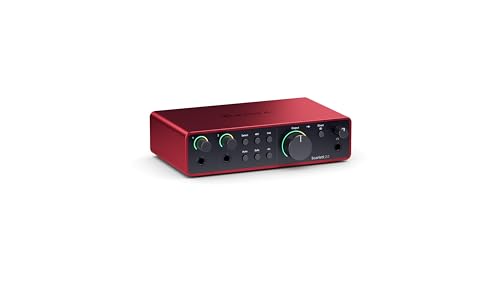
The Scarlett 2i2 4th Gen adds Auto Gain and Clip Safe, helping you maintain optimum levels and prevent clipping. It supports dual inputs for mic and instrument, making it versatile for songwriters or small studios. Best for: users who want more input flexibility than Solo models without a large footprint. Limitation: may be less ideal for advanced multi-mic recording compared to larger interfaces or dedicated mixers.
M-AUDIO M-Track Duo
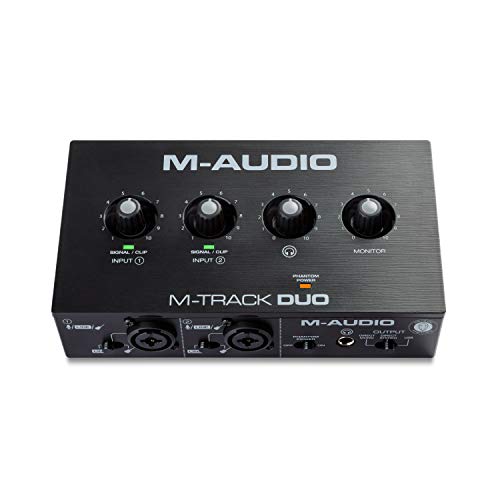
The M-Track Duo provides a compact, budget-friendly path to clear streaming audio. It offers dual inputs, 48kHz resolution, and direct monitoring with a simple USB connection. Best for: beginners or budget-conscious creators who want dependable 24-bit/192kHz performance without complexity. Caution: feature set is basic compared with higher-end Focusrite models; may lack some advanced software features or expanded I/O for future growth.
Buying Guide: How To Choose Your Audio Interface For Streaming
- Input needs: Do you need one mic input or two, plus an instrument input? If you plan to have guests or multiple mics, lean toward 2-input interfaces or a mixer.
- Microphone type: Condenser mics require phantom power. Ensure the interface provides 48V if you use condensers.
- Monitoring: Look for zero-latency monitoring and adjustable direct monitoring mix so you can hear yourself in real time without delay.
- Converter quality: Higher dynamic range and 24-bit/192kHz sample rates yield cleaner recordings, especially for voice and music tracks.
- Air/Voice features: Interfaces with Air mode or enhanced pre-amps can boost presence on vocals and acoustic instruments.
- Software bundle: Some models include DAW software or useful plugins; consider your needs and learning curve.
- Size and portability: If you travel or stream from different locations, compact 1-2 input units are advantageous.
FAQ
- What is the primary difference between Solo and 2i2 models?
Solo models offer a single mic input and a single instrument input, while 2i2 models add a second input for an additional mic or line/instrument, enabling more flexible setups.
- Is 24-bit/192kHz necessary for streaming?
Not always, but it provides higher fidelity for voice and music, reducing noise and improving headroom during loud passages or dynamic performances.
- Do I need built-in phantom power?
Yes if you plan to use condenser microphones or some higher-sensitivity mics that require external power.
- Should I choose a mixer-type interface for streaming?
If you want on-device control over multiple inputs, monitoring, and quick adjustments without software, a mixer-style interface can be advantageous.
- Can I use any USB microphone with these interfaces?
These interfaces are designed for XLR mics and line inputs; USB microphones typically connect directly to a computer and may not work through all interfaces without adapters.
- What is “Air” mode?
Air mode is a Focusrite feature that emulates the airiness of classic transformer-based pre-amps, enhancing presence in vocals and acoustic guitars.