
Best Audio Multicore Cable Snake Solutions for Studios and Stages
If you’re looking to organize and carry multiple balanced audio lines in one cable run, a multicore audio snake is the ideal choice. This guide highlights five solid options tailored for home studios, live stages, and small venues. Each pick suits different signal counts, lengths, and environments, helping you choose the right fit for your workflow.
| Product | Channels | Length | |
|---|---|---|---|
| GEARit XLR Snake 8 Channel 30 ft | 8 | 30 ft | Studio to high-end gear, stage monitors |
| Seismic Audio 4 Channel XLR Snake 15 ft | 4 | 15 ft | Compact stage box setups |
| Seismic Audio SAJT-16x8x75 | 16 inputs, 8 returns | 75 ft | Long runs with returns for larger venues |
| AXCESSAbles 20 ft 4 Channel XLR Snake | 4 | 20 ft | Color-coded, durable live work |
| Harmony Audio 16 Channel 100 ft Snake | 16 | 100 ft | Long-stage runs with clear labeling |
GEARit XLR Snake 8 Channel 30 ft

Length and channel count make this snake ideal for compact studios or small venues. It carries eight balanced lines between a mixer and stage or processing gear using pro-grade metal XLR connectors. Clear channel labels on top help you stay organized in low-light environments, such as behind a mixer or speaker stack. Best for studio setups requiring a reliable, labeled 30-foot run.
Best for: small studios and live gigs needing organized 8-channel power with robust connectors. Avoid this if you need more than eight channels in a single run.
Seismic Audio 4 Channel XLR Snake Cable 15 Feet
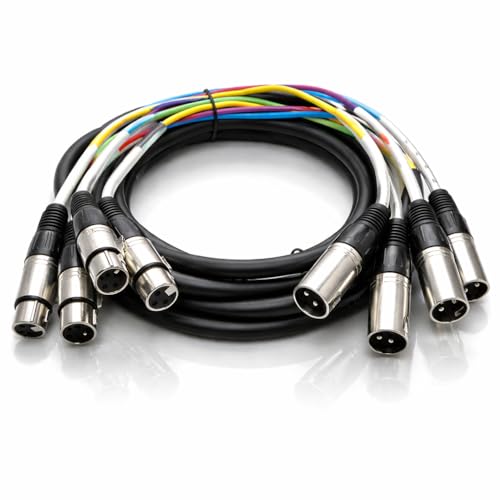
This 4-channel snake is compact and straightforward, suitable for small stages or studio patching. It features four female and four male XLR connections and a 15-foot length, offering a clean, simplified cabling solution for basic multi-mic or multi-line configurations. Best for: quick, reliable 4-channel runs where space is limited. Caution: longer cable runs can introduce more potential for signal noise and latency in some setups.
Seismic Audio SAJT-16x8x75
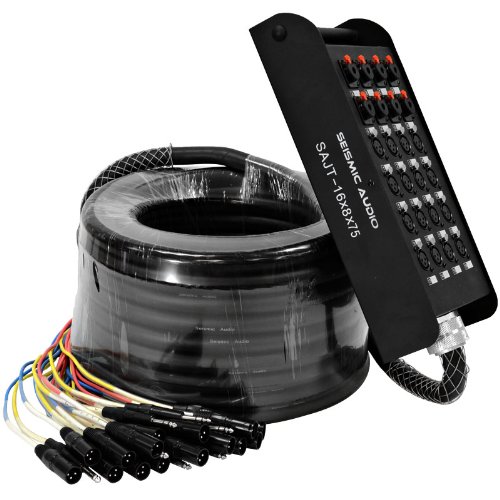
This 16x8x75 model supports a large input of 16 XLR channels with eight returns on 1/4″ TRS. It’s designed for longer stage runs where multiple signal paths are managed from a single stage box. Best for: mid-to-large venues needing many inputs with mixed return paths. Limitation: returns are 1/4″ TRS, which may require adapters for some gear.
AXCESSAbles 20 ft 4 Channel XLR Snake

This 20-foot, four-channel snake emphasizes durable, color-coded connectors and robust copper conductors. It is designed to simplify live setups by reducing cable clutter and easing channel identification. Best for: live performances and installations where quick setup and clear labeling matter. Caution: heavy use can wear outer jackets; inspect for any pin or connector looseness over time.
Novazylum 4 Channel 1/4″ TRS to XLR Snake

This 4-channel snake blends 1/4″ TRS to XLR paths, offering a compact balance between inputs and returns. It uses 24 AWG conductors with shielding to minimize RF/EMI interference and is color-coded for quick identification. Best for: studios or small performances needing reliable balanced lines with straightforward wiring. Caution: longer extensions can introduce impedance changes in some setups.
GEARit 8 Channel XLR Snake 10 ft

Shorter, lighter, and easy to route, this 10-foot snake is geared toward control rooms or smaller stages where space is at a premium. It includes eight channels with metal XLR connectors and numbered labeling for quick setup. Best for: compact studios and small venues needing a tidy 8-channel run. Limitation: shorter length may require a second run or extension for larger spaces.
Harmony Audio 16 Channel 100 ft Snake

This long 100-foot snake consolidates 16 channels with dedicated labeling for inputs and returns. It’s designed for large stages or multi-room setups where a single snake carries extensive signals. Best for: venues needing extended runs with clear input/return separation. Caution: length may impact signal integrity if not properly terminated or shielded over very long distances.
Buying Guide: Key Considerations For Picking The Right Multicore Snake
- Channel count vs. length: Match the number of inputs you need to the distance between gear. Higher channel counts paired with long runs require robust shielding and quality connectors.
- Connector quality: Metal XLR connectors and locking designs help prevent accidental unplugging during movement or on busy stages.
- Cable construction: Look for OFC copper conductors, shielding, and a durable outer jacket. Multicore cables should minimize crosstalk and noise.
- Color-coding and labeling: Pre-printed or easily identifiable channel labels simplify installation and maintenance in low-light environments.
- Returns and monitoring: For live sound, consider snakes that offer returns that align with your stage monitor or desk setup.
- Flexibility vs. durability: Flexible jackets aid in routing, while tougher shells protect cables in touring scenarios. Balance based on usage.
Frequently Asked Questions
- What is a multicore audio snake used for?
It consolidates multiple XLR or TRS audio paths into a single, organized bundle for easier routing between mixers, stage boxes, and monitors.
- How long should an audio snake be for live performances?
Length depends on room size and stage distance. Common lengths range from 10 ft to 75 ft; for very large venues, consider longer runs with proper shielding.
- Are armored or metal connectors necessary?
Metal connectors increase durability and reduce connector looseness during hard use, especially in live environments.
- What should I check before buying a multicore snake?
Check channel count, length, connector quality, shielding, labeling, and jacket durability to ensure it fits your setup.
- Can I mix different brands on a single setup?
Yes, as long as connectors match (XLR or TRS) and impedance and signal levels are compatible with your gear. Verify that the returns and channels align with your routing plan.