Best Audio Sine Wave Generators for Precise Testing and Calibration
Answering your search for accurate audio sine wave generators, this guide focuses on compact, reliable units ideal for electronics testing, audio work, and lab experiments. The top picks below are best for hobbyists, students, and professionals who need clean sine waves, stable frequencies, and straightforward operation. Each product includes a brief suitability note to help you compare at a glance.
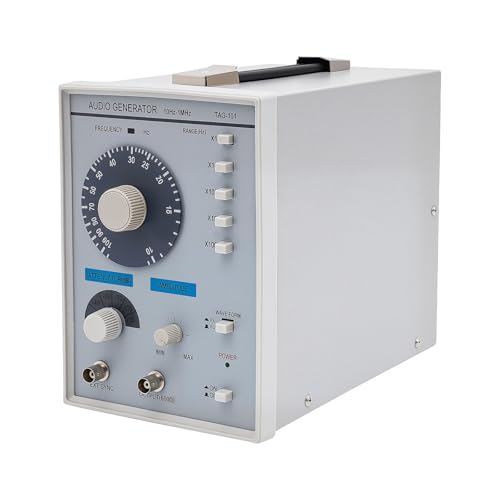
Best for beginners and educational use, ECUTEE’s low frequency signal generator covers 10 Hz to 1 MHz with five ranges and a single calibrated scale. It offers sine and square waveforms and a 6-step attenuator with 10 dB steps, plus a level regulator. The sine wave is greater than 5 Vrms no-load and greater than 2.8 Vrms at 600 Ω load, making it suitable for basic audio and electronics projects.
Why this is selected: Simple to operate, stable enough for introductory lab exercises, and includes both sine and square outputs for versatile testing. Best for: students, hobbyists, and educators who need an affordable, straightforward generator.
Limitations: For very precise professional calibration, you may want a unit with tighter frequency tolerance and advanced modulation options.
Best for versatile testing and modulation experiments, this DDS waveform generator covers a broad range of waveforms, including sine, square, triangle, pulse, and arbitrary outputs. It supports advanced modulation capabilities and can be powered by AC/DC adapters or batteries, which makes it ideal for fieldwork or compact labs. The device enables quick configuration for testing various modulation schemes used in communications.
Why this is selected: A flexible platform for multifaceted signal testing, suitable for research and development workflows. Choose this if you need a compact, all-purpose generator with extensive waveform options.
Caution: The breadth of features may require a short learning curve to exploit modulation options fully.
Best for precision frequency testing, this low-frequency generator spans 10 Hz to 1 MHz with five ranges. It supports sine and square dual output waveforms, enabling a range of testing scenarios from signal integrity checks to standalone audio testing. Frequency accuracy is described as high, with a low distortion rate to ensure clean waveforms for calibrations.
Why this is selected: Strong choice for those who need reliable, repeatable basic waveform generation with clear range delineation. Better for repeated bench testing where consistency matters.
Limitation: The specification notes high stability but may lack some advanced modulation features found in broader DDS platforms.
Best for synchronizable testing and classroom use, this model emphasizes reliability and ease of operation. It provides sine and square waves with a synchronizing input terminal and a five-range frequency selection from 10 Hz to 1 MHz. The sine waveform exceeds 5 Vrms no-load and 2.8 Vrms at 600 Ω load, making it suitable for general audio and electronics lab tasks.
Why this is selected: Clear design for instructional settings and straightforward integration with other equipment. Choose this if you want reliable outputs with easy synchronization.
Best for DIY electronics and prototyping, this XR2206-based module covers 1 Hz to 1 MHz with a wide frequency scanning range. It lists a sine wave distortion around 0.5% and a 600-ohm impedance. Its compact form and compatibility with common hobby-grade power supplies make it a practical building block for custom signal generation projects.
Why this is selected: A solid choice for hands-on projects that require a simple sine source within a DIY setup. Use this if you’re assembling custom test rigs or experimenting with signal processing circuits.
Limitation: As a module, it may require additional components for standalone operation or integration with non-standard power supplies.
Best for advanced waveform calibration, the FG-100 DDS generator offers sine, square, triangle, and sawtooth waves across 1 Hz to 500 kHz for various outputs. It lists specific distortion metrics and a 50-ohm output impedance, with a focus on DDS stability for oscilloscope scanning and signal timing calibrations. Power can come from a DC adapter or a lithium battery.
Why this is selected: A robust option for users who require precise waveform control and multiple output types. Choose this when you need stable DDS performance and flexible power options.
Limitation: Some users may find the interface less intuitive until they’re familiar with DDS settings and output configurations.
Buying Guide: Key Factors For Selecting An Audio Sine Wave Generator
Frequency Range and Resolution: Match the generator’s range to your typical tests. Five-range designs help cover broad bands, while tighter ranges improve stability at fixed frequencies.
Waveform Options: Sine waves are essential for many calibrations, but square, triangle, and sawtooth can be valuable for testing electronics and audio circuits.
Amplitude And Impedance: Consider no-load Vrms and load-dependent amplitude. Check output impedance (commonly 50 Ω or 600 Ω) to ensure compatibility with your test gear and cables.
Stability and Distortion: Look for units advertising low distortion and stable frequency performance to minimize measurement error.
Power Options: USB, AC adapters, or battery operation support fieldwork and portable setups.
Ease Of Use: Clear controls, labeling, and synchronization features can save time in busy labs or classrooms.
Size And Portability: Smaller modules are handy for benchtop setups or mobile testing; larger units may offer better display and stability).
FAQ
What is a sine wave generator used for? It provides a clean, stable sine waveform for calibrating amplifiers, oscilloscopes, and audio equipment, as well as for testing circuits.
Do these generators require calibration themselves? Some models include calibrated scales; others rely on external measurement to verify accuracy.
Is DDS better than traditional signal generators? DDS-based devices often offer finer waveform control and rapid switching between waveforms, useful for complex testing.
Can I use these for field testing? Yes, many models support battery or portable power options, which helps in field environments.
What should I consider for professional lab use? Look for tight frequency tolerance, low distortion, stable phase, and robust shielding to minimize noise.
Are square waves useful along with sine waves? Yes, square waves are valuable for testing digital circuits and clock-related performance in equipment.
Looking for a versatile multi media speaker system that covers rooms, desks, and workspaces alike? This guide highlights five strong options that balance sound quality, connectivity, and ease of use. Each pick is explained for who it’s best for, with clear pros, potential limitations, and practical setup notes. Whether you need compact desktop audio, multi-room…
Looking for ready-made backing tracks that fit a band setup? This guide highlights five solid options ideal for different players who want reliable practice and performance backing. Drummers, guitarists, and brass players alike can find tracks that match their instrument focus, tempo needs, and genre style. The picks favor versatility, portability, and clear rhythm sections…
Answering the need for clear voice capture with real-time monitoring, these microphones all include a 3.5mm headphone jack. They suit streamers, podcasters, gamers, and content creators who want instant headphone monitoring and easy mute controls. The top picks below emphasize direct USB or USB/XLR connectivity, built-in mute features, and RGB feedback to help manage live…
If you’re shopping for a car stereo with built-in navigation and a backup camera, you want models that integrate reliable GPS, clear display, and a straightforward installation. The top picks below suit drivers who want hands-free navigation, enhanced safety, and strong audio performance. Each option targets a different vehicle setup—from large 10.1-inch screens to compact…
Looking for a high-end Bluetooth receiver that preserves sound quality while upgrading an existing stereo or AV system? This guide highlights five premium options that emphasize audiophile DACs, LDAC/aptX HD support, and long-range wireless performance. Each pick is best for discerning listeners who want rich detail, low distortion, and reliable compatibility with modern devices. The…
Discover the best stereo amplifiers with VU meters to monitor levels in real time. This guide targets audio enthusiasts, home theater fans, and casual listeners who want retro visual feedback without sacrificing modern performance. Each pick balances sound quality, VU meter visibility, and compatibility with passive speakers. The table below highlights five top options across…