
Best Audio Wrap Sound Deadening Solutions for Cars
Answering the common buyer question: which sound-deadening options deliver solid vibration control, heat resistance, and easy DIY installation for car audio wraps? The top picks below cater to different needs—from thin, budget-conscious installs to high-density barriers for noisy cabins. Each product highlights who it’s best for and why, plus a practical caution to guide choices.
| Product | Best For | |
|---|---|---|
| KILMAT 80 mil 10 sqft | DIY newbies with small projects | Thick 80 mil butyl for strong insulation in tight spaces. |
| KILMAT 80 mil 36 sqft | Medium to larger panels | More coverage with the same thickness and adhesive strength. |
| Siless Liner 157 (4 mm) 36 sqft | Waterproof, lightweight barrier projects | Closed-cell PE foam with adhesive, excellent heat blocking. |
| Mass Loaded Vinyl (Swess) 1 x 8 Feet | High-density sound blocking on doors, panels | Dense, not lightweight foam—great for rigid barriers. |
| Siless 80 mil (2mm) 36 sqft | Budget-friendly, higher-performance dampening | VIBRO 80 mil with advanced formulation for automotive use. |
KILMAT 80 Mil 10 Sqft Car Sound Deadening

The 80 mil KILMAT mat uses a self-adhesive butyl and foil construction for automotive sound deadening. It is designed for straightforward DIY installation and is thicker than typical mats, yielding higher insulation performance per layer. Best for small panels or tight spaces where deeper damping is beneficial. A limitation is that larger projects may require multiple sheets to cover the area efficiently.
Who this is best for: DIY enthusiasts with limited project scope looking for reliable, thick insulation that’s easy to apply.
KILMAT 80 Mil 36 Sqft Car Sound Deadening

This larger 36 sq ft sheet uses the same 80 mil butyl/foil composition with strong, long-lasting adhesion. Its greater coverage makes it well suited for larger panels like doors and floor areas. The thicker material contributes to better overall dampening. A caveat is the transport and handling of bigger sheets, which may require careful cutting and shaping.
Who this is best for: Projects that cover more surface and need consistent damping across panels.
Siless Liner 157 (4 mm) 36 Sqft
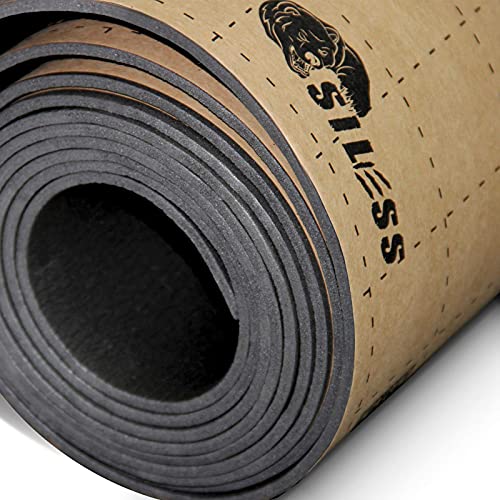
This closed-cell PE foam liner includes an adhesive layer for easier installation and offers substantial heat blocking and water resistance. It’s lightweight and compressible, making it suitable for curved surfaces and irregular panels. It does not absorb moisture and provides a practical balance between price and performance. The main limitation is that it is not a heavy mass-loaded solution, so it may require combination with other barriers for extreme noise reduction.
Who this is best for: Vehicle cabins needing moisture resistance and flexible application on curved surfaces.
Mass Loaded Vinyl Soundproofing Barrier (Swess)
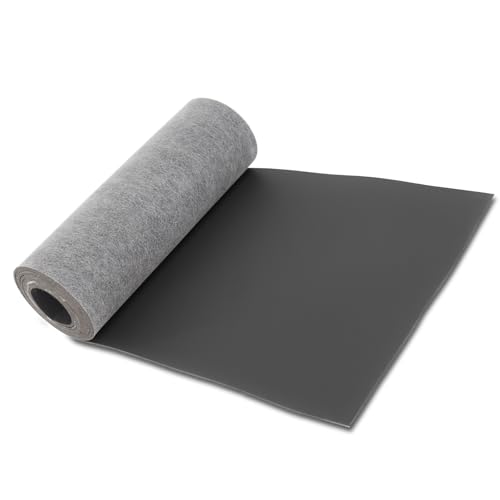
Mass loaded vinyl adds density to doors, walls, and panels to limit sound transmission. It is a practical barrier for rigid structures where added mass reduces noise passing through. It is heavier and denser than typical foam products and should be planned for project dimensions accordingly. It does not by itself absorb room echoes, so it’s best used in combination with other insulation layers for broader acoustic improvements.
Who this is best for: Projects focused on blocking sound transmission in metal panels and enclosures where added mass makes the most impact.
Siless 80 Mil (2 mm) 36 Sqft Car Deadening Mat

Siless 80 mil (2 mm) offers a robust dampening solution with a focus on value. Its VIBRO 80 mil formulation aims to deliver enhanced performance at a lower cost relative to other premium products. It’s a viable option for car enthusiasts seeking a balance between price and effectiveness. A limitation to consider is that very high-noise environments may benefit from combining with heavier barriers.
Who this is best for: Cost-conscious buyers who still want meaningful dampening in typical automotive installations.
Buying Guide: How To Choose Car Audio Deadening
What size and how much coverage do you need?
Measure target panels (doors, floor, trunk, wheel wells) to estimate total square feet. Larger areas benefit from higher coverage mats, but plan for cuts and waste. Consider whether you need thin, flexible mats for curves or thicker mats for high-heat zones.
What density and material type work best?
Foam and butyl/foil laminates offer good vibration dampening, while mass-loaded vinyl adds substantial density to block sound transmission. A combination approach often yields the best results: dampen vibrations with a flexible layer and block sound with a dense barrier at key paths.
How important is heat resistance and moisture handling?
Closed-cell foams resist moisture and are lightweight, making them suitable for damp environments. Butyl-based products provide strong damping and heat resistance but may be heavier. Choose based on climate, exposure, and installation area.
How easy is installation for beginners?
Self-adhesive mats simplify DIY installs, but large sheets require careful cutting and alignment. Tools like a seam roller help ensure even adhesion. For irregular surfaces, flexible foams can be easier to fit, though they may require more layers to reach the same dampening.
Frequently Asked Questions
- What is the main difference between foam liners and mass-loaded vinyl? Foam liners dampen vibration and heat, while mass-loaded vinyl primarily blocks sound transmission through adding density to surfaces.
- Can I use these products on the exterior of a vehicle? They are designed for interior panels, doors, floors, and trunks. Exterior use is not recommended without protective coatings.
- Will thicker mats always mean better dampening? Generally yes, up to a point. Thicker mats provide more mass and insulation, but installation complexity and panel fit must be considered.
- Do I need a professional for optimal results? Not required for many DIY installations, but complex vehicles or high-noise builds may benefit from professional guidance.
- Should I combine products for best results? Yes, combining a flexible dampening layer with a dense barrier often yields the best overall acoustic performance.
- Are there any safety concerns with adhesives? Use proper ventilation during cutting and avoid skin contact with adhesives. Follow product-specific safety instructions.