
Best Automatic Audio Source Selector Options for Clean, Hands-Free Switching
Answering the need for seamless, automatic switching between multiple audio sources, these selectors detect signal presence and route sound without manual input. They’re ideal for home theater setups, multi-room systems, or any scenario where one of several sources should play automatically. The top picks below are organized by purpose: compact two-source models for small spaces, multi-source units for larger setups, and units offering plug-and-play ease with adjustable sensitivity. This guide helps buyers choose based on compatibility, control, and reliability.
Summary table of selected products:
| Product | Best For | Key Benefit | Notes |
|---|---|---|---|
| MCM Custom Audio Automatic Two-Way Source Selector | Small to medium setups needing automatic two-source switching | Sound-activated switching | Direct two-input, simple install |
| Russound AB32 Ab Selector | Automatic input selection with tunable sensitivity | Adjustable sensitivity and delay | Good for variable signal environments |
| Automatic RCA Audio Selector by BobWire RCA1 | Home theaters and multi-source bypass | Audio sensing or 12V trigger | Flexible trigger options |
| Line Level RCA 2 Way Audio Switch (multicomp PRO) | Two-source, easy SC wiring | LED indicators and 12V power | Simple, clear status |
| Russound AB-3.2 Automatic A/B Selector | Two-source, robust tuning controls | Sensitivity and delay adjustments | Reliability features |
MCM Custom Audio Automatic Two-Way Source Selector

The MCM two-way selector is designed for users who want automatic switching between two audio sources. It emphasizes a straightforward setup, making it suitable for small listening rooms or compact home theater configurations. Best for users who prioritize hands-free operation with minimal configuration.
Best for: small to medium rooms with two primary sources needing automatic selection. Why selected: simple, purpose-built for automatic two-input switching with direct, predictable behavior. Limitation: limited to two inputs, offering less flexibility for expanding sources.
Russound AB32 Ab Selector
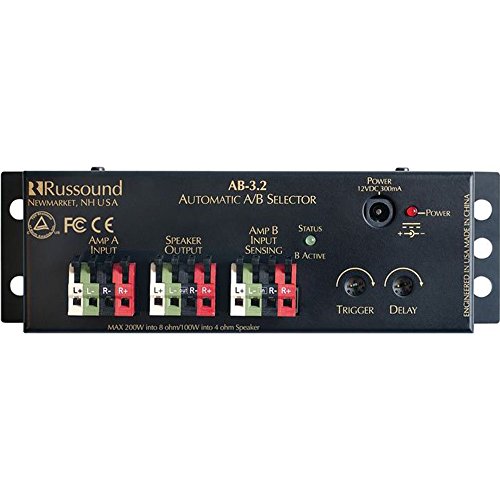
The AB32 from Russound is designed to automatically switch to the alternate amplifier input when a signal is present. It features sensitivity and delay adjustments to fine-tune performance for different setups and a removable color-coded connector system for easier, more reliable wiring. This unit is well-suited for rooms where background noise or variable signal strength requires customizable response.
Best for: environments with fluctuating signal levels or where precise timing is needed. Why selected: adjustable sensitivity and delay improve reliability in diverse listening rooms. Limitation: requires careful setup to optimize delay and sensitivity for your sources.
Automatic RCA Audio Selector by BobWire RCA1

BobWire’s RCA1 provides switching activated by either audio sensing or a 12V trigger, offering flexibility for different installation scenarios such as home theater bypass, Jukebox setups, or karaoke systems. It emphasizes high sensitivity audio detection and supports both trigger and audio-based switching for broad compatibility.
Best for: setups needing flexible triggering methods (audio or external trigger). Why selected: dual-mode operation increases adaptability across systems. Limitation: as a dedicated RCA switch, it may require careful source matching to avoid misfires in noisy environments.
Line Level RCA 2 Way Audio Switch (multicomp PRO)

This two-input, line-level switch supports two sources with a clean, fixed output path. It includes LED status indicators for A and B, a 12V DC power option, and a compact form factor. It’s a practical choice for users who want a straightforward, reliable two-source solution with clear status feedback.
Best for: users needing a compact, clearly indicated two-source selector. Why selected: simple indicators help avoid confusion during switching. Limitation: limited to two sources, which may not fit expanding systems.
Russound AB-3.2 Automatic A/B Selector
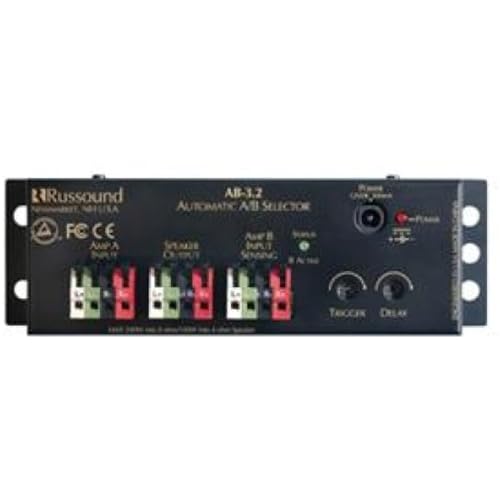
The AB-3.2 is designed to automatically switch between two inputs based on signal presence, with adjustable sensitivity and delay to tailor performance to the listening environment. Color-coded snap connectors are included to facilitate reliable connections. This option is suitable for more dynamic rooms or systems with varying source strengths.
Best for: two-source installations needing customizable switching dynamics. Why selected: adjustable controls enable precise tuning for different room acoustics. Limitation: two inputs, so not ideal for expanding source lists without additional equipment.
Pyle 6 Channel Speaker Selector Switch (PSLSW6)

Pyle’s 6-channel selector is built for multi-zone distribution, enabling independent audio control across up to six speaker pairs. It provides independent source volume control and a compact design. While not strictly an automatic source selector, its multi-zone capabilities make it worth considering for larger rooms or multi-area setups where central control is beneficial.
Best for: multi-zone environments needing distributed speaker control. Why selected: supports up to six speaker pairs with independent volume control. Limitation: higher power handling may require careful impedance matching with multiple speakers.
SOLUPEAK S1 4 Way RCA Audio Switch
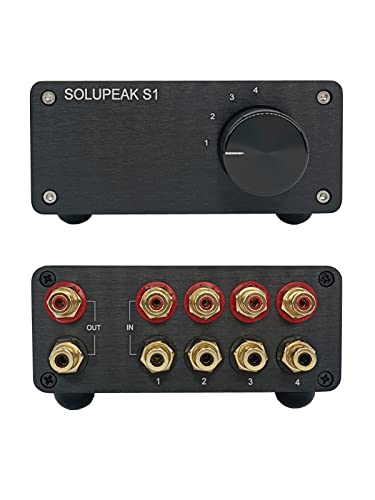
SOLUPEAK’s S1 allows connection of up to four stereo sources with one output via a rotary knob. It’s designed for lossless signal transmission with a robust aluminum shell and a high-quality front panel. Note that when used as 1-in-4-out, the four outputs are not simultaneous, which is an important consideration for bigger, synchronized systems.
Best for: users needing four-source selection in a compact form factor. Why selected: versatile 4-source capability with a physical control knob for tactile operation. Limitation: not all four outputs can play simultaneously in 1-in-4-out mode.
Buying Guide: How to Choose an Automatic Audio Source Selector
- Source count and future-proofing: Start with how many sources you currently have and whether you’ll expand. For two sources, focus on fast, reliable switching. For more, consider 4–6 input models with clear status indicators or multi-zone abilities.
- Switching method and sensitivity: Some units use audio sensing, others rely on triggers or signal presence. Adjustable sensitivity and delay help tailor performance to room noise, cable length, and source dynamics.
- Ease of installation: Color-coded connectors, screw terminals, and clear wiring guidance reduce setup time and errors. Removable connectors can help when replumbing or upgrading.
- Output configuration: Decide whether you need one output per source, a single shared output, or multi-zone distribution. This determines whether a 1-in-2-out or 1-in-4-out design fits your needs.
- Physical build and shielding: Aluminum enclosures and robust knobs or switches improve durability in home theater racks or cabinetry. Shielding also reduces potential interference in complex AV setups.
- Compatibility and audio quality: Look for devices rated for line-level RCA connections if your sources are consumer electronics. Avoid units with unnecessary conversion stages if you require faithful signal transmission.
Frequently Asked Questions
- What is an automatic audio source selector? It automatically routes audio from the active input to the output without manual switching, based on signal presence or triggering signals.
- Do I need a 12V trigger or just audio sensing? It depends on your system. A 12V trigger works well with AV receivers and control systems, while audio sensing simplifies standalone setups where sources themselves trigger switching.
- Can these devices handle multiple zones? Some models support multi-zone distribution (like the Pyle unit), while others are designed for single output with multiple inputs. Check the product’s output options before purchasing.
- Will switching cause audio dropouts? High-quality selectors use fast sensing and stable switching to minimize dropouts; however, very long cable runs or noisy sources may require more tuning with adjustable sensitivity.
- Is a dedicated selector better than routing through an AVR’s auto-switch? A dedicated selector can offer faster, more predictable switching and can simplify wiring if you have multiple zones not connected to a single AVR.
- What installation notes should I consider? Ensure impedance compatibility with your speakers, confirm cable lengths won’t degrade signal, and plan for secure connections to prevent loose wires.