
Best Back Boxes for Ceiling Speakers: Choosing the Right Enclosure for Clear, Reliable Sound
Answer: The best back boxes for ceiling speakers balance fit, insulation, and ease of installation to protect drivers and reduce unwanted sound leakage. This guide highlights five practical enclosures and mounting options that suit common ceiling installs, from retrofit projects to new construction. Best for: homeowners upgrading home theaters, DIY installers, and professionals seeking cleaner acoustics and simpler wiring. Below is a quick at-a-glance table of the selected products to help you compare core details quickly.
| Product | Application | Best For |
|---|---|---|
| Dynamat DynaBox Ceiling Speaker Enclosure System | Installation through existing speaker openings | Retrofit installs seeking vibration reduction and clearer sound |
| Round Recessed Ceiling Speaker Enclosure | General purpose ceiling enclosures | Affordable, simple enclosure for standard ceilings |
| Monoprice ABS Back Enclosure (Pair) for PID 4104 | 8″ ceiling speaker back enclosures | Durable, cost-effective pair for flush installs |
| Monoprice 2-Way Aramid Fiber Back Ceiling Speakers (Pair) | Ceiling speaker system with back protection | Better bass and protected electronics in ceilings |
| Earthquake RK-C8 V2 New Construction Rough-in Kit | New construction rough-in for 8″ ceiling speakers | Precise fit for new builds and remodeling |
DynaBox Ceiling Speaker Enclosure System

The DynaBox uses patented damping technology to reduce noise transmission through floors and improve in-ceiling acoustic quality. It collapses for easy retrofit and provides ample insulation to minimize vibration transfer. This enclosure is best for home theaters and rooms where minimizing resonant noise is a priority. It is particularly suitable for retrofits where existing speaker openings are used and vibration control is desired. Caution: installation may require careful alignment with existing openings to ensure a proper seal and maximum damping.
Round Recessed Ceiling Speaker Enclosure

Round Recessed enclosures offer a straightforward, budget-friendly option for many ceiling speaker setups. They are well-suited for standard installations where simplicity and cost control are key. Best for: smaller rooms or quick upgrades where a plain back box is sufficient. Limitation: may not include advanced damping features found in higher-end models, so expect less isolation from vibrations compared with premium enclosures.
Monoprice ABS Back Enclosure (Pair) for PID 4104
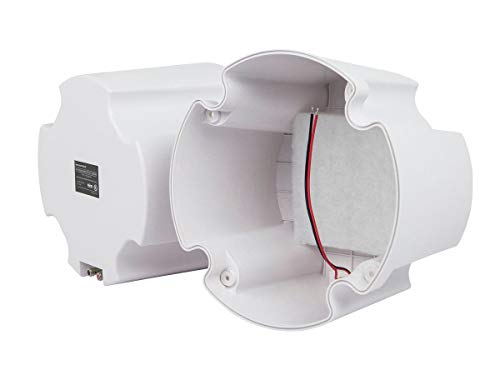
These ABS back enclosures come in a convenient pair for 8″ ceiling speakers, with dimensions suitable for standard construction. They’re noted for durable plastic construction and straightforward mounting, making them a practical choice for DIY projects and retrofits. Best for: cost-conscious installers who want reliable protection for drivers and wiring. Caution: ensure compatibility with your specific PID 4104 model and verify screw hole alignment before purchase.
Monoprice 2-Way Aramid Fiber Back Ceiling Speakers (Pair)

This pair integrates a protective back cover and a Kevlar woofer for deep bass, plus a silk titanium tweeter for smooth mids and highs. A variable high-frequency attenuator helps tailor brightness in brighter rooms. Best for: rooms where stronger bass response and refined highs are desired while keeping debris out of the driver area. Limitation: assembly and alignment are more involved due to the integrated crossover and protective features.
Earthquake RK-C8 V2 New Construction Rough-in Kit

The RK-C8 V2 rough-in kit is designed for new construction projects and must be installed before drywall. It supports 8″ speakers and includes four dog-ear wings and two adjustable mounting rings for 360-degree positioning. Best for: new builds or major remodels where precise placement and secure mounting are critical. Caution: not suitable for retrofit without wall access or drywall changes.
Buying Guide
What enclosure size do I need?
Choose an enclosure that matches the diameter and mounting depth of your ceiling speakers. Most 8″ speakers use standard 8″ back boxes, but verify inner diameter and mounting holes before buying.
Should I prioritize damping or debris protection?
If you have hard surfaces and footfall noise, opt for enclosures with damping materials like foam or fiber. If debris protection is a concern (pets, dust), consider models with a protective back cover or sealed designs.
Retrofit vs. new construction—what’s the difference?
Retrofit enclosures fit into existing openings and are generally easier to install. New-construction kits are installed before drywall and require precise measurements but can provide a cleaner, more secure mounting.
What about installation difficulty?
Basic enclosures require simple screw mounting and cavity insertion. Some kits include wings, adjustable rings, or collapsible designs to simplify alignment and sealing in ceilings.
Which features improve sound quality?
Enclosures that dampen vibration, use stiff woofer materials (like Kevlar), and offer controlled treble adjustments can improve in-ceiling sound clarity and reduce resonance.
How do I avoid common installation problems?
- Confirm compatibility with your speaker model and mounting pattern.
- Ensure a proper seal to prevent air leaks that degrade bass response.
- Follow manufacturer guidelines for wiring depth and cable routing.
Summary of key considerations
- Match enclosure to speaker size and mounting method (retrofit vs. new construction).
- Assess damping and debris protection needs based on room and environment.
- Evaluate ease of installation and adjustability features for optimal positioning.
FAQ
- What is a back box for ceiling speakers?
A back box is an enclosure placed behind a ceiling speaker to protect the driver, provide mounting support, and reduce sound leakage into surrounding spaces.
- Do I need a back box for all ceiling speakers?
Not always, but many ceiling speakers benefit from a dedicated enclosure, especially in rooms with surrounding noise or in homes with open floor plans.
- Can I install a back box myself?
Yes, with basic tools and careful measurement. Follow product instructions for cutting, mounting, and sealing to ensure proper fit and performance.
- Are universal back boxes compatible with multiple brands?
Some back boxes are universal or designed for standard 8″ or 6.5″ speakers, but always check mounting patterns and diameter specs.
- Which feature most improves sound quality?
Effective damping and proper sealing typically provide the most noticeable improvement by reducing cabinet resonance and air leaks.