
Best Balanced Tube Headphone Amp for Rich, Defined Sound
Answering the search for a balanced tube headphone amp means focusing on models that minimize hum, maximize headroom, and deliver the warm, musical character tubes bring. This guide highlights five balanced-output amps suited to different buyers—from desktop audiophiles seeking warmth to editors needing versatile preamp options. Each pick emphasizes a fully balanced path, reliable build, and clear sonic advantages. The table below compares the featured models at a glance.
| Product | |||
|---|---|---|---|
| Apos Gremlin Headphone Amp | Balanced XLR In, 4-pin XLR / 4.4mm Balanced Out | Hybrid warmth with strong desktop power | High output for tough-to-drive headphones |
| Douk Audio H2 | Balanced XLR In, 4.4mm, 6.35mm; dual TPA6120 | Versatile studio-style workflow | Real balanced input with quiet background |
| Fosi GR70 | Balanced XLR/6.35mm; tube preamp stage | Authentic tube sound in a compact form | Two-stage tubed amplification for texture |
| XDUOO TA-22 DAC & Tube Balance | 4-pin XLR and 4.4mm balanced outputs | Compact desktop with high-detail sound | Combination of DAC/Tube balance for rich detail |
| XDUOO TA-32 DAC & Tube Balance | 4-pin XLR, 4.4mm balanced; USB DAC | Portable-friendly desktop setup | DSD/Hi-Res decoding with tube preamp |
Apos Gremlin Headphone Amp

The Gremlin is a compact, Class A, fully balanced hybrid amplifier designed to drive demanding headphones with 1250 mW of output. Best for: listeners who want a powerful desktop solution with tube warmth and a clean, low-noise profile. Why selected: it combines a purely balanced output path with tube warmth at a surprisingly affordable price. It excels when paired with high-density IEMs or over-ear cans that benefit from a robust, musical midrange. Caution: its compact enclosure can run warm under heavy loads, so ensure adequate ventilation.
Douk Audio H2 Balanced Tube Headphone Amp
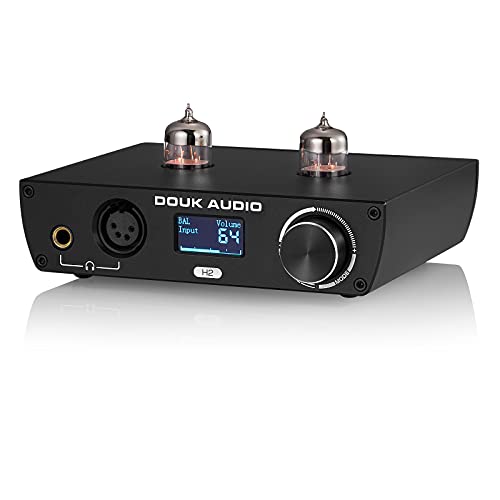
H2 offers a true balanced input with flexible jack options (XLR, 4.4mm, 6.35mm) and a strong dual-TIA6120 amplifier. Best for: studios or desk setups requiring robust compatibility across headphones from 16 to 600 ohms. Why selected: the triple-jack approach provides easy routing from multiple sources, and its German Valvo-style tube warmth adds a musical, engaging character. Caution: tube-based warmth can introduce subtle microphonics if environments are unusually loud or unstable.
Fosi GR70 Tube Headphone Amp

The GR70 blends vintage tube sensitivity with modern drive. Best for: headphone enthusiasts who want an authentic tube voice in a compact desk setup. Why selected: its two-stage tube amplification (5654W and 6AC7) provides a textured, balanced sound with a clear sense of air around instruments. Limitation: the compact form factor may limit the largest headphones’ comfort or thermal headroom in long sessions.
XDUOO TA-32 DAC & Tube Balance

TA-32 combines a DAC with tube-balanced output, delivering up to 3000 mW of power across 4-pin XLR and 4.4 mm connections. Best for: users seeking a compact, all-in-one desktop solution with strong drive and DAC decoding. Why selected: high output power and versatile digital inputs suit detail-oriented listening across genres. Caution: some users may prefer a purer analog path for critical mastering applications.
XDUOO TA-22 DAC & Tube Balance
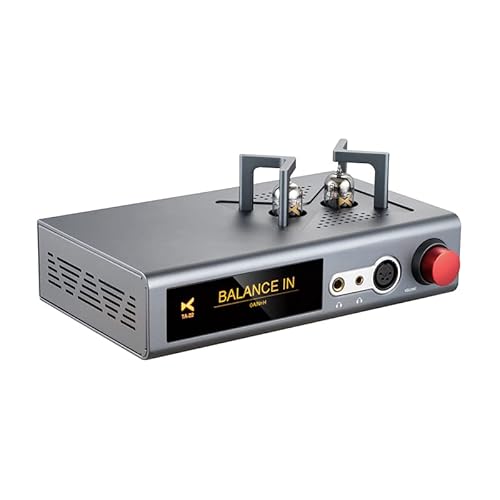
TA-22 provides a balanced output path and a high-quality DAC in a compact case. Best for: desktop users who want a mixed DAC/amp with tube flavor. Why selected: a compact, balanced design that can drive a wide range of headphones while offering clear, textured sound. Caution: feature set favors balanced paths; users seeking purely solid-state sound may not prefer the tube character.
Buying Guide
What to consider when choosing a balanced tube headphone amp
- Output power and headphone compatibility: Look for models with balanced XLR and 4.4mm outputs to ensure compatibility with your headphones and to minimize noise.
- Tube type and design: Vacuum tubes add warmth and harmonic richness, but can introduce microphonics. Hybrid designs try to balance warmth with low distortion.
- Source and DAC integration: If you want fewer boxes, consider DAC/amp combos that support your input sources (USB, coaxial, optical) and resolutions like PCM/DSD.
- Size and ventilation: Desktop amps vary in size. Ensure adequate airflow to prevent thermal issues during long listening sessions.
- Impedance handling: Ensure the amp can drive your typical headphones (some handle 16–600 ohms or more).
- Flexibility: If you use multiple sources or monitoring setups, a preamp mode or additional inputs can be valuable.
Frequently Asked Questions
- What is a balanced headphone amp and why use one?
A balanced headphone amp uses symmetrical signal paths to reduce noise and crosstalk, delivering cleaner sound with improved channel separation, especially with high-impedance or sensitive headphones.
- Do all tube amps sound the same?
No. Tube types, circuit design, and tube placement influence warmth, detail, and damping. Some hybrids emphasize precision, others prioritize lush mids.
- Is a DAC and amp combo better than separate units?
Not necessarily. A combined unit saves space and can reduce interconnect clutter, but separate components can offer upgrading flexibility and isolation.
- What headphones pair best with balanced tube amps?
High-sensitivity and high-impedance models (e.g., 32–600 ohms) typically benefit from the extra drive and smoother top end that balanced tube paths provide.
- Should I worry about tube microphonics?
Yes in sensitive environments. Some designs include noise-reduction measures, but placement away from movement and vibrations helps minimize the effect.
- How important is output power?
For demanding headphones, higher output power supports clean dynamics at higher listening levels without distortion.