
Best Baritone Acoustic Guitar Strings for Rich Low-End Tone
When shopping for baritone acoustic guitar strings, aim for sets that balance stability, tension, and clear, deep resonance. This guide highlights five options that suit different players—from studio subtleties to on-stage performances. Best for players who want long-lasting tone, strong tuning stability, and comfortable playability across baritone range.
Summary of selected products:
| Product | Gauges / Type | Best For | Notes |
|---|---|---|---|
| Elixir Acoustic 80/20 NANOWEB 6-String | 80/20 Bronze | Live performers; studio players | Long-lasting tone; sweat and rust resistant |
| D’Addario XT Phosphor Bronze Baritone 16-70 | Phosphor Bronze | All-around baritone players | Extended life; excellent tuning stability |
| Stringjoy Naturals 15-70 Baritone | Phosphor Bronze | Players seeking natural feel | Exceptional tuning stability; balanced tone |
| Stringjoy Naturals 15-70 Baritone 2-Pack | Phosphor Bronze | Budget-conscious bulk buyers | 2-pack for longer sessions |
| Elixir Acoustic 80/20 NANOWEB 8-String | 80/20 Bronze | Baritone or extended-range players | Same NANOWEB protection; bright focus |
Elixir Acoustic 80/20 NANOWEB 6-String Baritone Set

Brand: Elixir. Type: 6-string acoustic, 80/20 bronze with NANOWEB coating. Features long-lasting tone, bright focus, and comfortable feel. Best for performers who need consistent tone across sessions and resistance to sweat and humidity.
Best for: Stage musicians and studio players seeking longevity and reliability. Why selected: The NANOWEB coating protects the entire string, preserving tone while extending life. Caution: Coated strings can feel slightly slick for players who prefer bare metal under finger contact.
D’Addario XT Phosphor Bronze Baritone 16-70

Brand: D’Addario. Type: Phosphor Bronze, baritone range 16-70. Features extended life with corrosion-resistant coating, warm balanced tone, and strong tuning stability due to NY Steel core and Fusion Twist.
Best for: Players who value longevity without sacrificing warmth and balance. Why selected: XT coatings resist corrosion while maintaining natural tone, helping keep intonation stable across gigs. Caution: Some players report a slight initial slickness until the coating settles.
Stringjoy Naturals 15-70 Baritone

Brand: Stringjoy. Type: Phosphor Bronze, baritone set 15-70. Features exceptional tuning stability, lush sound, and natural feel with balanced tension for precise control.
Best for: Players seeking organic feel and reliable intonation on baritone acoustics. Why selected: The Naturals line emphasizes traditional feel with modern tuning stability. Caution: May require careful winding to prevent slippage in winding near tuner posts.
Stringjoy Naturals Baritone 15-70 2-Pack

Brand: Stringjoy. Type: Phosphor Bronze, 15-70 baritone in a 2-pack. Features exceptional tuning stability and superior sound quality with natural feel and balanced tension.
Best for: Players who want extra value for extended practice or sessions. Why selected: The 2-pack provides consistent tone for longer practice runs. Caution: Always check string wound direction before installation to maintain even tension.
Elixir 80/20 NANOWEB 8-String Baritone
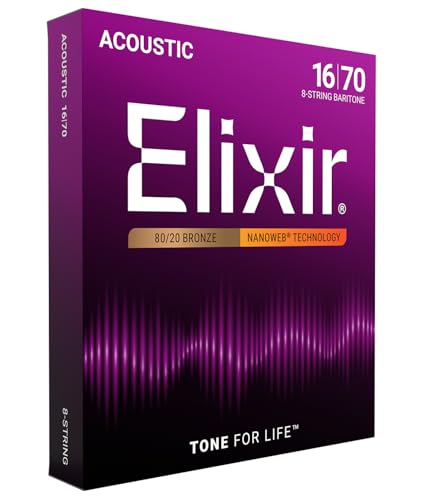
Brand: Elixir. Type: 8-string acoustic, 80/20 bronze with NANOWEB coating. Features long-lasting tone and protection from sweat, humidity, and rust.
Best for: Players who tune lower or include extended-range baritone setups. Why selected: Keeps bright, focused tone across the extended range with durable protection. Caution: Not all standard baritone sets fit an 8-string guitar; verify string gauges for your instrument.
Buying Guide: Baritone Acoustic String Essentials
What makes a string set suitable for baritone guitars?
Baritone guitars require slightly higher tension to maintain proper intonation and string stability across extended scales. Look for sets labeled for baritone or with gauges around 15-70 to support the lower B or A strings without flabbiness.
Coated vs. uncoated: which is right for you?
Coated strings last longer and resist corrosion, ideal for players who sweat heavily or play frequently. Uncoated sets deliver a brighter tone and a traditional feel. Consider your playing style and maintenance routine when choosing.
Bronze vs. phosphor bronze for acoustics
Bronze (80/20) offers bright, articulate tone with strong projection, while phosphor bronze tends to yield warmer, balanced warmth with robust low-end. For baritone tuning, phosphor bronze often provides more even warmth across the range, though both work well.
Tension, feel, and playability considerations
Higher tension improves stability and sustain on longer-scale guitars, but can feel stiffer. If you value comfort, look for sets marketed as baritone-friendly with balanced tension. Strings with a smooth coating may feel slick to fretboard contact until broken in.
Maintenance and longevity tips
Wipe strings after playing to remove oils and sweat. Regularly check intonation after replacing strings, especially on baritone setups with longer scale lengths. If you notice dulling or uneven brightness, consider a coating or changing brands to refresh tone.
FAQs
- What gauge should I start with on a baritone acoustic? – Start with mid-to-light baritone gauges (around 15-70) to balance tension and playability; adjust based on tension and feel.
- Are coated strings better for baritone guitars? – Coated strings last longer and resist corrosion, which can be beneficial for frequent players, but may alter feel slightly.
- Do baritone sets require a longer scale guitar? – Yes, baritone guitars use longer scales to accommodate lower tunings with adequate tension.
- Can I use regular acoustic strings on a baritone guitar? – It’s possible but may result in reduced tension and poor intonation; use sets designed for baritone range.
- Is phosphor bronze better than bronze for baritone acoustics? – Phosphor bronze tends to provide warmer, more balanced tone across the neck; bronze is brighter but might be less balanced on the low strings.
- How often should I change baritone strings? – Replace when tone dulls, tension seems uneven, or after extended playing sessions; coated strings last longer but may feel different.