
Best Bass Guitar Distortion Pedals for Rich, Defined Tones
If you want bold, punchy bass distortion without losing low-end clarity, these pedals are ideal. This guide targets players seeking versatile overdrive and fuzz tones tailored for bass. Top picks include one dedicated bass overdrive, a classic bass fuzz, a compact bass distortion, a multi-effects option with bass-appropriate amps, and a heavy-metal style distortion for aggressive styles. Each product is selected for clear low-end retention, practical controls, and tonal flexibility suited to bassists across genres. The quick comparison below helps you choose the right match for your rig.
| Product | |||
|---|---|---|---|
| JOYO Bass Overdrive (DOUBLE THRUSTER R-28) | Bass overdrive | Players seeking blend-preserved grit | Blend control keeps low end while adding edge |
| Electro-Harmonix Bass Big Muff Pi | Bass fuzz/distortion | Rich, sustaining fuzz textures | Dry blend and bass boost options for depth |
| MXR Bass Distortion | Bass distortion | Classic, aggressive bass drive | Distinct, gnarly bass tones with reliability |
| Zoom B1X Four Bass Multi-Effects | Bass multi-effects | Versatile tones and built-in looping | 70+ effects and nine amp models for variety |
| IOppWin HOLY WAR Heavy Metal Distortion | Guitar-style distortion | Heavy, high-gain metal tones | Three modes for dynamic metal tones |
JOYO Bass Overdrive with Blend and Boosts

The JOYO DOUBLE THRUSTER R-28 combines a dedicated Blend control with mid and gain boost switches, offering four distinct voicings. The Blend knob preserves low-end punch while introducing harmonic grit, making it ideal for players who want edge without sacrificing foundation. Mid Boost adds presence for dense mixes, while Gain Boost thickens the tone at lower gain settings. The four-knob layout—Tone, Blend, Volume, and Gain—provides straightforward sculpting from warm overdrive to saturated distortion. Best for players who value bass clarity with controlled grit.
Best for: Bassists who need flexible mixed signals and clear lows. Consider this if you frequently blend clean and dirty signals and want multiple tonal options from a single pedal. Caution: the independent switches can require careful setup to avoid excessive gain at lower volumes.
BOSS DS-1 Distortion Compact Pedal

The BOSS DS-1 is a compact distortion with a long history in guitar rigs. It remains a staple for hard-edged attack and smooth sustain. While originally guitar-oriented, its tight, aggressive tone can translate to bass contexts when paired with appropriate EQ adjustments. Best for players seeking a classic hard distortion voice and reliable performance. Limitation: not designed specifically for bass, so low-end response may require tone shaping to avoid perceived loss in fullness.
AFOT Heavy Metal Distortion Pedal

The AFOT Heavy Metal Distortion uses independent tone-shaping controls and a multi-band approach to metal tones. It claims to deliver clear articulation at high gain and a flexible 6-rotary knob layout for Treble, Mid, Bass, Boost, Volume, and Distortion. Best for: players seeking a wide high-gain range with defined mids and clarity. Limitation: marketed primarily for guitar, so bass compatibility and performance can vary with specific rigs.
IOppWin HOLY WAR Heavy Metal Distortion Pedal
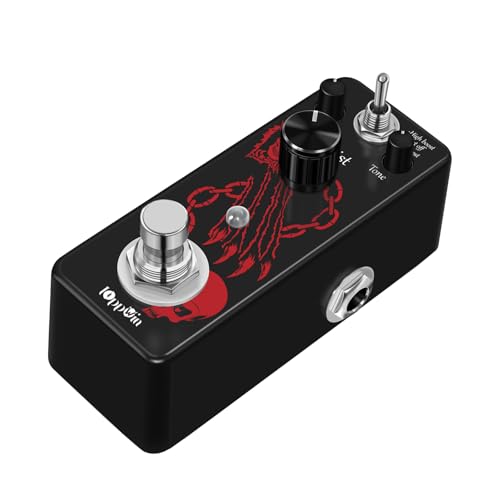
The HOLY WAR pedal offers a three-mode setup (Lo/Hi Boost or bypass) in a compact metal chassis. True bypass helps preserve the guitar’s natural tone when disengaged. Best for: bass players who want a compact, easy-to-use high-gain option with switchable boost modes. Caution: intended for guitar use, so low-end balance should be tested in your rig to ensure adequate bass response.
JOYO High Gain Distortion Pedal

The JOYO JF-04 provides a wide gain range from subtle crunch to full-on metal. It features a dedicated Treble and Mid control for tonal shaping and an analog-style response that reacts to picking dynamics. Best for: players wanting classic rock to metal tones in one box. Limitation: primarily targeted at guitarist tones, so bass may require careful EQing to preserve low-end fullness.
MXR Bass Distortion

MXR Bass Distortion is built around a classic distortion circuit but tailored for bass with separate dry and wet signals. This design helps retain some clean tone even under heavy drive, giving a gnarly yet intelligible bass texture. Best for: players who want a proven, compact bass distortion with clear blend control. Caution: may require careful level matching to avoid clipping at higher volumes.
Buying Guide
What should I look for in a bass distortion pedal?
Key considerations include low-end preservation, input/output level compatibility with your bass and amp, and whether you need a dedicated blend or dry/wet control. A bass-specific pedal often delivers better low-end retention than guitar-only units.
How important is tone shaping for bass?
Controls like Bass, Mid, Treble, and Gain help sculpt definition and attack. Pedals with independent EQ sections or dedicated bass-friendly voicing tend to produce clearer, more usable tones in a live mix.
Should I choose a single-pedal distortion or a multi-effects unit?
Single-pedal distortions are typically more focused and cheaper. Multi-effects units offer variety and on-the-fly tone changes, which can be advantageous for players exploring many genres or performing live with rapid tone shifts.
What about portability and build quality?
Durable metal housings and compact footprints suit gigging players. True bypass is valuable for preserving your bass signal when the pedal is off, especially in pedalboard setups.
How do I avoid losing low end?
Prefer pedals with blend or dry-wet controls, or ensure your rig includes a bass-optimized EQ stage after distortion to restore low frequencies if needed.
How should I test pedals before buying?
If possible, try pedals with your specific bass and amp setup, listening for low-end retention, note articulation, and how the pedal reacts to your playing dynamics.
Choosing a recommended order
Common practice: place dynamic effects (compressors, envelope filters) before overdrive, then place modulation and time-based effects after distortion if used. This arrangement helps maintain clarity in your bass tone while preserving dynamics and punch.
FAQ
- Do bass-specific pedals always sound better than guitar pedals for bass?
- Can distortion pedals damage my bass or amp?
- Is a blend control essential for bass distortion?
- What is the difference between overdrive and distortion for bass?
- Should I use a DI box when using distortion live?
- Can I use a bass amp as a guitar amp with distortion pedals?
Direct answers will depend on your gear and musical goals. In general, bass-specific pedals tend to preserve low end better, blend helps maintain clarity, and trying several options is advisable to find the best match for your rig.