Best Bass Guitar Octave Pedals for Rich, Flexible Tones
Answering the question, which bass octave pedal fits your needs best depends on your playing style, live rig, and how you want to blend octaves with your dry signal. This guide highlights five top options that suit different players—from clean sub-octave tones for bassists to synth-like octave textures for guitarists who double on bass. Each pick includes why it’s best for you, plus practical considerations to help you decide.
Summary table of chosen products
| Product | Best For | Key Benefit |
|---|---|---|
| BOSS Octave Pedal OC-5 | Versatile players needing polyphony | Dry direct output and lowest-note isolation in poly mode |
| MXR Bass Octave Deluxe | High headroom and clean tracking | Constant headroom technology for reliable tracking |
| SONICAKE Octave Pedal | Analog, compact, budget-friendly | Pure analog, two-octave blend with dry signal |
| Rowin Polyphonic Octave Pedal | Budget-conscious players needing many octaves | 11 octave modes, true bypass, compact |
| JOYO Bass Sub Octave & Fuzz | Layered bass textures with fuzz | Dual channels with independent footswitches |
BOSS Octave Pedal OC-5

The BOSS OC-5 is a polyphonic octave pedal with Mono and Poly modes and a Dry Direct Output. Best for players who perform chords or arpeggios and want clean sub-octaves without sacrificing dry tone. The lowest-range setting in Poly mode isolates the octave effect to the lowest note in a chord, which helps bass lines stay defined when stacking octaves alongside higher notes.
Who this is best for: bassists or guitarists who frequently play chords or complex lines and need reliable, articulate tracking with flexible routing. Why selected: it combines broader octave ranges with precise control, making it versatile for stage and studio use. Caution: poly tracking can feel less immediate in extremely fast passages if your attack is very aggressive.
MXR Bass Octave Deluxe
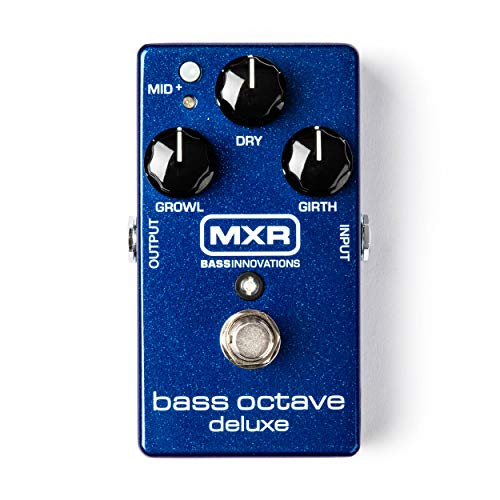
MXR’s Bass Octave Deluxe emphasizes headroom and organic analog tone. It’s suited for players who want a clean, robust octave signal with minimal tracking anomalies, preserving the natural feel of the bass while adding lower octave content. True bypass helps keep your core signal intact when the octave circuit is disengaged.
Who this is best for: players who require dependable tracking and a straightforward, musical octave without extra fuss. Why selected: it offers reliable performance and a warm, natural octave response that sits well in a mix. Caution: some players may want more tonal sculpting options beyond the included controls.
SONICAKE Octave Pedal

SONICAKE delivers a compact, analog octave pedal with two-voice blending. It blends octave tones (one and two octaves down) with the dry signal, offering a compact solution for players who want a simple, pedalboard-friendly option with minimal latency. The true bypass design helps preserve your original tone when the effect is off.
Who this is best for: players seeking a budget-friendly, analog octave with a classic feel and straightforward controls. Why selected: its analog path and small footprint make it a practical choice for gigging musicians on a tight layout. Caution: lower price pedals may have less nuanced tracking in very fast passages compared to premium models.
Rowin Polyphonic Octave Pedal

Rowin’s Polyphonic Octave Pedal offers 11 octave modes with true bypass and a compact form factor. It’s designed for players who want a broad palette of octave tones on a budget, from subtle octave walks to heavy synth-like textures. The pedal’s range and poly tracking make it a versatile stage companion.
Who this is best for: beginners and budget-conscious players who still want a wide octave range. Why selected: value-friendly with a broad mode set. Caution: some users report that tracking can vary with aggressive pick attack or very fast notes, depending on signal level.
JOYO Bass Sub Octave & Fuzz

JOYO’s Bass Sub Octave & Fuzz combines a sub-octave generator with a fuzz channel and independent footswitches. This setup is ideal for players who want a heavy, textured low end with a separate fuzz voice that can be mixed via the dry/wet control and tone shaping. It’s especially suitable for live performances needing aggressive bass textures.
Who this is best for: players seeking a radical, stacked octave and fuzz setup in one pedal. Why selected: the dual-channel design provides distinct octave and fuzz paths, offering flexible tonal opportunities. Caution: the fuzz portion can overpower the octave if not dialed carefully; use the dry/wet and tone controls to balance.
Buying Guide
Key considerations when choosing a bass octave pedal include tracking accuracy, polyphony, dry signal options, and how you route the effect in your signal chain. For live use, consider a pedal with a dry direct output to preserve your core tone. If you play chords or complex riffs, polyphonic models help keep each voice intelligible. Tuning stability and latency are also important; analog pedals generally offer musical, immediate feel, while digital models can provide more octave options and presets.
Recommended questions to guide your decision:
- Do I need polyphonic octave tracking for chords, or is a singe-note octave enough?
- Is a dry/wet blend important for preserving bass tone in the mix?
- How many octave voices do I require (1, 2, or more) and do I need lower isolation for chords?
- Will I perform with multiple effects on one pedal, or prefer a simple, dedicated octave?
- What is my budget, and do I prioritize analog tone over a broader feature set?
FAQ
- What is a polyphonic octave pedal? It can apply octave effects to multiple notes played simultaneously, not just single notes.
- Should I choose analog or digital octave pedals? Analog often offers warmer, more musical tracking; digital can provide more octaves and presets.
- Do octave pedals affect latency? Some pedal designs introduce minor latency; many players don’t notice it in real-time playing.
- Can octave pedals be used with bass and guitar? Yes; most octave pedals support both, but tracking and tone can vary between instrument types.
- What is a dry signal output for an octave pedal? It sends your clean signal alongside the octave effect, preserving clarity in the mix.
- Is setup important for octave pedals on stage? Yes—proper cable management, proper gain staging, and routing help ensure stable tracking and minimal noise.