
Best Battery Chargers for ECU Programming and Vehicle Diagnostics
Find the right battery charger that keeps ECU programming stable and prevents data loss during updates. This guide targets buyers needing reliable, high-current power supplies for automotive programming, diagnostics, and calibrations. Each top pick is explained for the type of user it suits best, from shop-savvy technicians to DIY enthusiasts performing frequent ECU updates.
| Product | Best For | Key Benefit |
|---|---|---|
| AUTOOL Flash Reprogramming Power Supply 120A | Professional shops, ECU programming | High current with stable 10.8–16.0V output |
| Clore Automotive PL2320 | Versatile 6V/12V maintenance | Fully automatic, multiple charge rates |
| Schumacher INC100 | High-reliability shop use | Stable voltage with dedicated reprogramming modes |
| PowerMax PMBC-100-SE | ADAS calibration and diagnostics | Up to 100A for demanding loads |
| AUTOOL EM355 | ECU programming, battery repair | Stable 12V output with pulse repair |
AUTOOL Flash Reprogramming Power Supply 120A

Best for high-demand ECU programming. This unit provides a stable 10.8V–16.0V output with a maximum 120A current sustained for up to three minutes. It is designed for module coding, ADAS calibrations, and reprogramming tasks where voltage stability matters most. The device also supports battery repair functions for deeply discharged or sulfated batteries and is compatible with standard lead-acid, AGM, EFB, and gel types. Use this when maintaining data integrity during ECU operations is critical.
- Best for: professional ECU programming and vehicle diagnostics.
- Why selected: robust high-current operation minimizes voltage drops during reflashing.
- Caution: heavy usage may require adequate cooling and power source management.
Clore Automotive PL2320 20-Amp Fully-Automatic Smart Charger

Best for flexible shop use with 6V and 12V batteries. The PL2320 offers 2/10/20 amp settings and fully automatic operation. It maintains voltage while performing programming tasks, which helps protect memory and settings during reflash sessions. Suitable for garages that require a dependable maintainer alongside regular charging tasks. A limitation is that higher current modes are not present for very large loads, so plan for mid-range charging needs when performing frequent ECU updates.
- Best for: routine maintenance plus programming sessions.
- Why selected: automatic operation reduces supervision during long sessions.
- Caution: not ideal for extreme high-current ECU reprogramming beyond 20A.
Schumacher Electric INC100 Car Battery Charger & Power Supply
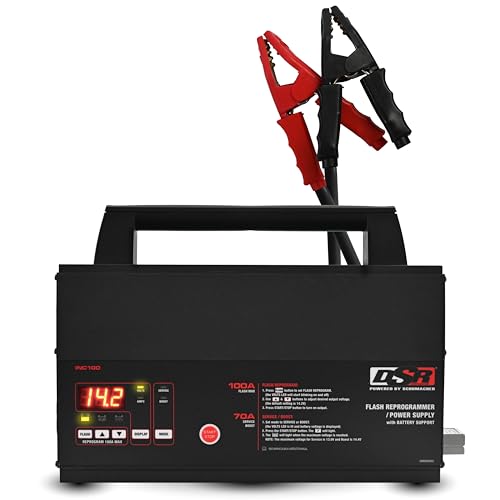
Best for shops needing uninterrupted programming power. The INC100 maintains stable voltage for memory retention and vehicle programming across multiple jobs. It features three modes: Service Mode, Flash Reprogram Mode, and Boost Mode. The unit uses Anderson Plug connections for secure, high-current reliability and offers selectable output within a tight range to minimize voltage drift during ECU updates. A potential limitation is the bulk and weight typical of shop-grade power supplies.
- Best for: high-volume programming in a shop environment.
- Why selected: dedicated reprogramming mode supports ECU updates without data loss.
- Caution: larger footprint may require secure mounting space.
PowerMax PMBC-100-SE 100A ECU Programming Power Supply
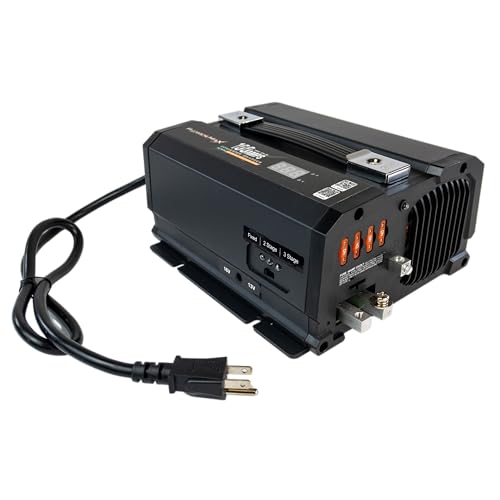
Best for demanding calibration and ECU tasks. The PMBC-100-SE provides up to 100A of current, ensuring stable power during ECU flashing and module programming. It is positioned as a reliable backbone for ADAS calibrations and diagnostic work. The data indicates strong current delivery to prevent voltage dips, though as with any high-current device, proper cooling and ventilation are recommended during long sessions.
- Best for: ECU flashing and persistent diagnostic work.
- Why selected: high-current capability reduces risk of voltage drop during programming.
- Caution: ensure adequate airflow during extended operation.
AUTOOL EM355 Programming Power Supply 12V

Best for ECU programming with pulse repair capability. The EM355 delivers a stable 12V output with features aimed at automotive programming, including a three-stage pulse charging system to activate, charge, and trickle-charge safely. It also includes pulse repair to revive weak batteries, extending service life and supporting long programming sessions. A minor limitation is that the pulse repair feature may be less effective on severely damaged batteries.
- Best for: ECU programming with repair capabilities.
- Why selected: pulse charging enhances programming stability and battery health.
- Caution: effectiveness may vary on heavily sulfated cells.
TOPDON T90A 12/24V Car Battery Charger

Best for versatile 12/24V applications with broad battery compatibility. The T90A covers a wide range of lead-acid chemistries and supports a 5–90A charging spectrum with six Smart Modes, including a SUPPLY mode for voltage stabilization during programming. It is well-suited for mobile technicians or mixed fleets that require a flexible charger for programming, diagnostics, and calibration tasks. A potential drawback is that it may require more user familiarity to dial in exact settings for precise ECU work.
- Best for: versatile programming and diagnostic work across 12V and 24V systems.
- Why selected: adjustable current/voltage and SUPPLY mode support stable ECU operations.
- Caution: advanced setup may be needed for optimal programming stability.
Buying Guide: Key Considerations For Battery Chargers Used In ECU Programming
- Voltage stability during reprogramming: Look for models offering a tight DC output range with minimal ripple to protect memory and data during ECU flashing.
- Current capacity vs. application: High-current units (50–120A) reduce voltage drop on demanding loads; lower-current options are fine for maintenance and light programming.
- Smart charging and pulse repair: Pulse charging helps activate and recover marginal batteries, improving reliability during long sessions.
- Modes and versatility: Generous mode options (service/flash/boost) and 12V/24V compatibility increase flexibility for various vehicles and calibration tasks.
- Cooling and duty cycle: High-current devices require adequate cooling; check the duty cycle specifications to avoid overheating during extended programming.
- Safety features: Automatic shutoff, temperature compensation, and overcharge protection help prevent damage to batteries and ECUs.
Frequently Asked Questions
- What makes a charger suitable for ECU programming?
A charger that maintains stable voltage under load, supports high-current modes when needed, and offers programming-specific modes to minimize data loss during reflashing. - Is higher current always better for ECU programming?
Higher current helps prevent voltage drops on demanding tasks, but ensure the unit matches the vehicle’s battery type and the programming session length. - Do I need a dedicated reprogramming power supply?
For frequent ECU updates and ADAS calibrations, a dedicated power supply with stable voltage can reduce data corruption and improve consistency. - Can these chargers repair weak batteries?
Several models include pulse repair features that help revive sulfated or weak batteries, extending life and reliability for programming sessions. - How important is voltage ripple?
Lower ripple reduces the risk of ECU memory loss or erroneous updates during reflashing; aim for units with minimal ripple. - Are these chargers compatible with all vehicle types?
Most are designed for common 12V and some 24V systems; verify battery chemistry compatibility (lead-acid, AGM, EFB, gel) for your fleet.