
Best Bluetooth in-Ear Monitors for Singers and Live Performances
The term “Bluetooth” is often used loosely for wireless in-ear monitoring, but for singers the key is reliable, low-latency wireless or wired IEMs that deliver clear, detailed sound on stage. This guide highlights five top picks for singers, bands, and performers who need dependable monitoring with minimal latency, stable connections, and comfortable fit. Each option targets a different performance scenario—from small gigs to studio-ready rehearsals—so you can choose the best match for your voice and venue.
| Product | Best For | Connection | Notes |
|---|---|---|---|
| LEKATO MS-02 | Small/Medium stages, multi-performer practice | 2.4G Transmitter/Receivers | Up to 4 receivers, ultra-low latency |
| MIZISNR IME-4000 | Professional mono IEM setup, band usage | UHF | Wide range, stable, low distortion |
| YINYOO Storm (wired) | Studio and stage monitoring with custom fit | Wired | High-resolution driver, detachable cable |
| CCA C12 | Detail-rich sound and easy upgrade path | Wired | 5BA + 1DD hybrid drivers |
| BASN Pro Clear Brown | Comfortable all-day wear for performers | Wired MMCX | Custom-fit with detachable cable |
Note: The five selections below cover a mix of wireless and wired IEMs suitable for singers. Each product section explains who it’s best for, why it was chosen, and a practical limitation to consider during your decision.
LEKATO MS-02 Wireless In-Ear Monitor System

Best for small to mid-sized stages with multiple performers. The MS-02 supports up to four receivers from a single transmitter, enabling easy setup for bands, choirs, or church worship teams. It features ultra-low latency (<4.5 ms) and a 24-bit/48 kHz sampling rate for clear, natural sound. A long-lasting battery (6–8 hours) and a five-level volume control help performers stay comfortable and in control on stage.
Why selected: Low latency, multi-receiver capability, and detailed sound make it a strong choice for singers who need reliable, clean monitoring with minimal delay. Cautions: Pairing requires following the two-button sequence; ensure all receivers are synchronized before performances.
MIZISNR IME-4000 UHF IEM System

Best for professional mono monitoring with strong signal stability. Operating in the UHF band with PLL technology, it minimizes interference and distortion. The system supports quick IR sync for rapid setup across multiple receivers (up to 2×40 frequencies within 520–580 MHz). Ideal for bands, studios, and stage performances where a single vocalist or a small ensemble needs reliable, clear audio with minimal latency.
Why selected: The UHF design and limiter circuitry help preserve sound quality and reduce drops during dynamic performances. Caution: Avoid thick walls and dense materials that could reduce range in crowded rooms.
YINYOO KBEAR Storm In-Ear Monitor Earphones

Best for performers who prefer a wired, high-resolution in-ear experience with long-term comfort. The Storm uses a 10 mm dynamic driver with a PEEK+PU diaphragm for extended frequency response and detailed timbre. Ergonomic design reduces fatigue during long sets, and the detachable cable enables easy upgrades or replacements. Suitable for singers who value a balanced, enhanced on-stage sound.
Why selected: Excellent detail, comfortable fit, and a reliable wired connection. Caution: As a wired option, mobility is limited compared to wireless systems on large stages.
CCA C12 In-Ear Monitor Headphones
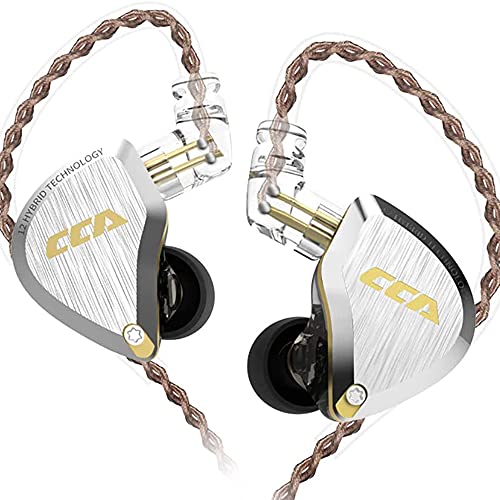
Best for singers seeking a hi-fi wired IEM with a rich, wide soundstage. The C12 features a 5-BA plus 1-DD hybrid driver configuration for strong bass, clear mids, and detailed highs. Detachable cables support easy upgrades and repairs, and the low-impedance design facilitates stable performance with multiple devices. Great for studio monitoring or live performance where sound layering matters.
Why selected: Advanced driver mix provides a spacious, detailed sound. Caution: Premium sound comes with a premium price; ensure fit and seal are comfortable for long sets.
BASN Pro In-Ear Monitor Headphones

Best for musicians who value all-day wearability and a secure over-the-ear fit. The BASN Pro uses MMCX detachable cables with flexible memory wire and a lightweight design. Its engineered fit aims to reduce fatigue during long sessions, making it suitable for singers who perform extended sets or rehearsals. A caution is to confirm compatibility with your preferred cables and ear tips for the best seal.
Why selected: Comfort and reliability for extended performances; detachable MMCX cable simplifies upgrades. Caution: Durability depends on cable quality and insertion technique.
Buying Guide: Key Considerations For Singers
- Connection Type: Wireless IEMs minimize stage clutter but require stable radio performance. Wired IEMs offer ultra-low latency and simplicity. Choose based on stage size and interference risk.
- Latency And Sound Quality: Low latency preserves singer timing with backing tracks and live cueing. Look for 4 ms or lower for wireless models and high-resolution DAC specs for wired models.
- Channel Count And Family Use: A single transmitter feeding multiple receivers helps with small ensembles. If you regularly perform solo, a two-channel or mono setup may suffice.
- Battery Life And Power: For wireless systems, ensure battery life covers your longest set with a margin. Consider hot-swappable options or spare batteries.
- Comfort And Fit: Ear tips, ear hooks, and weight impact stage comfort. For long sets, prioritize secure fit with low fatigue.
- Durability And Cables: Detachable cables offer easy upgrades. MMCX connectors are common, but ensure compatibility with your preferred accessories.
- Environment And Range: UHF systems reduce interference in crowded venues, while 2.4G can be susceptible to Wi‑Fi traffic. Assess venue size and potential obstructions.
- Maintenance And Upgrades: Consider ease of cleaning, tip compatibility, and future cable upgrades to extend the life of your IEMs.
Frequently Asked Questions
- What is the main difference between wireless and wired IEMs for singers?
– Wireless IEMs reduce stage clutter and allow mobility but require reliable wireless performance. Wired IEMs offer ultra-low latency and consistent sound with fewer interference concerns. - How important is latency for live vocal monitoring?
– Very important. Lower latency prevents timing mismatch with effects, backing tracks, and other musicians, ensuring natural vocal delivery. - Can I use consumer Bluetooth headphones as IEMs for singing?
– Not recommended. Most consumer Bluetooth headphones have higher latency and limited channel management, which can cause delay and feedback during performances. - Which IEM type is best for a small church band?
– A 2.4G wireless IEM with multi-receiver support or a compact UHF system can provide reliable coverage for a few performers without excessive interference. - What should I look for in a singer-specific IEM?
– Focus on sound clarity, stage isolation, comfort, and easy pairing or quick setup, plus long battery life if wireless. - Are detachable cables worth it for IEMs?
– Yes. Detachable cables allow upgrades and easy replacement, increasing lifespan and versatility.