Best Bluetooth Receiver With XLR Output for Live Sound and Studio
The best Bluetooth receiver with XLR output is a dedicated wireless link between your Bluetooth source and a high‑quality XLR input. This guide highlights five top picks suited for live sound, DJ setups, and studio monitoring. Each option supports XLR output and varies in range, codec support, and battery life. Choose this if you need to connect wireless audio directly to active speakers or mixers. Choose this if you want longer range and low latency for performances. Avoid this if you require true Bluetooth input to a preamp that lacks XLR compatibility.
| Product | Best For | Key Strength | Notes |
|---|---|---|---|
| blafili B3 Bluetooth Receiver | Pro DJs and live sound setups needing versatile outputs | Active XLR, RCA, Coax, Optical outputs; LDAC and aptX family | Optical output is input‑only for some devices |
| Xvive P3 Bluetooth XLR Receiver | On‑the‑go wireless link to mixers and PA | Long range Bluetooth 5.0; simple cabling | Compact; may require compatible preamp input |
| Aokeo AK‑M1 (2 Pack) | Budget setups with multiple wireless senders | Mono or stereo options; universal mixer compatibility | DAC quality creamy but budget tier |
| [Upgraded] 1Mii B06Pro | Home studios and larger rooms needing long range | Bluetooth 5.3, aptX HD, long range | 3D audio feature; range varies by environment |
| FiiO BR15 | High‑fidelity home and project studios | QCC5181, LDAC, R2R DAC for warm detail | More feature‑rich; higher price point |
Below are five top picks that fit the “Bluetooth receiver with XLR output” need. Each product section explains suitability, best use case, and potential drawbacks to help you compare quickly.
blafili B3 Bluetooth Receiver For Mixers

Best For: Pro DJs and live sound engineers needing a robust multi‑output device. The B3 packs LDAC, aptX HD, aptX Low Latency, aptX, SBC, and AAC codecs for flexible wireless listening. It supports simultaneous active outputs on XLR, RCA, Optical, and Coax, allowing you to feed multiple channels from a single source. It is best when you require high‑quality wireless streaming from a phone or tablet to powered speakers or a mixer with XLR inputs.
Why Selected: The combination of high‑fidelity codecs and multiple active outputs helps ensure reliable integration with modern PA systems. The device uses a Qualcomm QCC5125 chipset and ESS DAC ES9018K2M for reduced distortion and improved dynamic range, contributing to a cleaner wireless signal in busy venues.
Limitations: Optical (Toslink) port is output‑only in this model, and it cannot drive passive speakers directly. Users should connect to powered speakers or an amplifier with its own input stage.
Xvive P3 Bluetooth XLR Receiver

Best For: Musicians and technicians who need a straightforward wireless link to a mixer or active PA system. The P3 emphasizes ease of use with Bluetooth 5.0 and a wide range, making it suitable for rehearsal spaces or small venues.
Why Selected: Its compact design and high‑quality Bluetooth performance offer a dependable, cable‑free connection with limited setup time, which helps workflows that prioritize simplicity.
Limitations: The product data describe a general Bluetooth receiver; ensure your mixer’s XLR input is compatible with the P3’s line level output to avoid mismatches in gain structure.
Aokeo AK‑M1 XLR Bluetooth Receiver
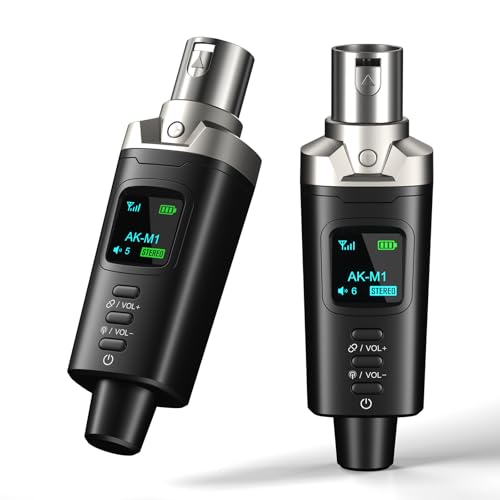
Best For: Budget‑minded live sound using single or dual units to cover mono or stereo outputs. The AK‑M1 is designed for compatibility with a wide range of mixers and DJ gear, enabling quick wireless setups for ongoing events.
Why Selected: It offers reliable 16‑bit/48kHz DAC performance, delivering clear fidelity comparable to many mid‑tier Bluetooth adapters, with a straightforward mono option and a dual‑receiver P3D option for stereo setups.
Limitations: As a budget option, fidelity and latency may not match premium models, especially in complex live sound environments where noise reduction matters.
1Mii B06Pro Long Range Bluetooth Receiver

Best For: Home studios and larger rooms where long wireless range is beneficial. Dual antennas and Bluetooth 5.3 provide extended reach and stable connections to active speakers or a mixer with XLR inputs.
Why Selected: This model emphasizes long range and low latency, supporting aptX HD and aptX Low Latency, with a 3D audio option for enhanced listening experiences in larger spaces.
Limitations: Real‑world range varies with obstacles and interference from Wi‑Fi networks or other devices; performance can dip indoors in busy RF environments.
FiiO BR15 R2R High‑Resolution Bluetooth Receiver

Best For: Audiophile‑oriented projects where high‑fidelity wireless audio is a priority. The BR15 uses a 24‑bit R2R DAC and supports LDAC with Bluetooth 6.0 for richer detail and dynamic range.
Why Selected: The BR15 pairs a premium DAC architecture with LDAC and aptX family support, offering a more analog‑like sound that benefits critical listening and mixing environments.
Limitations: Higher feature set may come with a higher price and more complex setup; ensure your system can utilize LDAC and lossless codecs for maximum benefit.
Buying Guide
What should you consider when choosing a Bluetooth receiver with XLR output?
- Output options: Ensure the unit provides XLR output and compatible line level outputs (RCA, XLR, optical) for your mixer or powered speakers.
- Codec support: Look for LDAC, aptX HD, aptX LL, and AAC/ SBC for better fidelity and lower latency depending on your needs.
- Range and environment: Longer range is beneficial for large venues, but indoor performance depends on walls and interference from Wi‑Fi networks.
- Latency: If you’re performing live, prioritize low latency (aptX LL or similar) to minimize lip‑sync issues with video or on‑stage monitors.
- DAC quality: A high‑quality DAC reduces distortion and noise, improving the perceived fidelity of wireless audio.
- Power and form factor: Battery life matters for wireless setups; consider whether you need a plug‑in or battery‑powered unit for flexibility.
How to connect a Bluetooth receiver to an XLR mixer or powered speaker?
- Power the Bluetooth receiver and switch to a pairing mode if needed.
- Choose the correct output on the receiver (XLR or other outputs) and connect to the mixer’s line input or a powered speaker’s XLR input.
- Set the mixer’s input gain to a safe level and test with a short audio signal before a performance.
What are common limitations to expect?
- Not all models support Bluetooth input to passive speakers; most require an active speaker or amplifier.
- Some optical ports may be output‑only, requiring an alternative connection path.
- Real‑world range varies by environment and device interference; plan for stage layouts accordingly.
FAQ
- What is the main advantage of a Bluetooth receiver with XLR output?
It provides a wireless link to devices with professional‑grade XLR inputs, enabling cable‑free connections to mixers and powered speakers. - Can I use any Bluetooth receiver with XLR outputs on passive speakers?
No. Passive speakers need an external amplifier or powered stage box unless the receiver directly drives a suitable powered input. - Do all receivers support LDAC or aptX HD?
No; codec support varies by model. Check codec lists to match your source device and listening needs. - Is latency a concern for live performance?
Yes. If minimizing lip‑sync issues is critical, choose a model that explicitly supports low‑latency codecs. - What setup is simplest for quick gigs?
A compact unit with a single XLR output and straightforward pairing can reduce setup time and potential signal issues. - Should I buy more than one receiver for stereo setups?
If you need true stereo wireless monitoring or multi‑channel feeds, consider a model that supports stereo output or dual units for linking.