Best Bluetooth Speakers for Hearing Impaired: Clear Dialogue and Comfort
The following selection focuses on Bluetooth and TV-friendly speakers designed to aid hearing-impaired users. Each entry highlights how voice clarity, adjustable volume, and easy connectivity can improve dialogue, reduce listener fatigue, and support shared viewing experiences. This guide covers products that bring sound closer, offer direct-to-you listening, and simplify setup for seniors and those with hearing challenges.
| Product | Brand | Key Benefit |
|---|---|---|
| SEREONIC Portable Wireless Speakers for Smart TV | SEREONIC | Close-range TV listening with 95dB output |
| SEREONIC Portable Wireless TV Speakers for Smart TV | SEREONIC | Zero-lag RF audio to TV speakers |
| SIMOLIO 621D Plus | SIMOLIO | Dialogue boost with 3 EQ modes |
| SIMOLIO Wireless Portable TV Speakers SM-621D | SIMOLIO | Voice highlighting and 2.4GHz wireless mode |
| Coby Wireless Hearing Amplifier | Coby | Personal volume and amplification for TV sound |
SEREONIC Portable Wireless Speakers for Smart TV
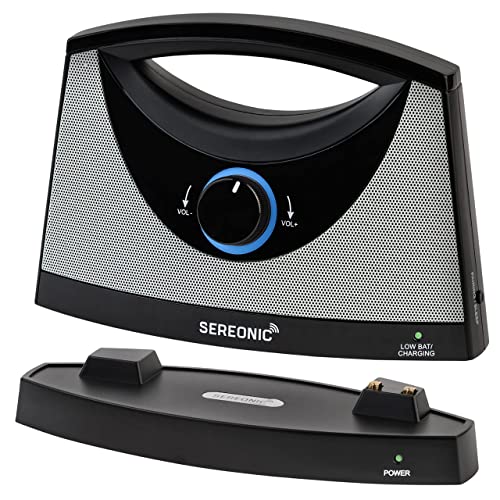
Designed for hard of hearing individuals, this SEREONIC model places a wireless base near the listener to deliver clear dialogue without blasting the TV speakers. The system supports multiple connections via RCA, 3.5 mm aux, and digital optical, allowing easy integration with most TVs and media devices. With a maximum audio output around 95dB, it offers substantial volume without overwhelming room acoustics, reducing listener fatigue during long viewing sessions. The portable design makes it suitable for use in bedrooms, living rooms, or even outdoor spaces during gatherings, enabling a more comfortable and inclusive viewing experience.
Key features include flexible placement, a zero-lag RF audio link to the base, and compatibility with standard audio jacks. Users can place the wireless speakers right beside them for enhanced voice clarity, which helps when dialogue is masked by background sounds. This model emphasizes ease of use, minimal setup complexity, and a reliable range for moving between rooms while watching TV. The device is well-suited for seniors who want to keep conversations and shows accessible without the need to increase the TV volume to uncomfortable levels.
SEREONIC Portable Wireless TV Speakers for Smart TV
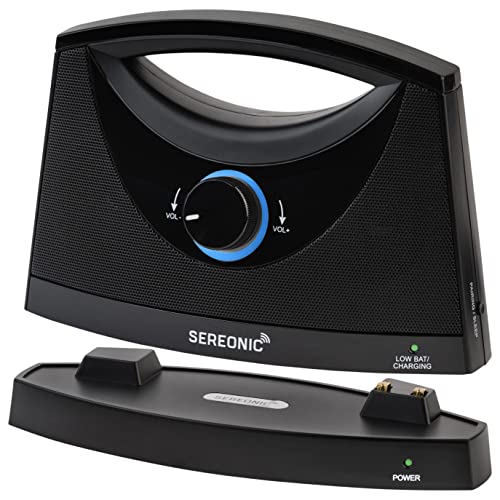
This model mirrors the brand’s emphasis on bringing sound closer to the listener for those who need targeted audio. It provides a wireless base that transmits to TV speakers with custom-tuned, zero-lag RF audio, enabling near-instant dialogue delivery and reduced echo. The portable configuration supports use in different rooms, while the 95dB output level helps maintain intelligibility at lower seating distances. The device suits viewing with family or in shared spaces where loud TV volume would disturb others.
From a connectivity standpoint, this system supports RCA, 3.5 mm, and digital optical inputs. Users can pair the wireless base with existing TV speakers or use it as a standalone listening option. The design aims to reduce the cognitive effort required to follow conversations by delivering voice at a more direct path to the ear, which is especially helpful for viewers with presbycusis or other hearing impairments. Overall, it provides a practical balance of simplicity and effectiveness for daily TV watching.
SIMOLIO 621D Plus Wireless Speakers for TV

Co-designed with audiologists, the SIMOLIO 621D Plus focuses on boosting voice clarity while minimizing background noise. It uses dual speakers and offers three preset EQ modes—Dialogue, Standard, and 7.1CH Surround—to tailor listening to individual preferences. A notable advantage is its placement strategy: the speaker is designed to sit close to the listener, turning the TV into headphones-free listening for seniors who need a more direct audio path. The 164ft range expands potential seating arrangements without sacrificing sync with the TV.
The system supports 2.4 GHz wireless TV mode for zero-lag video dialogue, with an easy switch to Bluetooth for streaming music. This dual-mode capability is useful for late-night viewing and social gatherings where different audio sources are involved. The design prioritizes dialogue enhancement, enabling clearer speech without requiring high TV volumes, and is compatible with various TVs and media players thanks to flexible input options.
SIMOLIO Wireless Portable TV Speakers SM-621D
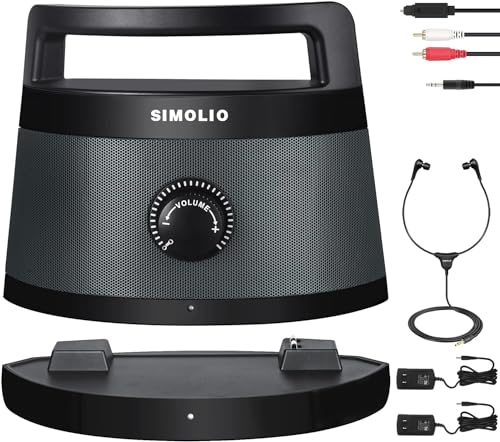
The SM-621D model emphasizes voice highlighting technology and automatic gain control to make dialogue stand out against background sound. It features tone adjustments to optimize speech intelligibility and reduce listening effort for seniors and hearing-impaired users. 2.4 GHz FHSS connectivity ensures a stable, low-latency link to the TV, while allowing Bluetooth mode for mobile devices. The device is designed as a personal, portable solution so users can bring enhanced audio to different rooms without relying on a built-in TV speaker system.
In practice, this speaker system serves as a bridge between TV-only audio and personalized listening. By delivering targeted vocal prominence, it helps viewers follow conversations more easily during sitcoms, news broadcasts, or movies. The product’s flexible connection options and Emma-friendly controls are intended to accommodate varying hearing profiles and home setups, making it a practical option for households with multiple TV viewing preferences.
Coby Wireless Hearing Amplifier And TV Audio Speaker
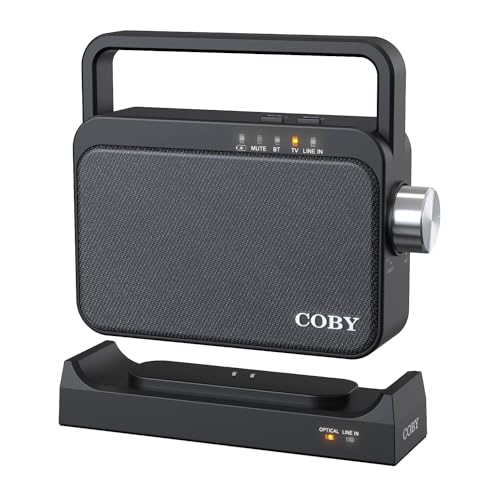
The Coby system targets seniors and hearing-impaired users seeking manageable volume control and a personal listening experience from a distance. It includes a base for TV connection and allows headphones to be plugged in for private listening. The range claims up to 100 feet, letting users move around the home without losing audio clarity. The setup is straightforward—connect the base to the TV via line-in or digital output, link to the speaker, and adjust volume to comfortable levels. This option emphasizes practical accessibility and simplicity for daily TV use.
Note that the device supports flexible use with the TV’s digital or analog outputs and offers the convenience of personal listening without bulky headphones. This makes it suitable for households where one person needs higher dialogue clarity while others maintain regular TV sound levels. The system’s emphasis on ease of use and proximity-based listening aligns with the needs of many older adults and hearing-impaired viewers seeking a straightforward solution.
Buying Guide: Key Purchase Considerations
- Voice clarity and dialogue enhancement: Look for devices with dedicated voice optimization, dialogue modes, or tone control to emphasize speech while reducing background noise.
- Proximity listening: Portable or near-field systems that sit next to the listener can dramatically improve intelligibility without raising overall TV volume.
- Connectivity and compatibility: Ensure the speaker supports common TV outputs (RCA, 3.5 mm, optical) and wireless options (Bluetooth, 2.4 GHz wireless) for seamless pairing with your TV or media devices.
- Latency and synchronization: Zero-lag or low-latency links help prevent audio delay, preserving natural dialogue timing with on-screen action.
- Power and portability: Consider whether a model will stay in one room or move between spaces. Battery life and weight influence practical use for seniors.
- Safety and ease of use: Large, clearly labeled controls and simple setup reduce caregiver assistance needs and support independent use.
- Room acoustics: In small rooms, even modest volume can be sufficient when voice is emphasized. For larger spaces, higher output and efficient drivers help maintain clarity.
- Privacy: Some models allow private listening via headphones; others are designed for shared listening. Decide which mode fits your household preferences.
Overall, choosing a Bluetooth or wireless TV speaker system for hearing impairment involves balancing voice clarity, ease of use, and compatibility with existing home electronics. The options listed above vary in setup complexity, range, and emphasis on dialogue enhancement, making it possible to match a preferred listening style with individual needs.