
Looking For A Bluetooth Stereo Speaker System? This guide reviews five compact home stereo systems with Bluetooth, CD, USB and radio functions to help you choose the best fit for living rooms, bedrooms, or small home studios. Below is a quick comparison of the selected models to help you scan features at a glance.
| Model | Key Features | Output |
|---|---|---|
| PHILIPS Micro Music Sound System | Bluetooth, CD, USB, FM, dual amp | Up To 18W |
| PHILIPS FX10 Stereo System | Bluetooth, CD, USB, MAX Sound, dual amp | 230W Peak Spec Stated |
| Panasonic SC-PM700 | Bluetooth, CD, USB, Bass/Treble Control, Remote | 80W RMS (40W+40W) |
| PHILIPS 60W Micro System | Bluetooth, CD, FM, Bass-Reflex Speakers, 10 Presets | 60W Max |
| Sharp XL-BH250 5-Disc System | 5-Disc CD Carousel, Bluetooth, USB, AM/FM, 40 Presets | Manufacturer Specified Multi-Disc Unit |
PHILIPS Bluetooth Stereo System For Home With CD Player
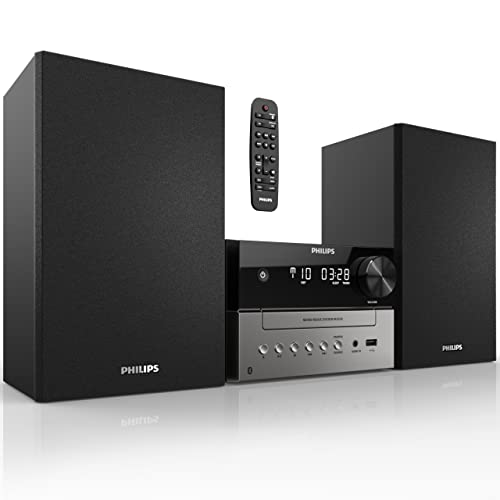
Key Features: Bluetooth wireless streaming, CD & MP3-CD playback, USB input, FM radio with 10 presets, dual amplifier for fuller output.
This compact micro hifi is designed for users who want multiple playback options in a small footprint. The system supports streaming from smartphones via Bluetooth and plays physical media such as CDs and MP3-CDs. The unit’s dual amplifier design aims to deliver clearer sound than a single-channel approach, and preset FM stations make radio listening convenient.
PHILIPS FX10 Bluetooth Stereo System With Bass Reflex
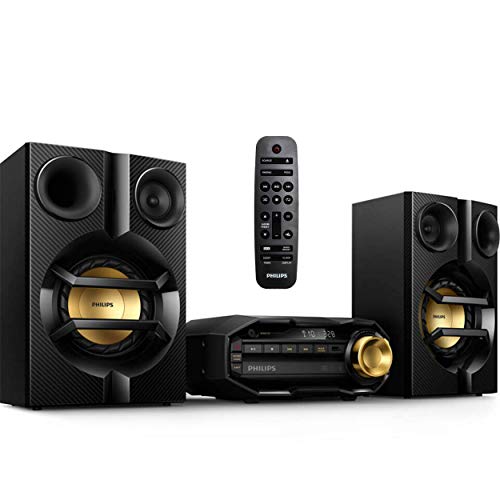
Key Features: Bluetooth streaming, dual amplifier, MAX Sound instant boost, bass-reflex speaker, remote control included.
The FX10 emphasizes impactful bass and dynamic range through a dedicated dual-amplifier design and MAX Sound boost. Bluetooth pairing covers common mobile devices, while the inclusion of USB and CD playback adds media flexibility. The remote lets users control sound and source from across the room.
Panasonic Compact Stereo System SC-PM700PP-K With 80W RMS

Key Features: 80W RMS (40W+40W), Bluetooth, CD player, USB playback, bass & treble knobs, My Sound presets, remote control.
This Panasonic model focuses on higher continuous power (RMS) and customizable sound. Physical tone controls and presets allow users to tailor playback without relying on app-based equalizers. The stereo’s speaker configuration (woofer + tweeter with bass reflex) is designed to balance low-end presence with clear highs.
PHILIPS Bluetooth Stereo System With Bass-Reflex Speakers
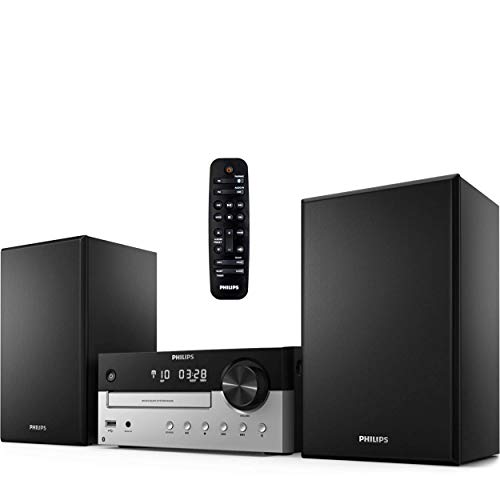
Key Features: Bluetooth streaming, CD & MP3 CD playback, FM tuner with 10 presets, bookshelf-style loudspeakers with bass-reflex ports, textured volume dial.
Offering a classic hi-fi aesthetic, this Philips micro system combines modern wireless convenience with traditional controls. The bookshelf speakers integrate woofer and tweeter drivers with bass-reflex ports to enhance low-frequency output while maintaining clarity in mid and high ranges.
Sharp XL-BH250 5-Disc Bluetooth Speaker System With USB

Key Features: 5-disc carousel, Bluetooth streaming, USB playback, AM/FM tuner with 40 presets, compatibility with CD-RW/CD-R/WMA/MP3 formats.
The Sharp unit stands out for multi-disc playback and extensive radio presets, useful for users with sizable CD collections or who prefer switching among discs without swapping media. Bluetooth and USB extend playback options for mobile devices and digital libraries.
Buying Guide: How To Choose A Bluetooth Stereo Speaker System
Choosing the right Bluetooth stereo system depends on several practical variables. Use the following considerations to compare options and identify the model that best fits your room, listening habits, and source preferences.
Sound Output And Power
- RMS vs. Peak/Max — RMS ratings better reflect continuous power and real-world loudness; peak specs can be misleading.
- Speaker Configuration — Systems with separate woofer and tweeter drivers plus bass-reflex ports usually deliver clearer lows and defined highs.
Connectivity And Media Support
- Bluetooth Version — Newer Bluetooth versions yield more stable streaming and lower latency for video or gaming.
- Physical Media — If you use CDs, look for top-loading, front-loading or multi-disc carousels; check supported formats (MP3, WMA, etc.).
- Wired Inputs — USB and aux-in increase compatibility with legacy devices and file playback from flash drives.
Controls And Usability
- Remote Control — Helpful for living-room setups; verify remote functions cover essential features.
- On-Unit Controls — Physical knobs for bass/treble or preset buttons make quick adjustments easier without apps.
Room Size And Placement
- Small Rooms — Compact micro systems with modest RMS are often sufficient and minimize clutter.
- Medium/Larger Rooms — Consider higher RMS outputs and systems with larger woofers or subwoofer support for fuller sound.
Feature Tradeoffs
- Multi-Disc Versus Simplicity — Carousel drives are convenient for large CD collections but add mechanical complexity.
- Power Versus Footprint — Higher output systems often occupy more space; match the form factor to your placement constraints.
Durability And Brand Support
- Build Quality — Look for solid cabinets and stable controls; speaker cabinet material affects resonance and tone.
- Warranty And Support — Brand service and warranty terms vary; confirm coverage if longevity is a priority.
Comparison Perspectives
- Versatility — Systems with Bluetooth, USB, and CD cover the widest variety of playback sources.
- Audio Fidelity — Consider RMS power, driver sizes, and bass-reflex designs when fidelity matters more than features.
- Convenience — Remote control, presets, and physical EQ knobs improve day-to-day usability.