
Best Bookshelf or Tower Speakers for Home Theater and Stereo
Answer: For a balanced home setup, choose bookshelf speakers for compact spaces or where wall-mounting is preferred, and opt for floor-standing or tower designs when you want bigger sound and deeper bass. The selected products cover entry-level to higher-quality options, suitable for small living rooms, home theaters, and desktop setups. This guide highlights who each product suits best, from budget-friendly starters to more capable performers, and explains what to look for when pairing with amplifiers or receivers.
| Product | Brand | Notes |
|---|---|---|
| Polk Audio T15 100 Watt Home Theater Bookshelf Speakers | Polk Audio | Good for entry-level home theater, versatile front/left-right/rear use |
| Edifier P12 Passive Bookshelf Speaker | Edifier | Requires amplifier/receiver, compact and detailed treble |
| Polk Monitor XT15 Pair of Bookshelf Speakers | Polk Audio | Hi-Res capable, Dolby Atmos & DTS:X friendly, compact yet punchy |
| Elimavi Passive Bookshelf Speakers | Elimavi | Balanced sound, needs external amp, cozy wood finish |
| BESTISAN Active Bookshelf Speakers for Record Player | BESTISAN | Built-in amp, wireless/Bluetooth plus RCA, convenient for turntables |
Polk Audio T15 100 Watt Home Theater Bookshelf Speakers

These passive bookshelf speakers use a 0.75″ tweeter and a 5.25″ Dynamic Balance woofer to deliver clear vocals and immersive sound with deep bass, even at low volumes. Best for entry-level home theater setups where space is limited. They can be mounted on walls and used as front, left-right, or rear channels to form a surround system. Ideal for buyers starting a home audio journey who plan to expand to a full 5.1 setup later with Polk speakers.
Best for: budget-conscious newcomers building a basic 2.0/2.1 or 5.1 system; best when paired with a compatible receiver and a subwoofer later. Limitation: bass response is solid for small rooms but may feel light in large listening spaces without a subwoofer.
Edifier P12 Passive Bookshelf Speaker
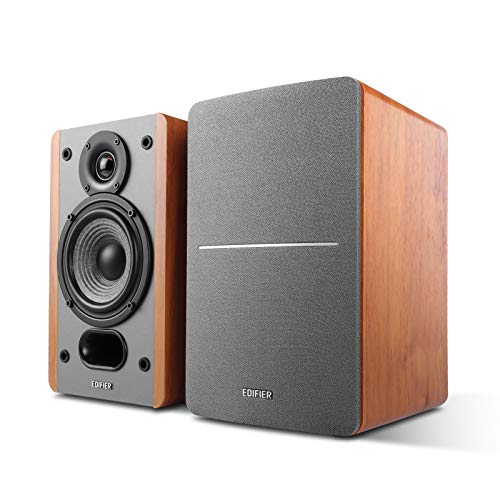
The Edifier P12 requires an amplifier or receiver to operate, offering silk dome 19mm tweeters and 4-inch bass drivers to deliver balanced, detailed sound. This model emphasizes treble clarity and overall musical balance, suited for small-to-medium rooms and desktop setups where space is at a premium. It’s a straightforward choice for listeners who already own an amplifier or plan to add one soon.
Best for: listeners who already own or plan to buy an amplifier; those who value clear highs and straightforward, reliable performance. Caution: requires external amplification, so it is not a standalone powered option.
Polk Monitor XT15 — Bookshelf Speakers

Polk Monitor XT15 pairs a 1″ terylene tweeter with a 5.25″ Dynamically Balanced woofer to create a detailed, open soundstage suitable for movies, games, and music. These compact speakers support high-resolution source material and are compatible with Dolby Atmos and DTS:X when used in proper multi-channel setups. They combine modern design with improved acoustics over older Polk lines.
Best for: listeners seeking higher-fidelity sound in a small footprint and future-proofing for surround formats. Better for: those who value clarity and a wider soundstage in living rooms or desktops. Caution: ensure your receiver can drive 4-8 ohm loads for optimal performance.
Elimavi Passive Bookshelf Speakers

Elimavi emphasizes a stereo balance with a 2-way design featuring a 4″ woofer and a silk horn tweeter. As passive speakers, they require an external receiver or amplifier. The high-density wood-panel enclosure helps minimize resonance, delivering a warm, immersive listening experience in home theaters, living rooms, or studios.
Best for: buyers who want a classic bookshelf look with solid midrange and highs, assuming they have or will purchase an amplifier. Limitation: no built-in amplification or Bluetooth; uses external amplification only.
BESTISAN Active Bookshelf Speakers for Record Player
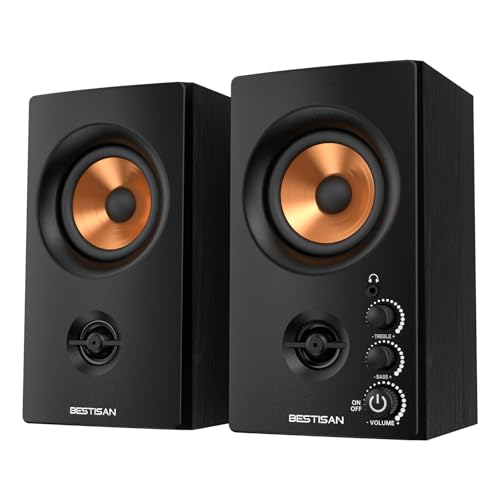
BESTISAN offers active bookshelf speakers with built-in amplification and dual inputs (wireless Bluetooth and wired RCA). A 50W output drives a compact 3″ woofer and 1″ tweeter for clear highs and punchy bass. This model is suitable for streamers, turntables, or TVs without needing a separate amp. It’s a convenient option for small spaces or desk setups.
Best for: turntable users who want an all-in-one solution with wireless and wired inputs. Choose this if you prefer minimal components. Caution: built-in amps may limit headroom in larger rooms; consider pairing with a subwoofer if you need deeper bass.
Buying Guide
What room size should guide your choice?
In small rooms, bookshelf speakers often perform best without overpowering the space. For larger living rooms or home theaters, consider larger bookshelf models or floor-standing towers with stronger bass. If you plan a multi-channel setup, ensure your speakers integrate well with your receiver and center channel.
Do you need powered (active) speakers or passive speakers?
Active speakers include built-in amplification—simplifying setup and reducing gear count. Passive speakers require a separate amplifier or receiver but can offer more flexibility with high-power setups. Your choice depends on space, budget, and whether you already own an amp.
What about compatibility and impedance?
Check impedance and power handling to match your amplifier or receiver. Most bookshelf speakers work well with common home theater receivers, but mismatches can limit loudness or sound quality. If unsure, start with 4-8 ohm compatible models and verify with your amp’s specifications.
What performance features matter most?
Listen for clarity in vocals, balance across bass and treble, and how the speaker handles complex music or cinematic effects. Tweeter size and woofer diameter influence detail and bass impact. Some models offer room-friendly enclosures or vibration-damping designs to minimize resonance.
Do you plan to expand later?
If you anticipate expanding to a full 5.1 or 7.1 system, choose bookshelf speakers that pair well with a center channel, subwoofer, and additional surrounds. Polk XT15 and similar models can serve as core front channels in a future upgrade path.
Wiring and placement considerations
Proper placement—typically at ear level and spaced evenly from walls—improves stereo imaging. Use stands or wall-mount options where appropriate. Cable management features in some stands help maintain a clean setup. Ensure cables and connectors fit your receiver and source devices.
FAQ
- What’s the difference between bookshelf and tower speakers? Bookshelf speakers are compact and versatile, ideal for small to medium rooms. Towers are larger and usually offer deeper bass, suitable for bigger rooms or ceilings where space allows.
- Do I need a separate amplifier for passive speakers? Yes. Passive speakers require an external amplifier or powered receiver to produce sound.
- Can I use bookshelf speakers with a turntable? Yes, with an appropriate amplifier or receiver. If you choose active speakers with built-in amps, you can connect a turntable via RCA if supported.
- Is Bluetooth enough for high-fidelity sound? Bluetooth is convenient but may not deliver the highest fidelity. For best sound, use wired connections and, if possible, a quality amplifier/receiver.
- Should I pair bookshelf speakers with a subwoofer? For music, many bookshelf models provide enough bass, but for movies or large rooms, adding a subwoofer enhances low-end impact and overall dynamic range.
- What should I look for in a buying guide? Focus on compatibility with your receiver, room size, listening preferences, and potential expansion into a multi-channel system.