Best Bookshelf Speakers for TV: Clear Dialogue, Rich Bass, and Easy Setup
Choosing the right bookshelf speakers for a TV can elevate both dialogue clarity and overall soundstage without overwhelming your living room. This guide highlights five well-rounded options that pair well with televisions, offer multiple inputs, and fit common living-room aesthetics. Each pick below supports easy connection to TVs, game consoles, or media players, with practical features like Bluetooth, optical or coaxial inputs, and built-in or external amplification.
The following quick reference summarizes the featured products and core specs to help you compare at a glance.
- Edifier R1280T Powered Bookshelf Speakers — 42W RMS, 2.0 active, wooden enclosure, AUX inputs
- Saiyin Bluetooth Bookshelf Speakers (30W x 2) — Optical/AUX/RCA inputs, remote control
- Polk Audio T15 — 0.75″ tweeter, 5.25″ bass, wall-mount capable
- Edifier R1280DBs — 42W RMS, Bluetooth, optical/coax inputs, sub-out
- Electrohome Huntley Powered Bookshelf Speakers — built-in amp, 3″ drivers, multiple inputs
Edifier R1280T: Classic Wood Finish With Modern Inputs
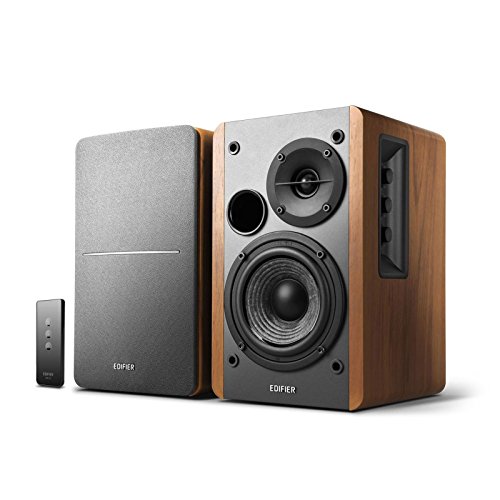
The Edifier R1280T pairs a traditional wood enclosure with modern connectivity. Each speaker delivers 42 watts RMS, with convenient 2 x AUX inputs for dual-device use—so you can switch between a TV soundbar and a media player without plugging and unplugging. A side panel houses bass and treble controls for quick room tuning, and the classic wood finish blends with most living room decors. This setup emphasizes clear midrange and practical volume control, making it a solid pick for TV dialogue and music alike.
Saiyin Bluetooth Bookshelf Speakers (30W x 2)

Saiyin’s 30W x 2 bookshelf system emphasizes wireless versatility with Bluetooth 5.3 and multiple wired inputs (Optical, AUX, RCA). The instruction set notes compatibility caveats for turntables, so verify your equipment’s Bluetooth transmitter/receiver arrangement before purchase. The integrated remote control supports input switching and mute functions, and a top-panel button layout complements on-speaker controls. This arrangement is well-suited for TV use as a Bluetooth-enabled alternative to wired connections, with straightforward operation for casual TV listening.
Polk Audio T15: Solid Stereo Imaging And Mounting Options

Polk Audio T15 speakers emphasize clear highs and defined midrange with a 0.75″ tweeter and a 5.25″ Dynamic Balance driver. They are designed to be versatile as front, left-right, or rear speakers in a surround setup, and they are wall-mount capable to optimize TV listening space. While these are passive speakers requiring an amplifier, they offer robust performance and room-filling sound that can clearly reproduce dialogue and ambient TV audio as part of a larger system.
Edifier R1280DBs: Bluetooth 5.0 With Sub-Out And Optical/Coax
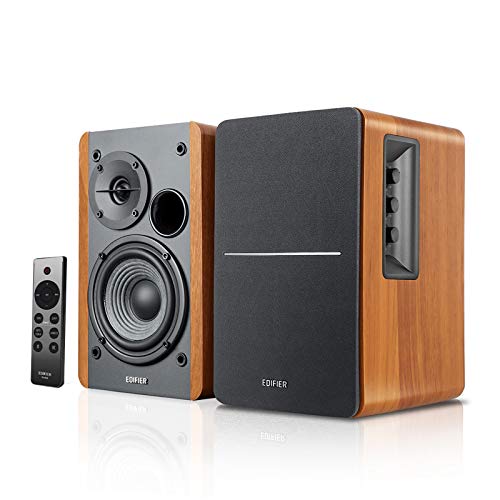
The Edifier R1280DBs adds Bluetooth 5.0 connectivity and a dedicated subwoofer output, plus optical and coaxial inputs for direct TV or computer connections. Its 42W peak power and 13mm silk-dome tweeter deliver balanced, distortion-free sound ideal for dialogue-heavy TV scenes and casual music, while the sub-out option helps extend bass for a more immersive listening experience without sacrificing clarity in speech and effects.
Electrohome Huntley: Compact Power With Flexibility

The Electrohome Huntley pair features built-in amplification and three-inch drivers, delivering warm and natural sound in a compact footprint. With flexible input options including RCA and Aux, these speakers adapt to TVs, turntables, and computers without requiring a separate amp. The included Bluetooth functionality supports wireless streaming, making them a convenient all-in-one solution for TV audio with room-filling presence.
Buying Guide: Key Purchase Considerations
- Power and room size: Match speaker wattage to your room. Larger rooms benefit from higher output (around 40–60W per channel), while small-to-medium living rooms can achieve sufficient level with 20–40W.
- Inputs and compatibility: Look for optical or coaxial inputs for TV connections, plus AUX or RCA options for legacy devices. Bluetooth adds wireless convenience, but ensure the codec compatibility you need (SB, AAC, or aptX) is supported.
- Speaker configuration: Powered vs. passive. Powered (built-in amp) speakers simplify setup, especially for TVs. Passive speakers require an external amplifier but can be more scalable for larger systems.
- Speaker placement: Bookshelf speakers perform best at ear level and away from walls to minimize bass boomy effects. Wall-mountable designs offer flexibility in tight spaces.
- Dial-in controls: Consider models with adjustable bass/treble and remote controls for easy room tuning and convenient operation while watching TV.
- Sound signature for TV: Prioritize clear dialogue and controlled bass. A balanced or warm sound with a crisp midrange helps dialogue readability and overall immersion in movies and shows.
- Build quality and aesthetics: Wood finishes or neutral grays blend with most decors. Durable cabinets reduce unwanted resonance that can color dialogue and music.
- Future expandability: If you plan a full home theater later, choose speakers that can join a 5.1 or 7.1 setup or that offer sub-out connections for deeper bass when needed.
For TV-centric listening, these five options provide a spectrum of approaches—from compact, all-in-one powered units to versatile components that adapt to growing home theater needs. Each model emphasizes clarity, ease of use, and compatibility with common TV setups, ensuring that dialogue remains intelligible across scenes while delivering engaging overall sound. When choosing, consider your room size, input needs, and whether you prefer wireless convenience or a system built around a dedicated receiver.