
Choosing the right bookshelf speakers for your TV affects dialogue clarity, soundtrack impact, and overall viewing enjoyment. Below is a concise comparison table of the top selected options followed by focused product overviews and a buying guide to help match speakers to your setup.
| Product | Type | Key Features |
|---|---|---|
| Edifier R1280T | Powered | Dual AUX, Remote, Wooden Enclosure |
| Edifier R1280DBs | Powered Bluetooth | Bluetooth 5.0, Optical/Coax, Sub Out |
| Saiyin Bluetooth Bookshelf Speakers | Powered Bluetooth | Bluetooth 5.3, Optical/Coax, Remote |
| Electrohome Huntley | Powered Bluetooth | 3″ Drivers, Bluetooth, RCA/Aux |
| Polk Audio T15 | Passive | 5.25″ Driver, Wall-Mountable, Home Theater |
Edifier R1280T Powered Bookshelf Speakers
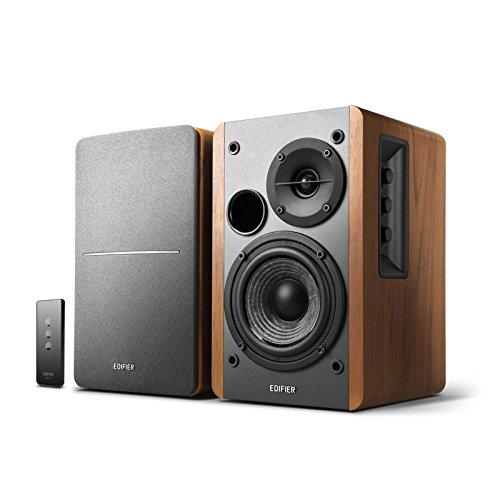
Edifier R1280T is a compact powered bookshelf speaker set with a classic wooden enclosure. It offers two AUX inputs so you can connect two source devices simultaneously without switching cables. Onboard controls include bass and treble adjustments, and a remote control handles volume from the listening position.
Its MDF wood cabinet helps reduce resonance for cleaner sound, and the near-field design suits smaller living rooms or TV cabinets. For TV use, the dual-input convenience is practical when combining a TV and auxiliary device, though there is no optical input for direct digital TV connection.
Edifier R1280DBs Active Bluetooth Bookshelf Speakers
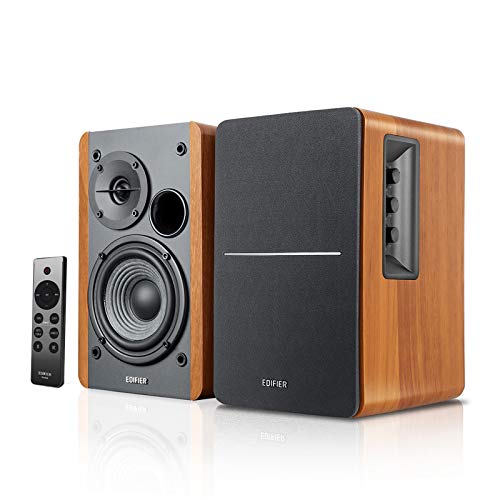
The Edifier R1280DBs adds modern TV connectivity with Bluetooth 5.0, optical and coaxial inputs, and a subwoofer line out for improved low-end impact. These features make it a versatile choice for a TV-centered setup where lossless digital audio is preferred.
Built with a silk dome tweeter and 4-inch driver, the speakers provide distortion-free playback up to the stated continuous power. The sub out with automatic detection simplifies adding a powered sub for better movie bass without an external crossover setup.
Saiyin Bluetooth Bookshelf Speakers With Optical Input

The Saiyin Bluetooth Bookshelf Speakers provide Bluetooth 5.3 streaming and multiple wired inputs including optical, coaxial, RCA, and AUX. A supplied remote lets you toggle inputs and manage volume, which can be convenient when using a TV and other sources.
These speakers support direct connection from turntables with line out and include guidance on phono vs. line compatibility. Their input flexibility plus remote control make them a practical choice for TV systems where wireless streaming and wired digital connections are both used.
Electrohome Huntley Powered Bookshelf Speakers

The Electrohome Huntley speakers emphasize a warm, natural sound from 3-inch drivers and include Bluetooth alongside RCA and aux inputs. Designed for versatility, they can connect to TVs, turntables, PCs, and gaming consoles.
These powered speakers are aimed at small-to-medium rooms where balanced, full-bodied playback is preferred. Their compact footprint and Bluetooth streaming ease integration with modern smart TVs and mobile devices.
Polk Audio T15 Home Theater And Stereo Bookshelf Speakers

The Polk Audio T15 are passive bookshelf speakers intended for home theater use. Featuring a 5.25″ Dynamic Balance driver and 0.75″ tweeter, they deliver deep bass response and clear vocals. They are wall-mountable and suitable as front, surround, or left-right speakers in a 5.1 system.
Because they are passive, the T15 requires an AV receiver or amplifier. This makes them ideal for users building a dedicated home theater around a receiver that handles Dolby/DTS decoding and amplification.
Buying Guide: How To Choose Bookshelf Speakers For Your TV
Selecting bookshelf speakers for TV depends on connectivity, room size, and whether you want powered or passive speakers. Below are key considerations and comparison perspectives.
Connection Types
- Optical/Coaxial: Best for modern TVs with digital audio outputs; provides lossless connection for clear dialogue and soundtracks.
- Bluetooth: Convenient for streaming from phones and tablets; may introduce latency—look for low-latency codecs or an ARC connection for TV audio.
- RCA/Aux: Common analog connections; useful for older TVs or secondary sources like turntables (line-level outputs).
- Subwoofer Output: Important if you want deeper bass for movies; simplifies adding a powered subwoofer.
Powered vs Passive
- Powered (Active): Built-in amplifier simplifies setup—plug into TV, no receiver required. Good for small setups and TVs without a receiver.
- Passive: Requires receiver or amp. Offers more flexibility for multi-channel home theater or future upgrades to stronger amplification and surrounds.
Room Size And Placement
- Small Rooms: Compact powered speakers with near-field design perform well and reduce room-driven coloration.
- Medium/Large Rooms: Look for larger drivers, subwoofer outputs, or separate subwoofers to fill space and reproduce movie bass.
- Placement: Bookshelf speakers near walls may increase bass; wall-mountable models help with surround placement.
Sound Priorities
- Dialogue Clarity: Prioritize speakers with defined midrange and quality tweeters for clear speech.
- Movie Impact: Subwoofer support and larger woofers improve low-frequency effects and immersion.
- Music Listening: Balanced drivers and low distortion matter more for fidelity across genres.
Compatibility With Turntables
- If connecting a turntable, verify whether the turntable outputs PHONO or LINE. PHONO requires a phono preamp; LINE can connect directly to powered speakers.
- Some powered speakers accept turntable line-outs directly; others need a separate preamp or receiver.
Additional Practical Considerations
- Remote Control: Handy for TV setups when volume and input switching are needed from the couch.
- Latency: For Bluetooth, consider potential lip-sync issues; using optical/ARC avoids latency.
- Upgrade Path: If you plan to expand to 5.1, choose speakers and outputs that integrate with a future receiver or subwoofer.