Best Bright Acoustic Guitar Strings for Clear, Shiny Tone
Searching for bright, crisp acoustic guitar strings? This guide highlights top options that emphasize bold brightness and strong projection, ideal for players seeking a lively, glassy tone. Best for players who perform live, record, or practice in small spaces where clarity matters. The following selections favor 80/20 bronze and related high-brightness designs, with notes on feel, longevity, and potential caveats.
| Product | Best For | Why It Stands Out |
|---|---|---|
| Elixir Strings, Acoustic 80/20 Bronze NANOWEB | Stage players and studio recording | Longest-lasting bright tone with smooth feel |
| D’Addario EJ11, 80/20 Bronze Light | General bright tone and ease of play | Classic bright D’Addario sound, reliable core |
| D’Addario EJ11-3D, 80/20 Bronze Light (3-pack) | Bulk buyers and budget-conscious players | Same bright tone in larger quantity |
| Ernie Ball Earthwood Extra Light 80/20 | Beginners and players with light touch | Bright, balanced with easy playability |
| D’Addario EJ10, 80/20 Bronze Extra Light | Beginners and players needing light tension | Bright projection with gentle feel |
D’Addario Acoustic Guitar Strings, 80/20 EJ11 Light Gauge
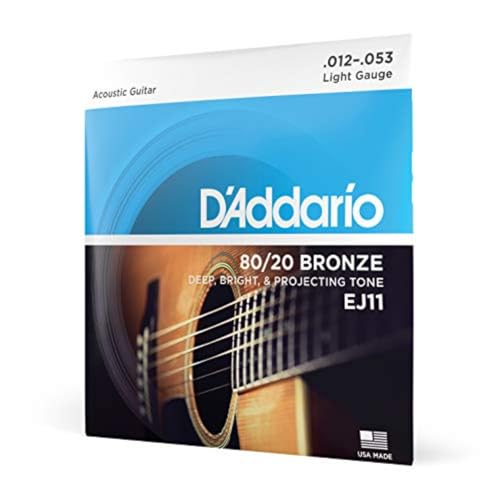
Reference: Precision wound over a hexagonal high carbon steel core yields a bold, bright sound with crisp projection. This set traces its origins to the 1930s as the original acoustic string design.
Best for: Players seeking a classic, bright acoustic voice with reliable projection, suitable for strumming and fingerpicking in brighter tonal contexts.
Why selected: It embodies the traditional bright D’Addario 80/20 voice, widely used and easy to source.
Caution: Brightness can be more susceptible to perceived harshness on very bright guitars; pairing with appropriate pick technique helps balance tone.
Elixir Strings, 80/20 Bronze NANOWEB Acoustic, Light Gauge

Reference: NANOWEB coating provides a bright, focused tone with a notably long life and a smooth feel. The strings stay bright longer and resist sweat and humidity to some extent.
Best for: Stage and studio players who want consistent brightness and longevity without frequent changes.
Why selected: Elixir is widely recognized for lasting brightness, making it a strong choice for players who perform regularly.
Caution: Higher price point and the coated feel may not be preferred by all players; some may prefer uncoated options for feel or attack.
D’Addario EJ10, 80/20 Bronze Extra Light

Reference: Extra Light gauge delivers a bright tone with easy fretting and lower tension, preserving brightness while minimizing hand fatigue.
Best for: Beginners or players who prefer a lighter touch but still want a bright, projecting voice.
Why selected: Combines the classic 80/20 brightness with a forgiving feel for new players or delicate picking styles.
Caution: Lower tension can lead to slightly less volume compared with normal light gauges in demanding strumming parts; technique matters more here.
Ernie Ball Earthwood Extra Light 80/20 Bronze

Reference: Bright, balanced tone with good projection; wound strings use 80% copper, 20% zinc wire around a high-carbon steel core for durability.
Best for: Beginners and players seeking easy playability without sacrificing brightness and articulation.
Why selected: Known for comfortable feel and clear note definition at light tension.
Caution: Some players may prefer more volume with heavier gauges for aggressive strumming style.
BELFORT Quality Acoustic Strings – 80/20 Phosphor Bronze Light

Reference: German-designed manufacturing aims for brilliance, durability, and rust resistance. Light tension is easy on the fingertips with a bright overall voice.
Best for: Players who want a bright tone with smoother playability and longer life due to protective coatings.
Why selected: Offers a well-rounded bright voice with a focus on comfort during extended playing sessions.
Caution: Coated or treated strings may feel different under the fingers for some players compared with standard uncoated sets.
Buying Guide: Bright Acoustic String Considerations
- Purpose and tone goals: Choose brighter 80/20 bronze for that classic shimmering brightness, versus phosphor bronze for a warmer brightness with more warmth.
- Gauge and playability: Light and extra-light gauges ease fretting but can deliver less volume in aggressive strumming; medium gauges offer a balance.
- Coating vs. uncoated: Coated strings last longer and resist corrosion, maintaining brightness longer, but some players feel coated strings are less bright or slick at the fingertips.
- Playing environment: Sweat, humidity, and exposure to oils can dull brightness faster; consider coated options for longevity in humid environments.
- Intended use: Live performances may benefit from longer-lasting brightness (like Elixir NANOWEB), while casual practice may suit standard uncoated sets.
Frequently Asked Questions
- What makes a string bright on an acoustic guitar?
– Brightness comes from the wrap wire composition (often 80/20 bronze) and the winding around a core, which influences sustain, projection, and brightness of the attack. - Are coated strings brighter than uncoated ones?
– Coated strings can retain brightness longer by resisting corrosion, but some players notice a slightly duller feeling and tone initially until they settle in. - Which gauge is best for brightness and ease of playability?
– Lighter gauges (like 12-53 light or extra-light) are easier to press and can sound bright, though they may produce less volume under aggressive strumming. - Is 80/20 bronze better than phosphor bronze for brightness?
– 80/20 bronze generally provides a brighter and crisper attack, while phosphor bronze offers more warmth with brightness intact; choice depends on preference and style. - Should beginners start with bright strings?
– Beginners may benefit from bright strings for clear note articulation, but they should prioritize a comfortable feel and low tension to reduce hand strain. - How long do bright strings typically last?
– Longevity depends on playing style, sweat exposure, and coating; coated options tend to last longer before brightness diminishes.