
Best C7 Power Cord Audiophile Cables for Clear, Low-Noise Audio
Answering the question “which C7 power cord is best for audiophile setups?” this guide highlights five top options designed to minimize noise and preserve signal integrity. These cables aim to deliver stable current, reduced EMI/RFI, and improved clarity for a range of hi‑fi components. Ideal buyers include turntable enthusiasts, DAC users, amplifiers, and subwoofers seeking cleaner power and a more accurate soundstage. The table below compares the featured cables at a glance.
| Product | Brand | Best For | Key Benefit |
|---|---|---|---|
| YYTCG Audiophile HiFi AC Power Cord 4.92ft | YYTCG | High-current audio gear | Ultra-low resistance with 4N OFC, strong shielding |
| Tertullus HiFi Audiophile Power Cord (2M) | Tertullus | Amplifiers and turntables | High-current delivery with robust construction |
| Preffair HiFi Purple IEC Power Cable (6.6ft) | Preffair | DACs, amps, subs | OCC copper, multiple shielding, low noise |
| Pangea Audio AC-14SE MKII C7 Signature Power Cable | Pangea Audio | Source components | Cardas-grade copper center conductor for wide-band power |
| AudioQuest NRG-X2 Power Cable (1m) | AudioQuest | Any high-end system seeking reduced distortion | Long-Grain Copper and semi-solid conductors |
YYTCG Audiophile HiFi AC Power Cord 4.92ft

The YYTCG cable uses three 4N OFC conductors (7 AWG total) to deliver stable power across 125V–250V, designed to handle transient high currents with minimal loss. The multi-shielding includes a high-density tinned copper braid and double-layer PVC to block EMI/RFI, reducing signal loss and distortion. Best for high‑demand audio equipment where clean, stable power improves overall detail and timing.
Best for: systems with sensitive DACs, integrated amps, or wide-range power needs. Choose this if you want a robust, low‑noise path that emphasizes dynamic nuance and a stable bass/treble balance. Limitation: larger diameter may be less flexible in tight rack setups.
Tertullus HiFi Audiophile Power Cord with US Rhodium Plated Connector (2M)

Designed for high-current power needs, this Tertullus cord uses copper multi-conductors and a 4N OFC composition with a 4-prong US plug and IEC C7 Figure 8 female connector. It targets reliable, durable power delivery for amplifiers, subwoofers, and turntables. Best for: equipment that requires steady current without frequent re-plugging. Limitation: some users may prefer higher shielding density in very EMI-heavy environments.
Preffair HiFi Purple IEC Power Cable 6.6ft
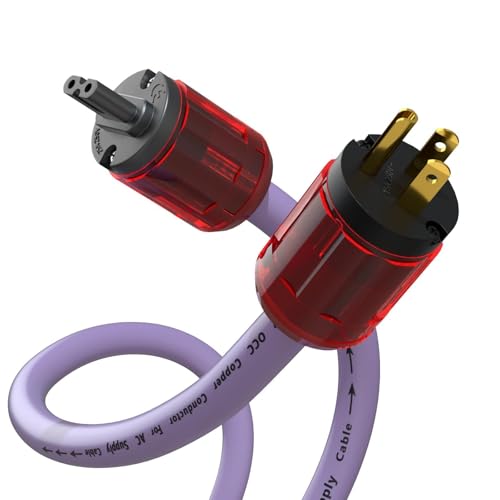
This 6.6-foot Preffair cord uses OCC copper conductors with 12 AWG per core and 13 mm diameter, plus professional shielding to reject EMI/RFI. The result is fuller, clearer stereo sound with reduced noise. Best for: upgrading older cables in a mid-size audio rack. Limitation: longer length may introduce more potential for slight voltage drop in very long runs.
Pangea Audio AC-14SE MKII C7 Signature Power Cable

The Pangea AC-14SE MKII is described as a no-compromise option for source components, featuring a Cardas Grade One copper center conductor and a C7-style power cord design. Best for: preamps, DACs, and line-level components where wide-band power delivery matters most. Limitation: marketing language emphasizes signature design; specific shielding density isn’t quantified.
AudioQuest NRG-X2 Power Cable (1m)

AudioQuest’s NRG-X2 relies on Long-Grain Copper conductors and Semi-Solid Concentric strands to minimize distortion from grain boundaries and strand interaction. It emphasizes clean power delivery with noise-dissipation technology. Best for: systems where reduction of conductor-related distortion is a priority. Limitation: higher-end design may not justify cost in basic setups.
Buying Guide: Key Considerations For C7 Audiophile Cables
- Conductor Material: OCC copper and 4N OFC offer low resistance and high purity, which can reduce signal loss and jitter. Higher-purity conductors often correlate with improved transient response.
- Shielding And EMI/RFI Rejection: Multi-shielding (foil, braided shields) helps block interference from nearby electronics and mains. This is crucial for sensitive audio chains.
- Conductor Gauge And Diameter: Larger gauges (like 7 AWG in some cables) support high current, reducing voltage drop during peaks. This matters for amps and subwoofers.
- Length And Flexibility: Longer cables can introduce more potential for signal loss or physical strain. Choose a length appropriate to your rack layout and power strip distance.
- Connector Quality: Rhodium-plated or heavy-duty connectors can improve durability and corrosion resistance, especially with frequent plugging in and out.
- Intended Use: For source components (DACs, CD players), prioritize wide-band, low-noise delivery. For power-hungry amps, focus on high-current delivery and robust shielding.
- Compatibility: Ensure the C7 end fits your equipment and that the IEC end matches your power setup. Some cables also offer IEC 320 C7 vs. IEC 320 C7 Figure 8 variations.
FAQ
- What makes a C7 power cord audiophile-grade? It uses high-purity copper conductors, robust shielding, and construction designed to minimize resistance and electromagnetic interference, resulting in clearer signal transmission.
- Is a longer cable always better for audio? Not necessarily. Longer runs can introduce more potential for signal loss and bending stresses. Choose the length that fits your setup with minimal slack.
- Which component benefits most from a power cable upgrade? Source components (DACs, preamps) and turntables often show noticeable gains in noise reduction and timing, though power-hungry amplifiers can also benefit from high-current cables.
- Should I avoid certain materials? Very cheap or non-audiophile-rated cables may introduce more noise. Opt for OCC copper or high-purity OFC when possible for best results.
- Do cables make a night-and-day difference? The improvement is typically in noise floor, timing, and dynamic range, impacting perceived clarity and stereo imaging rather than dramatic feature changes.
- How should I test a new power cord? Compare with your existing cord by listening to identical tracks at similar volume levels, noting timing, bass control, and high-frequency detail.