
Best Car Amplifier With Built in Fan for Strong Bass Output and Easy Tuning
The best car amplifier with a built-in fan combines high power, efficient Class D design, and smart cooling to keep performance steady on long drives. This guide highlights five top options ideal for dedicated bass lovers, custom installs, and DIY sound upgrades. Each choice includes built-in crossovers, bass boost, and wired remotes for easy bass control. Whether you want 1-ohm stability or multi-kilowatt headroom, the following amplifiers offer clear tuning paths, compact footprints, and practical features for everyday use.
Summary of chosen products:
- PRV Audio RS2200 — 2200W RMS, built-in crossover, remote bass knob, smart fans.
- SounDigital EVO6 3000.1 — 3000W RMS, built-in LPF/HPF, compact Class D design.
- Timpano TPT-BASS3000 — 3000W RMS, built-in crossover, bass boost, smart fans.
- AUDIOBANK P6001-G2 Gen 2 — 6000W, remote level control, adjustable low-pass, bass boost.
- VEVOR Monoblock 1500W — 1/2/4 ohm stable, remote level control, bass boost, LPF support.
PRV Audio RS2200 Bass Monoblock Amp

Best for: Bass-focused systems needing strong 1-ohm performance with built-in crossover and a bass-boost feature. This 2200W RMS unit emphasizes efficient power delivery and allows tuning via integrated filters. A wired remote bass knob expands control from the driver’s seat, making it ideal for dedicated subwoofer setups without external DSP.
Why chosen: It combines high power with a 9–16V operating range and a built-in subsonic filter. The included remote level control supports convenient bass management, while the high-level input enables easy integration with stock wiring. The built-in crossover reduces the need for external components.
Caution: Ensure your electrical system can handle 2200W RMS peak demands and check ventilation in tight installations to avoid overheating.
SounDigital EVO6 3000.1 Car Amplifier

Best for: Enthusiasts seeking a compact, high-output monoblock with built-in tone shaping. The EVO6 handles 3000W RMS at 1 ohm and includes low-pass and high-pass filtering to tailor bass and full-range output for a clean install.
Why chosen: Class D efficiency minimizes electrical strain while delivering robust bass. Built-in indicators simplify monitoring of clip and power status. It’s a straightforward plug-and-play option for serious subs and multi-sub setups alike.
Caution: Limited data on warranty specifics; verify compatibility with your vehicle’s battery and electrical system for long-term reliability.
Timpano TPT-BASS3000 Mono Block Amplifier

Best for: Bass-forward systems requiring substantial power and tunable crossover with a space-saving design. The 3000W RMS class D mono amp includes a built-in crossover and bass boost to adapt to various enclosure designs.
Why chosen: It offers a compact footprint with a high-efficiency MOSFET supply and adaptable subwoofer tuning. The adjustable bass boost lets you dial in low-end impact at listening distance.
Caution: The enclosure and mounting space should accommodate its dimensions; verify clearance in tight vehicle compartments before purchase.
AUDIOBANK P6001-G2 Gen 2 Monoblock
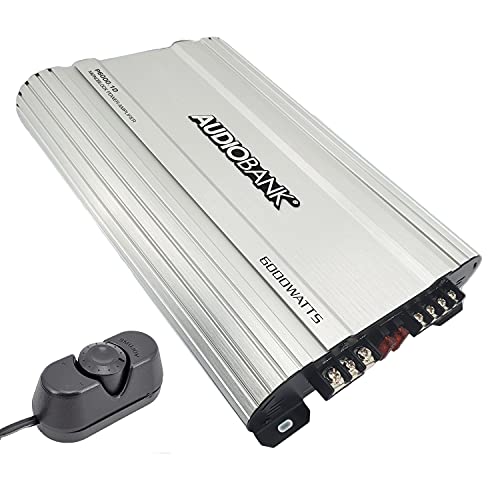
Best for: Users needing very high power with flexible tuning and remote bass control. The P6001-G2 Gen 2 delivers up to 6000W and features a 37 Hz to 180 Hz low-pass crossover, 0 to +12 dB bass boost, and a remote subwoofer control for convenient adjustments.
Why chosen: The remote control and adjustable crossover help integrate with various head units and sub configurations. It provides strong headroom for large subs or multi-sub installs, while the remote turn-on/off supports smooth system coordination.
Caution: 6000W peak implies substantial electrical demand; ensure the vehicle’s electrical system and fusing are adequate for long-term operation.
VEVOR Monoblock Car Amplifier 1500W
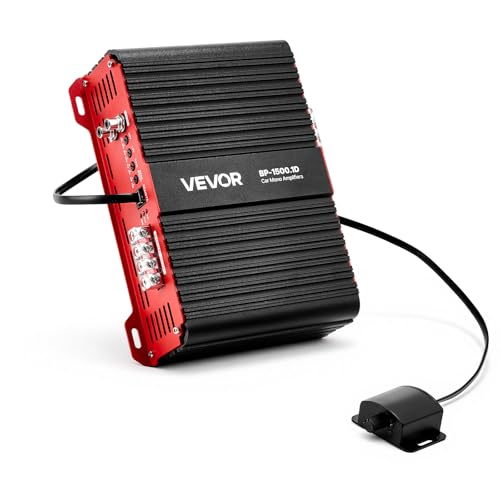
Best for: Those seeking a versatile, mid-to-high-power mono amp with broad impedance support and built-in bass features. The 1500W RMS at 1Ω delivers deep bass across a range of subwoofer sizes.
Why chosen: It supports 1/2/4 ohm configurations, has a remote bass control, and includes a low-pass filter and bass boost for tailored bass output. It is compatible with many factory systems and aftermarket subs.
Caution: Moderate power level compared with top-tier 6000W units; for very large or multi-sub setups, higher-capacity options may be preferable.
Buying Guide: How To Choose The Right Built-In Fan Car Amplifier
- Power needs: Match RMS power to your subwoofers and enclosure size. Higher wattage provides deeper bass but increases electrical load.
- Impedance stability: If you run 1 ohm loads, verify 1 ohm stability and cooling to prevent thermal shutdown.
- Built-in crossover and bass boost: Look for adjustable SUB/LF crossover ranges and a bass boost to tailor bass response to your vehicle acoustics.
- Cooling strategy: Built-in fans help prevent thermal limiting, but ensure adequate space and ventilation in your install area.
- Remote control options: A wired bass knob or remote level control improves on-drive adjustability and listening comfort.
- Installation compatibility: Check input types (high-level or RCA), wiring harnesses, and mounting dimensions for your vehicle.
- Reliability and heat management: Seek amps designed for continuous operation with efficient Class D designs and robust protection features.
Frequently Asked Questions
- Do built-in fans significantly improve amplifier performance?
- Is 1 ohm stability important for car amps?
- What is a remote bass knob used for?
- Should I choose a larger wattage amp for my setup?
- What if my car’s electrical system is limited?
- Do these amps require external DSP?
Yes, built-in fans help manage heat during demanding bass passages, reducing thermal limiting and allowing higher continuous output.
It matters if you run low-impedance subwoofers. 1 ohm stability ensures consistent power delivery and prevents overheating.
A remote bass knob lets you adjust bass level from the listening position, enabling quick fine-tuning without reaching into the trunk or under seats.
Choose wattage based on subwoofer ratings, enclosure type, and listening goals. Excessive power without proper wiring and enclosure tuning can waste energy and cause distortion.
Consider amplifiers with better efficiency (Class D) and moderate wattage, or upgrade power delivery components like the alternator and battery in conjunction with the installer’s guidance.
Not necessarily. Many options include built-in crossovers and bass controls, but external DSP can offer more precise tuning for complex multi-sub systems.