
Best Car Charging Power Converters for on-the-Go Power
Answering the demand for reliable in-vehicle power, this guide highlights five car power inverters that best balance capability, portability, and safety. Ideal for road trips, work on the go, and family travel, these picks suit different usage styles—from simple USB charging to powering laptops and essential devices. Whether you’re a commuter, traveler, or camper, choose the inverter that matches your device needs and vehicle setup.
Summary of chosen products
| Product | Best For | Key Power | Notes |
|---|---|---|---|
| PiSFAU 200W Car Power Inverter | Light travel, multiple USB devices | 200W continuous | Compact, quiet, USB + AC outlets |
| Pro Chaser 400W Power Inverters | Road trips with laptops and cameras | 400W continuous | Dual outlets + USB-C PD |
| FOVAL 150W Car Power Inverter | Compact daily use, light electronics | 150W continuous | Aluminum shell, 2 USB, 1 AC |
| FSATBTNE 400W Inverter | Fast charging and multiple devices | 400W continuous | 2 USB + USB-C PD 65W |
| ALLWEI 200W Car Power Inverter | Everyday car use with USB-C PD | 200W continuous | 6-in-1: 2 AC, 4 USB ports |
PiSFAU 200W Car Power Inverter

- 2 US standard AC outlets and 4 USB ports for charging laptops, tablets, phones, and small devices.
- DC 12V to AC 110V converter with a compact, lightweight design (8.5 oz, 2.7 x 1.4 x 5 inches).
- High-efficiency circuit design with advanced heat dissipation to reduce energy loss and noise.
Best for: Casual travelers who need flexible charging for multiple USB devices and light electronics without taking up space. Caution: Power output limited to 200W; avoid running high-wattage appliances simultaneously.
Pro Chaser 400W Power Inverters

- Continuous 400W with up to 800W peak; dual 110V outlets; 3.1A USB ports for fast charging.
- Road-trip ready with a 30-inch cord for flexible placement inside the vehicle.
- Portable, compact design; suitable for laptops, DVD players, and other mid-range loads.
Best for: Families and road-trippers needing reliable power for multiple devices and moderate appliances. Caution: Suitability declines with very high-wattage equipment; monitor total draw.
FOVAL 150W Car Power Inverter
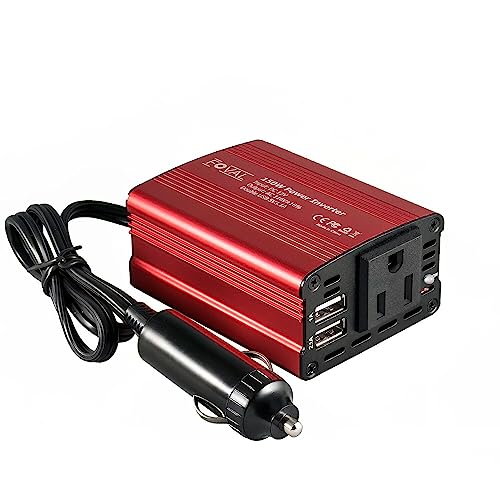
- Premium 150W continuous output with 2 USB ports and 1 AC outlet.
- Aluminum shell for durability and heat dissipation; compact size (3.2 x 2.5 x 1.5 inches).
- Portable and lightweight; ideal for cars, vans, and RVs on short trips.
Best for: Daily drivers needing a small, inexpensive inverter for phones, tablets, or small accessories. Caution: Not recommended for high-wattage devices like laptops for long periods.
FSATBTNE 400W Inverter

- 4-in-1 design with 2 AC outlets, USB-C (65W), and USB-A (18W).
- 65W USB-C PD enables fast charging for laptops and smartphones; 18W USB-A supports quick charging.
- Aluminum alloy housing with smart MCU for protection against overheating and overload.
Best for: Tech enthusiasts who need fast USB-C PD charging alongside AC power. Caution: Higher continuous load requires careful wattage management to avoid overheating.
StrenrmGO 400W Inverter

- Smart LED display shows voltage, power, and fault status for quick diagnostics.
- Two AC outlets plus multiple USB ports; supports up to five devices at once.
- 30W USB-C PD port provides faster charging for modern devices; suitable for laptops and tablets.
Best for: Users who value real-time monitoring and the ability to run several devices together. Caution: The dual outlets draw power; plan usage to avoid overloading the vehicle circuit.
ALLWEI 200W Car Power Inverter
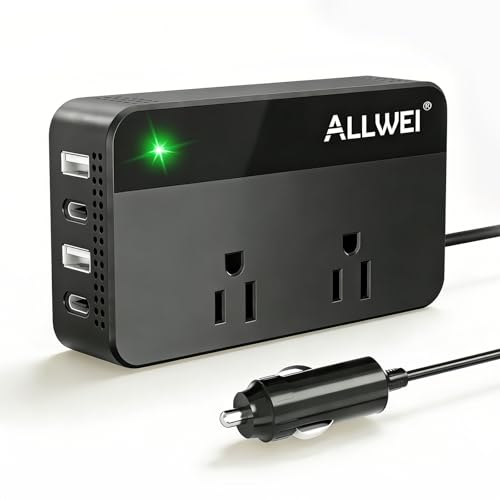
- 6-in-1 design with 2 AC outlets and 4 USB ports (including USB-C PD 18W).
- Smart protection features protect against over-voltage, under-voltage, overload, and short circuits.
- Ideal for daily car use with a focus on safety and stable power delivery.
Best for: Everyday drivers who want a single unit to power laptops, cameras, and phones. Caution: Ensure total wattage remains within the 200W continuous rating for safety.
Buying Guide
What should you consider when choosing a car power inverter?
- Power needs: Match continuous wattage to the devices you plan to run. If you frequently power laptops or small appliances, favor 300–400W models.
- Outlet mix: Look for a combination of AC outlets and USB ports (including USB-C PD) to cover a broad device set.
- Portability vs. capability: Smaller units save space but may limit high-wattage use. Larger units enable more simultaneous charging but take more space.
- Protection features: Prioritize overload, short-circuit, overvoltage, and overheating protections for in-vehicle use.
- Cord length: A longer cord increases placement flexibility, especially when passengers use the rear seats.
- Heat management: Aluminum housing and effective cooling extend inverter life and maintain performance on longer trips.
Frequently Asked Questions
- What is a car power inverter used for?
It converts 12V DC from the vehicle battery to 110V AC to power devices like laptops, cameras, and small appliances.
- Can a car inverter run a laptop?
Yes, many inverters in the 200–400W range can run most laptops, depending on the laptop’s power draw.
- Is it safe to use an inverter while the car is idling?
Yes, but monitor for heat and total power draw to avoid draining the battery or overheating the inverter.
- Do inverters require fuses?
Many models include built-in protections and fuses; always follow the manufacturer’s installation guidance for safety.
- What should I avoid when using a car inverter?
Avoid powering devices beyond the inverter’s continuous rating and don’t daisy-chain multiple inverters or use high-wattage appliances simultaneously.
- Can I power a CPAP machine with a car inverter?
Some CPAP devices can be powered by 150–400W inverters; confirm the device’s wattage and the inverter’s capacity before use.