
Best Car to House Adapters for on-the-Go Power Needs
Answering the demand for reliable mobile power, this guide highlights top car-to-house adapters that convert 12V vehicle power to 110V/120V household AC or stable DC outputs. The selections suit road trips, camping, van life, emergency backup, and mobile work setups. Best for travelers needing portable AC or DC charging, for campers running small appliances, or for backup power during outages.
Summary of chosen products (quick reference):
- PiSFAU 150W Power Inverter — Best overall for compact multi-device use.
- ALITOVE AC to DC Converter 120W — Best for long-reach power with solid protections.
- NALAKUVARA AC to DC Converter 60W — Best budget option with universal 110V-240V input.
- FOVAL 150W Car Power Inverter — Best for dense USB + AC charging in one unit.
- ALITOVE 180W Upgrade Converter — Best for higher load devices with grounding.
PiSFAU 150W Power Inverter — 12V DC To 110V AC Car Plug

Best for: travelers needing reliable mid-range power for laptops, tablets, and small appliances while on the road. This inverter provides 150 watts continuous and 300 watts peak, making it suitable for charging laptops, CPAP components, and media devices. It includes 2 USB ports for quick charging and a smart protection circuit that cuts output if a fault is detected.
Why chosen: It balances wattage with a compact form factor and straightforward safety features, helping avoid nuisance fuse changes on trips. The built-in protections support safer operation under load.
Caution: Do not run high-draw devices for long periods if they exceed the 150W continuous rating. Be mindful of heat buildup in small interiors.
ALITOVE AC to DC Converter 110V to 12V 120W
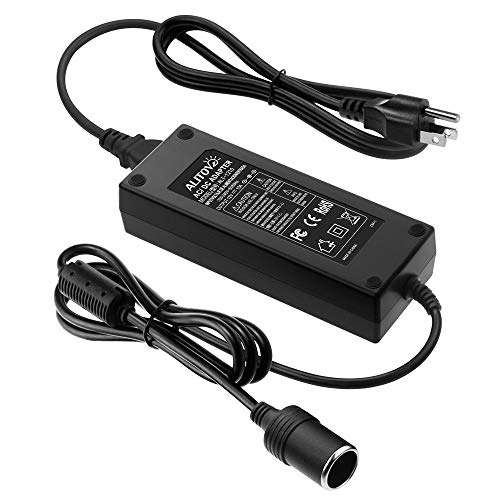
Best for: users who need a longer reach and broad device compatibility for 12V car electronics under 120W, including coolers, cameras, and small inflators. It comes with an 8-foot power cord for flexible placement and multiple safety protections against overload, overvoltage, short circuits, and overheating.
Why chosen: Wide input range (100–240V) and extended cord length support diverse home or vehicle setups, making it easier to position safely away from heat or moisture sources.
Caution: Avoid running devices that consistently draw near the 120W limit for extended periods, as this can shorten the adapter’s lifespan.
NALAKUVARA AC to DC Converter 60W
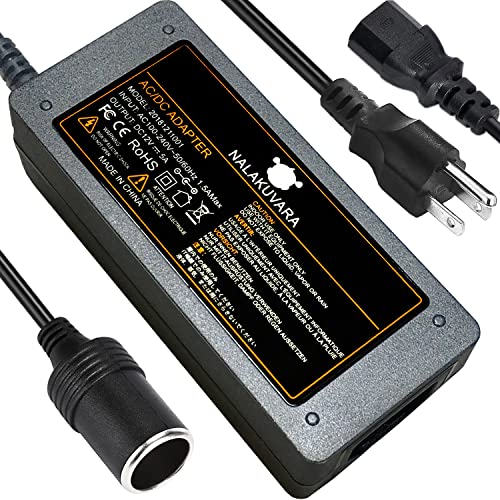
Best for: users seeking a budget-friendly 12V DC output from 110–240V AC outlets, suitable for smaller car devices under 60W such as mobile fans, chargers, or small lights. Includes an 8.8-foot extended cord for reach.
Why chosen: Practical option for basic 12V devices with built-in protection against overload, over-voltage, and short-circuit events, helping safeguard lighter-use electronics.
Caution: Not designed for high-wattage appliances; avoid long-running use near the 60W output limit.
FOVAL 150W Car Power Inverter
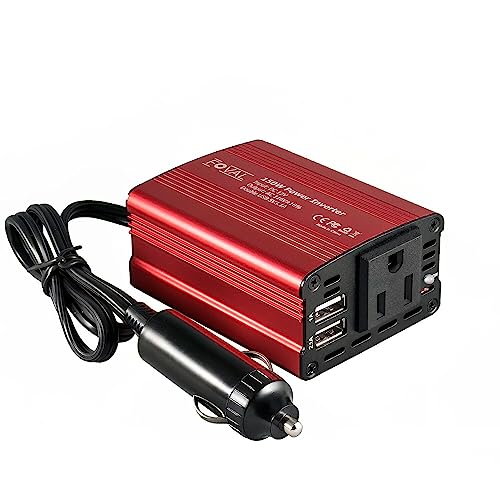
Best for: road trips requiring multiple charging options, including two USB ports and one AC outlet, with the ability to power laptops, tablets, and small appliances. The compact 3.2 x 2.5 x 1.5-inch body suits tight spaces.
Why chosen: Its combination of USB charging and an AC outlet in a small footprint makes it versatile for short trips or mobile offices, particularly when space is limited.
Caution: When using high-draw devices, monitor heat; compact aluminum shell helps, but heavy loads can still generate noticeable warmth.
ALITOVE Upgrade AC to DC Converter 180W

Best for: users who need higher wattage between 150W and 180W for car devices like refrigerators, inflators, or multiple devices simultaneously. It adds a grounding plug for improved safety and has a long 9.2-foot cord for placement flexibility.
Why chosen: The grounding feature and extended reach support safer operation when powering heavier 12V equipment, reducing risk of electrical faults in mobile setups.
Caution: Higher wattage may produce more heat; ensure adequate ventilation and avoid continuous operation near 180W for extended durations.
Buying Guide: Car-To-House Adapters
What wattage do I need?
Choose based on the devices you plan to power. If you need laptops or CPAP machines, aim for 150W–180W continuous rating with surge capacity. For small USB devices or phones, 60W–120W may suffice.
AC vs DC output requirements?
AC outlets mimic household power for devices that expect 110V/120V, while DC outputs are ideal for car accessories or devices designed for 12V. Assess device power adapters before buying.
Safety features matter?
Look for overload protection, short-circuit protection, over-temperature cutoffs, and automatic shutoff indicators. Grounding (three-prong) is beneficial for higher-load units.
Cord length and portability?
Extended cords improve placement flexibility in cars or rooms. Compact form factors help with storage in vehicles or bags during travel.
Device compatibility and load distribution?
Verify continuous wattage versus peak (surge) wattage. Use multiple units or distribute loads to avoid overloading a single inverter.
Durability and heat management?
Steel or aluminum housings with efficient cooling are preferable for longer sessions. Avoid enclosing units in confined spaces without ventilation.
FAQ
- Do I need a high-wattage inverter for laptops? Yes, ensure an inverter that supports at least 150W continuous output with a surge rating higher than the laptop power adapter’s requirement.
- Can I run a CPAP machine from a car inverter? It is possible with an inverter rated for the device’s power draw and a model with stable sine-wave output; check CPAP power needs and inverter specifications.
- Is a grounding plug important? Grounding improves safety for higher-load devices by providing a return path and reducing shock risk in certain configurations.
- Will using an inverter drain my car battery? Yes, extended inverter use draws more from the battery; avoid long idle operation and consider a dual-battery system for frequent heavy use.
- Can I power a refrigerator from a car inverter? Yes, if the inverter supports enough continuous wattage (often 120–180W or higher) and the refrigerator’s startup surge is within the inverter’s capacity.
- What should I avoid with car-inverter adapters? Avoid running high-wattage tools or appliances for long periods if they exceed the inverter’s continuous rating, and ensure proper ventilation to prevent overheating.