Best Carbon Fiber Bass Bow for Professionals and Students
When choosing a carbon fiber bass bow, the goal is to balance weight, balance point, response, and durability. This guide highlights top carbon fiber upright bass bows that cater to different players—from students and traveling players to professional performers. Each bow uses natural Mongolian horsehair and carbon fiber for strength, with variations in size, frog styling, and tone. Below is a quick buying table to compare the five most relevant options.
| Product | Size | Hair Type | Best For | Notes |
|---|---|---|---|---|
| German Style Upright 3/4 VINGOBOW 100BGB | 3/4 | Black Mongolian Horsehair | Advanced players, travel-friendly practice | Balanced tone, durable carbon stick |
| German Style Upright 4/4 VINGOBOW 100BGB | 4/4 | Black Mongolian Horsehair | Professional players, concert-ready | Full size, powerful tone |
| 3/4 Size VINGOBOW French Model 100BFB | 3/4 | Black Mongolian Horsehair | Students, intermediate players | French model, portable |
| LIEKE 4/4 Carbon Fiber Upright Bass Bow | 4/4 | Natural Mongolian Horsehair | Backup or practice bow for diligent players | Exquisite ebony frog, Parisian eye |
| VingoBow Full Size Top Model 200BGB | 4/4 | Black Mongolian Horsehair | Concert use, professionals | High-tech carbon fiber, bold tone |
Note: The table above is for quick comparison. Specifications and availability can change; verify details on the product page before purchasing.
German Style Upright 3/4 VINGOBOW 100BGB

The 3/4-sized German bow uses black Mongolian horsehair for resilience and rosining ease. It is designed for quick, smooth response and feels balanced in hand. The stick is stronger and more durable than wood, providing good bounce and flexibility. It weighs about 131g and measures roughly 74cm, including a 6cm screw. Best for advanced players who travel or rehearse frequently. Limitation: 3/4 size may not suit players who require full-size heft for certain repertoire.
German Style Upright 4/4 VINGOBOW 100BGB
This full-size bow uses black horsehair and high-quality carbon fiber for a strong, durable stick with excellent balance and response. Weighing about 135g and measuring about 76cm including the screw, it is aimed at advanced players seeking concert-ready performance. Best for professionals needing consistent tone in larger ensembles. Caution: the heavier weight may not be ideal for beginners who need lighter torsion control.
YINFEEL 3/4 Carbon Fiber Upright Bass Bow
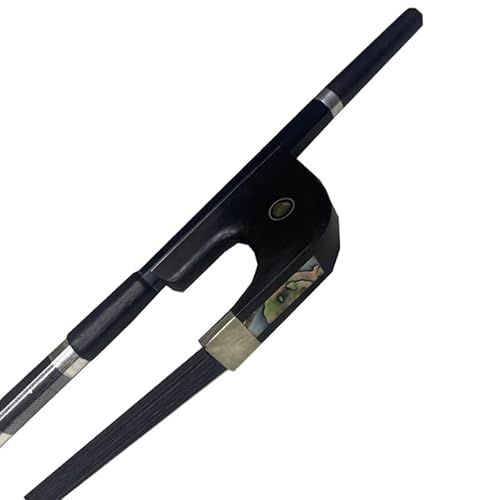
YINFEEL’s 3/4 bow features carbon fiber with a straightforward build and a focus on weight efficiency. The listing mentions both black and natural horsehair options, with basic specs that align with student or backup roles. Best for budget-conscious students who want a functional bow without extra ornamentation. Limitation: data is minimal on balance and frog details; consider auditioning if possible.
VINGOBOW 3/4 French Model 100BFB

This 3/4 French model emphasizes a Parisian eye decoration with ebony frog and abalone slide. It uses natural black Mongolian horsehair for resilience and rosining ease. The bow is designed for students and frequent travelers, offering reliable quick response. Best for students practicing diverse repertoire. Limitation: 3/4 size may feel light for players who prefer heavier bows for power in louder passages.
VingoBow Full Size Top Model 200BGB

This is marketed as a concert-use bow, combining high-tech braided carbon fiber with traditional handcrafted skills. The 4/4 bow weighs about 133g and is 76cm long, including the screw. Best for professional players seeking a loud, powerful tone with reliable balance across the dynamic range. Caution: higher price point may be a consideration for non-professional players.
Buying Guide
What size should you choose?
3/4 bows are common for intermediate players and students, while 4/4 bows suit professionals or players with larger hands who want more weight for tone. If you are traveling, a lighter, more compact 3/4 or French model may be preferable.
What hair type matters?
Natural black Mongolian horsehair is noted for resilience and rosining ease. It tends to deliver a stronger, wilder tone than pale or white hair, and is preferred by many professionals for projection.
How does carbon fiber impact durability and tone?
Carbon fiber offers durability, consistent flex, and a balanced response. It tends to be lighter or equally weighted compared with Pernambuco wood bows, while providing reliable performance in varying climates and with heavy use.
Which frog and ornamentation should you consider?
Frog styles (ebony, Parisian eye) influence grip feel and aesthetic. Ebony frogs with abalone slides can look premium and feel precise under a bow hand, but may come with higher cost.
What should you expect in terms of maintenance?
Regular rosin application and gentle cleaning help maintain response. Carbon bows generally require less humidity-sensitive care than wood bows, but check the manufacturer’s guidance for optimal care.
FAQ
- What size bow is best for a beginner?
Typically 3/4 bows are used by beginners transitioning to larger bass sizes, offering a balanced weight for control and tone.
- Are carbon fiber bows suitable for all genres?
Yes, they are versatile and work across classical, jazz, and ensemble settings, with consistent response in different acoustics.
- Do heavier carbon bows produce louder tones?
Weight can influence projection; however, technique and bowing pressure also play a major role in tone and dynamics.
- Is rosin customization important?
Rosin type and amount affect grip and response; use the amount recommended by the bow maker to avoid overly sticky or slippery feel.
- Should I choose a French model or a German model?
French models typically emphasize smooth handling and travel-friendliness; German models may emphasize power and robust tone. Choose based on grip preference and repertoire needs.
- Can I use a carbon bow for professional orchestras?
Yes, many professionals prefer carbon bows for consistency, durability, and clear projection in large halls.