
Best Cassette Tape Deck Player: Top Picks for Modern Nostalgia and Native Tape Lovers
Answering the search intent for a reliable cassette tape deck player, this guide highlights five practical options across classic dual-deck machines, versatile boomboxes, and compact USB/SD converters. These picks suit collectors, hobbyists, and casual listeners who want reliable dubbing, easy digital capture, or portable playback. The top choices emphasize ease of use, clear audio, and straightforward connectivity, with notes on who benefits most from each model.
Buying Tip: If you primarily want high-speed dubbing and integrated tape controls, prioritize dual-deck models with counters and auto stop. If you want USB or SD card recording, consider units that offer direct digital capture. For portability or space-saving setups, look at compact token converters that still support Type I tapes.
Product Summary
| Product | Best For | Key Feature |
|---|---|---|
| TEAC W-1200B Dual Cassette Deck | Deluxe home setup with dubbing and USB capture | Independent deck operation with USB PCM recording |
| TEAC AD-850-SE Cassette Deck & CD Player | Multifunction media playback and USB recording | CD/USB playback plus cassette with mic input |
| Pyle Home Digital Dual Cassette Deck | Budget dual-deck setup with auto controls | 3-digit counter, CrO2 selector, auto tape stop |
| PyleUsa Dual Cassette Deck | Rugged, rack-mountable dual-deck for production | Removable rack hardware and auto tape features |
| ONKYO TARW244 Double Cassette Deck | Mid-range dubbing with noise reduction | Dolby B/C, auto reverse, CD synchro |
TEAC W-1200B Dual Cassette Deck

The TEAC W-1200B offers dual cassette decks with independent operation and a dedicated noise reduction framework to limit hiss during playback. It supports high- and standard-speed dubbing, plus a USB output option for digital recording. This model is best for users who want a feature-rich, studio-grade experience with flexible dubbing and the ability to transfer analog tapes to digital formats. Best for serious hobbyists and home studios seeking robust performance.
TEAC AD-850-SE Cassette Deck & CD Player
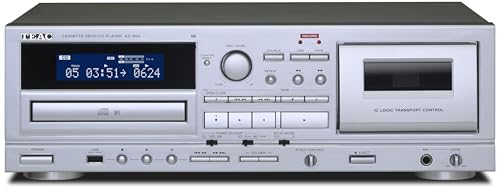
This versatile unit combines CD/USB playback with a cassette deck and a microphone input featuring an echo effect. It’s ideal for karaoke-like setups, mixed-media playback, and easy digitization of tapes to USB drives. Choose this if you want a compact, all-in-one solution for music playback and simple recording-to-USB without needing a separate computer.
Pyle Home Digital Dual Cassette Deck
This Pyle model emphasizes control and production readiness. With a 3-digit tape counter, CrO2 tape selector, auto tape selector, and auto stop, it suits users who want straightforward dubbing workflows and precise level regulation. Best for small studios or hobbyists who value integrated controls and solid connectivity through RCA inputs/outputs.
Pyle Home Dual Cassette Deck with Removable Rack Hardware
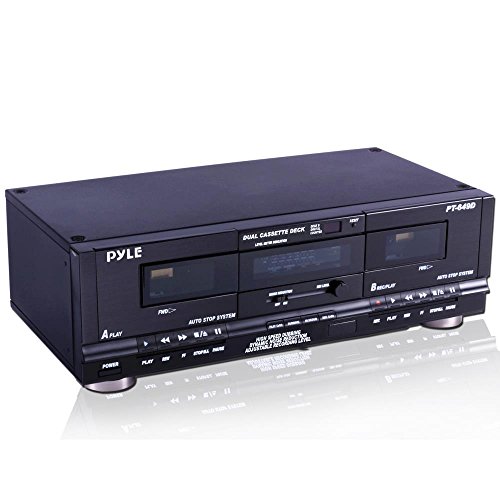
Similar to the earlier Pyle option, this model emphasizes removable rack mounting hardware and a CrO2 tape selector with a built-in 3-digit counter. It’s best for users who want to integrate a dual-deck system into a rack-mountable setup while maintaining easy tape management and production control. Use this if space-saving rack mounting is a priority and you need reliable auto stop features.
ONKYO TARW244 Double Cassette Deck
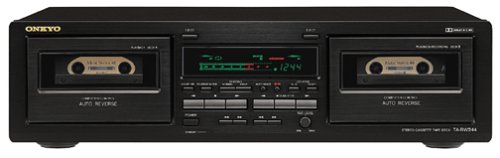
Onkyo TARW244 focuses on high-speed dubbing and high-fidelity noise reduction with Dolby B/C and headroom expansion. It’s well-suited for users who need reliable auto-reverse operation and a balance of features between classic dubbing and modern noise control. Consider this if you want robust dubbing options without venturing into premium digital features.
Buying Guide
What to consider when choosing a cassette tape deck player
Tape type compatibility, dubbing features, and the availability of a digital capture path are top considerations. If you plan to digitize tapes frequently, units with USB or SD card outputs simplify transfers without a computer. For home studios, choose models with independent deck operation, noise reduction, and robust input/output options.
Which features matter most for different buyers
- Best for dubbing and production: Dual-deck models with auto stop, tape counters, and chrome/CrO2 selectors.
- Best for digitizing tapes: Models offering USB or SD card recording and straightforward transfer to digital formats.
- Best for space-saving setups: Compact units or rack-mountable dual decks.
- Best for casual listening: Basic playback with simple inputs/outputs and solid sound.
- Best for karaoke or mic use: Cassette decks with a mic input and echo effects.
Connection and compatibility considerations
- RCA line inputs/outputs enable easy integration with amplifiers and receivers.
- Auto reverse and Dolby noise reduction improve playback quality for older tapes.
- USB/SD outputs enable quick digital archiving or convenient playback from digital media.
FAQ
- Q: Do all cassette decks support high-speed dubbing?
A: Dual-deck models commonly offer normal and high-speed dubbing, but always verify the specific unit’s dubbing modes in the features list. - Q: Can I digitize cassette tapes without a computer?
A: Some models provide built-in USB or SD card recording, which allows direct digitization to USB drives or SD cards. - Q: Is Dolby noise reduction essential for playback?
A: Dolby B/C reduces hiss on older tapes; it is beneficial for playback clarity on many cassettes, especially when recording or archiving. - Q: Are rack-mountable decks worth it for home use?
A: If you have a dedicated rack or fixed setup, removable rack hardware helps organize components and save space. - Q: What’s the difference between Type I, II, and IV tapes?
A: Type I is standard magnetic tape; Type II (CrO2) and Type IV (Metal) offer higher quality with different biasing. Check the device’s auto-detect features for compatibility.