
Find compact stereo systems that play CDs and stream via Bluetooth. This guide compares top CD-and-Bluetooth combos that blend retro playback with modern wireless convenience. Below is a quick summary of the five featured models to help you scan key features before the detailed reviews.
| Product | Key Features | Ideal For |
|---|---|---|
| AIWA Exos Home Speaker | 30W RMS, Built-In CD, Optical Input, FM, Remote | Room-Filling Sound & CD Playback |
| Sharp XL-BH250 5-Disc System | 5-Disc CD Changer, Bluetooth, USB, AM/FM | Multi-Disc Listening & Presets |
| Gueray Portable CD Desktop Player | Bluetooth 5.0, USB/TF/AUX, Timer, LCD | Desktop Use & Versatile Inputs |
| PHILIPS Micro Music Sound System | CD/MP3, Bluetooth, USB, FM, 18W Output | Compact Home Stereo With Wireless Streaming |
| MONODEAL Portable CD Player | Bluetooth Tx/Rx, 4000mAh Battery, Remote | Rechargeable Portable Use & Long Playtime |
AIWA Exos Home Speaker With Built-In CD Player

Key Features: Dual 1” tweeters and dual 2” bass units with individual amplifiers, 30W RMS output, integrated CD player, Bluetooth connectivity, FM radio, optical digital input, IR remote control.
This system emphasizes acoustic design and higher RMS power than many compact CD players. The dedicated tweeters plus dual bass units with separate amplification target clearer highs and fuller lows, while the optical input supports a digital connection to TVs or streamers. The built-in CD player retains compatibility for physical media, and the included remote enables convenient control from a distance.
Sharp XL-BH250 5-Disc Bluetooth Speaker System

Key Features: 5-disc CD changer, Bluetooth streaming, USB playback, AM/FM tuner with 40 presets, supports CD-R/RW, MP3 and WMA.
This unit is focused on multi-disc convenience and radio presets. The 5-disc carousel makes it easy to queue multiple CDs without swapping discs, and broad format support (CD-R/RW, MP3/WMA) increases playback flexibility. The large preset capacity suits users who rely on radio tuning. Bluetooth streaming covers wireless playback from phones and tablets.
Gueray Portable Bluetooth Desktop CD Player

Key Features: Bluetooth 5.0 HiFi speakers, supports CD/CD-G/MP3/WMA, FM radio, TF card and USB playback, LCD display, timer, remote control, USB Type-C charging.
Designed for desktop and small-room use, this model provides wide format support and updated connectivity. Bluetooth 5.0 improves pairing stability, while USB and TF slots allow direct playback from flash storage. The timer and remote are convenient for scheduled listening or bedside use. The unit can function as a Bluetooth transmitter or receiver, expanding integration options.
PHILIPS Bluetooth Micro Music System With CD Player
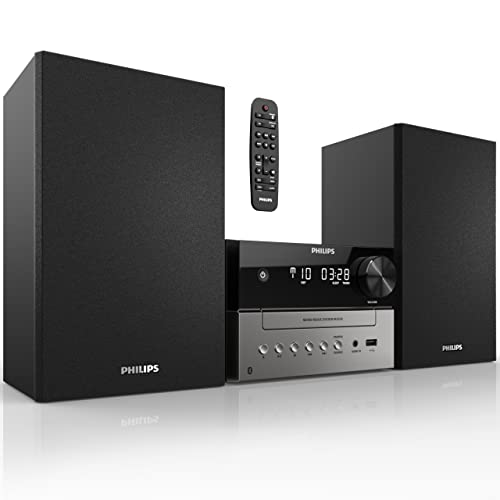
Key Features: CD and MP3-CD playback, Bluetooth wireless streaming, USB input, FM radio with 10 presets, dual amplifier design delivering up to 18W output, remote control included.
This compact system prioritizes a balance of size and functionality. The dual amplifier and bass-reflex design (in related Philips models) help extract more presence from smaller speakers. Bluetooth and USB inputs allow modern streaming alongside CD playback. The unit is suitable for users who need a small footprint without sacrificing basic stereo capabilities.
MONODEAL Portable CD Player With Rechargeable Battery

Key Features: Bluetooth transmitter and receiver, dual HiFi stereo speakers, 4000mAh rechargeable battery (approx. 12 hours), remote control, supports USB/AUX/headphones, fast and stable Bluetooth pairing.
The MONODEAL unit emphasizes portability and battery-powered operation. The built-in 4000mAh battery supports extended playback away from outlets, making this a versatile option for outdoor or mobile use. Bluetooth Tx/Rx capability enables both streaming to the unit and output from it to other Bluetooth devices. Remote control and multiple outputs expand usability for various listening setups.
Buying Guide: How To Choose A CD And Bluetooth Speaker System
Selecting the right CD-and-Bluetooth system depends on usage, space, and feature priorities. Below are the main considerations to compare models effectively.
Audio Power And Speaker Design
- RMS Power vs Peak: RMS indicates continuous output and is a better measure of sustained loudness than peak watts.
- Drivers And Tweeters: Separate tweeters and dedicated bass drivers often yield clearer highs and fuller lows in compact systems.
- Bass Reflex / Enclosure Type: Systems with bass-reflex ports or larger cabinets typically offer more pronounced low-end response.
CD Functionality And Media Support
- Disc Formats: Check support for CD-R, CD-RW, MP3 CDs and WMA if you plan to play burned discs.
- Multi-Disc Changers: 3–5 disc changers reduce disc swapping for heavy CD users.
Connectivity Options
- Bluetooth Version: Newer versions (e.g., 5.0) offer improved range and stability.
- Aux, Optical, USB, TF Card: Multiple inputs increase flexibility for TV, phone, USB drives, or memory cards.
- Bluetooth Tx/Rx: Devices that can act as transmitter and receiver are useful for both sending and receiving audio wirelessly.
Portability And Power
- Rechargeable Battery: Built-in batteries enable outdoor use; check claimed run times and charging method.
- Weight And Footprint: Consider desktop vs shelf vs portable placement when measuring space.
User Convenience Features
- Remote Control: Handy for living-room or bedroom setups.
- Display And Presets: LCD displays and radio presets simplify navigation and tuning.
- Timer Functions: Sleep or timer options are useful for bedside or scheduled playback.
Comparison Perspectives
- Best For Sound Quality: Prioritize models with higher RMS, dedicated tweeters, and optical inputs for cleaner digital sources.
- Best For CD Collections: Choose multi-disc changers and broad format support for heavy CD users.
- Best For Portability: Look for rechargeable units with stable Bluetooth pairing and multiple outputs.
- Best For Small Spaces: Compact micro systems with balanced amplification offer a small footprint without sacrificing functionality.
Use these criteria to match product specs to your needs: power, format support, connectivity, portability, and convenience features. Comparing those aspects will help you pick the system that best fits your listening habits and space.