Best Ceiling Fire Alarm Speaker Systems for Clear Alerts
Introduction
Choosing a reliable ceiling fire alarm speaker system is vital for ensuring clear, prompt evacuation alerts in commercial and residential spaces. This guide highlights five top options tailored for ceiling-mounted sound and strobe signaling, with features designed to maximize audibility and visibility. Each product is evaluated for installation practicality, compatibility with common fire alarm networks, and durability in high-traffic environments. Use the buying guide below to compare capabilities, mounting options, and maintenance considerations to find the right fit for your building’s safety plan.
| Product | Brand | Key Feature |
|---|---|---|
| System Sensor SPSCWL Ceiling Mount Speaker Strobe | System Sensor | Ceiling mount, clear lens, white |
| Wheelock ELSTRC Ceiling Fire Alarm Strobe Light | Wheelock | 24V, red fire lettering |
| Pure Resonance Audio VCA8 Vector Ceiling Speaker Array | Pure Resonance Audio | 360-degree coverage, 120W |
| System Sensor SPSRL – L-Series Wall Mounted Speaker Strobe | System Sensor | Wall-mounted, red strobe |
| QWORK Wired Emergency Fire Alarm Station (pull station) | QWORK | Dual action, 12/24V DC |
System Sensor SPSCWL Ceiling Mount Speaker Strobe

The System Sensor SPSCWL is designed for ceiling installation, combining a speaker with a strobe to deliver synchronized audio and visual alerts. The unit is described as an indoor ceiling speaker strobe, finished in white with red lettering for high visibility. This integration helps facilities meet code requirements for audible and visible notifications in busy spaces like offices, schools, and healthcare environments. Installation typically involves mounting to standard ceiling grids and wiring into the building’s notification system. The device prioritizes reliable operation during emergencies and aims to minimize misfires by offering a clear, conspicuous signal.
Key considerations include compatibility with existing annunciation networks, the brightness of the LED or strobe, and ease of testing continuity prior to activation. The product’s white housing with red lettering ensures legibility against typical ceiling backdrops, supporting quick recognition during evacuations. For maintenance, verify that the housing remains clean and that the strobe lens remains unobstructed to preserve intensity. This model is suited for spaces where ceiling-mounted visibility is essential to reach occupants quickly.
Wheelock ELSTRC Ceiling Fire Alarm Strobe Light

The Wheelock ELSTRC ceiling strobe integrates a red 24V strobe with fire lettering, designed to deliver a noticeable alert for occupants. Wheelock is a recognized name in fire safety equipment, and this ceiling-mounted option emphasizes robust visibility and fast alerting in commercial environments. Its compact form complements various ceiling types while maintaining a strong optical output to capture attention across rooms. When evaluating this unit, consider synchronization with other notification devices and the reliability of its power supply, which is critical for continuous operation during emergencies.
Operational considerations include brightness calibration to avoid nuisance activations, compatibility with existing fire alarm control panels, and the ease of installation in both new builds and retrofit projects. The ELSTRC is positioned for spaces prioritizing early detection and immediate notification, such as corridors, classrooms, and open-plan offices. Regular testing and lens cleaning help sustain its performance over time.
Pure Resonance Audio VCA8 Vector Ceiling Speaker Array

The Pure Resonance Audio VCA8 is an in-ceiling speaker array designed to provide broad, hemispherical coverage. With an omnidirectional 360 x 180-degree dispersion, this model aims to eliminate dead zones and ensure consistent audibility across large rooms. The unit is described as an infinite-baffle ceiling speaker that drops into standard ceiling tile openings, offering a clean, unobtrusive installation. rated at 120 Watts into 8 Ohms, it is built to deliver clear, intelligible voice alarms and messages without overpowering adjacent spaces.
Key considerations include impedance matching with existing amplifiers, the number of units required for full-room coverage, and the ceiling’s structural suitability for installation. Maintenance involves periodic fixture checks, dust management around the grille, and ensuring secure mounting. For facilities seeking broad coverage with minimal speaker placements, the VCA8 provides a practical option for audible alerts with consistent performance across varied occupancy zones.
System Sensor SPSRL – L-Series Wall Mounted Speaker Strobe
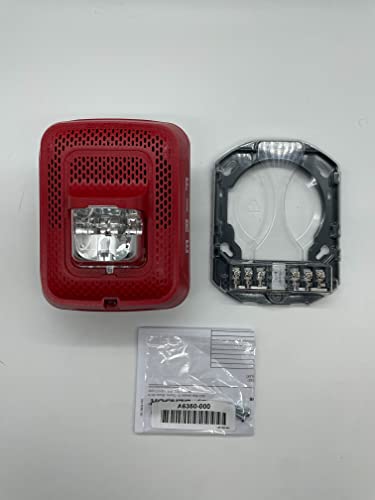
The SPSRL L-Series is a wall-mounted speaker strobe aimed at providing audible alerts with visible signaling in strategic wall locations. This System Sensor model emphasizes a straightforward mounting approach and a visible strobe to reinforce evacuation messaging. Suitable for hallways, entryways, and other vertical surfaces, the SPSRL is designed to pair well with common fire alarm control panels, ensuring synchronized audio-visual cues. Installation considerations include ensuring proper wall clearance for the audible output and visibility from multiple angles, particularly in high-traffic areas.
When evaluating, users should assess the strobe brightness, color coding, and the device’s ability to perform reliably in varied environmental conditions. Regular testing of the strobe, along with routine maintenance of the communication wiring, helps preserve performance and reduces the risk of miscommunication during emergencies.
QWORK Wired Emergency Fire Alarm Station

The QWORK wired emergency fire alarm station is a dual-action pull station intended for traditional fire alarm systems. This manual call point supports 12/24V DC operation and includes two keys for access control, enabling authorized testing or alarm triggering. While not a ceiling speaker, it remains a critical component within a comprehensive alert system, providing a physical activation point to initiate alarms in case of fire. When integrated with ceiling audio or strobe devices, it helps ensure occupants receive timely, multi-modal alerts.
Key factors include ease of use under stress, visibility of the activation mechanism, and compatibility with existing wiring standards. The dual-action requirement helps prevent accidental activations, and the included keys support secure operation in high-traffic environments such as schools and offices. Regular inspection and proper maintenance are essential to ensure a reliable emergency response workflow.
Buying Guide: Key Purchase Considerations
Selecting ceiling fire alarm speakers and related signaling devices involves balancing audibility, visibility, and installation practicality. Consider these perspectives to inform your decision:
- System compatibility: Confirm compatibility with your current fire alarm control panel, annunciator modules, and building management systems. Look for standard mounting patterns and power requirements (12V, 24V, or equivalent).
- Audibility and visibility: Prioritize devices with high-decibel output and bright, reliable strobes. In busy environments, ensure coverage reduces dead zones by using multiple ceiling speakers or staggered placements.
- Installation environment: Indoor ceilings, open atriums, or corridors may demand different mounting heights and grille designs. Consider acoustic properties and potential sound reflections in large spaces.
- Maintenance and testing: Choose models with accessible wiring, straightforward lens cleaning, and easy testing procedures. Establish a regular testing schedule for both audio and visual signaling components.
- Durability and compliance: Look for UL/ULC listings and corrosion-resistant housings if installed in challenging environments. Verify local codes and standards for audible/visual signaling in your building type.
- Scalability and layout: For larger facilities, plan the number of speakers needed to achieve uniform coverage. Factor in future renovations or expansions to avoid under- or over-sizing.
- Power considerations: Assess the available power supply and whether devices require manual or line-powered operation. Ensure adequate headroom for synchronized multi-device activation.
- Training and accessibility: Ensure building occupants understand the signaling system and that manual call points are clearly marked and accessible to staff following safety protocols.