Best Center Channel Speaker Kit for Immersive Home Theater
Choosing the right center channel speaker kit is key to crisp dialogue and an enveloping soundstage. This guide highlights five top options with strong performance, compatibility with Dolby Atmos and DTS:X, and sleek builds that fit modern living rooms. Each option includes essential features to help you compare based on size, power, and efficiency, so you can pick a kit that matches your existing speakers and AVR setup.
The following table summarizes five strong picks chosen for clarity, build quality, and value. Use it as a quick reference when evaluating options side-by-side.
| Product | Brand | Key Strengths | Approximate Size Class |
|---|---|---|---|
| Polk Monitor XT35 | Polk Audio | Slim profile, 4″ woofers with 1″ tweeter, hi-res inputs, Dolby Atmos & DTS:X ready | Low-profile center |
| Klipsch R-52C | Klipsch | Dual 5.25″ copper IMG woofers, 1″ aluminum LTS tweeter, tractrix horn | Compact to mid-size |
| Klipsch Reference Next-Generation R-30C | Klipsch | 90° x 90° Tractrix horn, LTS aluminum tweeter, refined woofer resonance | Compact |
| Polk Monitor XT30 | Polk Audio | 1″ tweeter, dual 5.25″ woofers, hi-res inputs, slim build | Compact |
| Polk Signature Elite ES35 | Polk Audio | Six 3″ woofers, 1″ tweeter, Power Port bass, hi-res compatibility | Mid-size |
Polk Monitor XT35 Slim Center Channel Speaker

The XT35 delivers a slim profile that minimizes obstruction around the TV while prioritizing clear dialogue. It uses a 1″ Terylene tweeter and four 3″ dynamically balanced woofers to provide an open mid-range with robust bass from a compact enclosure. The build emphasizes modern aesthetics and durability, making the XT35 a good match for contemporary living rooms. Its design supports high-resolution sound and compatibility with Dolby Atmos and DTS:X from various inputs, including streaming services.
Klipsch R-52C Center Channel Speaker
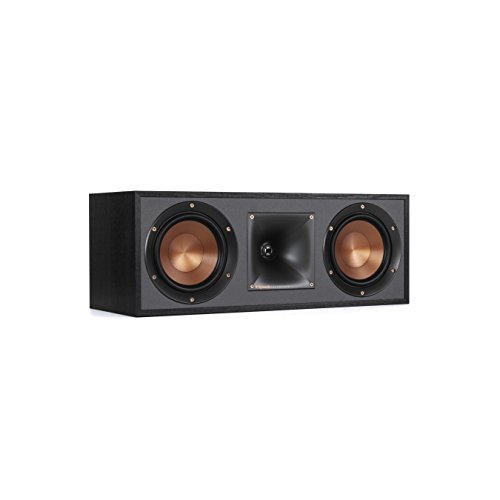
The R-52C centers on dual 5.25″ copper IMG woofers paired with a 1″ aluminum tweeter and a 90×90 square tractrix horn. This combination aims to deliver strong midrange presence and detailed high frequencies, with a frequency response tuned to emphasize crisp dialogue. The Tractrix horn helps control dispersion for a wider, more balanced soundstage, suitable for mid to large rooms and multi-channel setups seeking clarity in vocal rendering.
Klipsch Reference Next-Generation R-30C
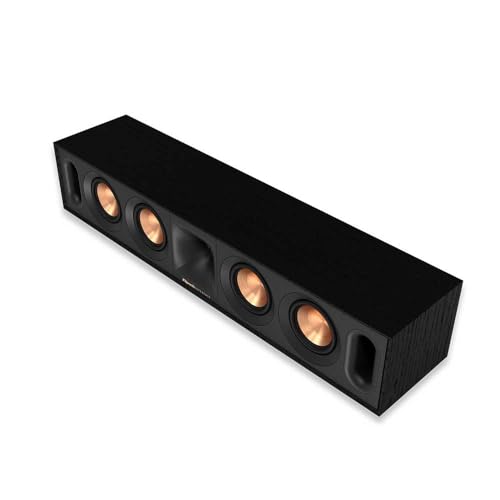
The R-30C features an all-new 90° x 90° Tractrix horn, a Linear Travel Suspension aluminum tweeter, and spun-copper TCP woofers for improved high-frequency control and smoother midrange response. The design emphasizes a wider dispersion pattern and reduced distortion, aiming to deliver dialogue with greater intelligibility while maintaining a broad and accurate soundstage across listening positions.
Polk Monitor XT30 Compact Center Channel Speaker
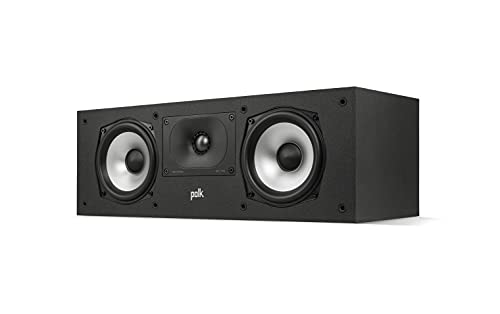
The XT30 is designed for compact spaces while delivering a robust center-channel performance. It features a 1″ tweeter and dual 5.25″ dynamically balanced woofers, supporting Dolby Atmos and DTS:X compatibility for multi-dimensional sound. The XT30 provides a balanced mid-range and solid bass extension without dominating room acoustics, making it suitable for tighter home theater configurations.
Polk Signature Elite ES35 Slim Center Channel Speaker

The ES35 centers on a potent six-driver setup with a 1″ tweeter and six 3″ woofers, combined with Polk’s Power Port technology to enhance bass presence without excessive port noise. Its slim profile is designed to blend with larger TVs while maintaining dynamic output suitable for Dolby Atmos and DTS:X setups. The ES35 aims to deliver a full, immersive center-channel experience with impactful, controlled bass and detailed vocal reproduction.
Buying Guide
Key considerations for selecting a center channel speaker kit:
- Room size and seating: Larger listening rooms benefit from more drivers and bigger woofers, while compact rooms benefit from slim designs like the XT35 or XT30 that minimize space taken by the center channel.
- Voice clarity vs. full-range: If dialogue clarity is paramount, prioritize designs with optimized horn loading or multiple mid drivers to reduce vocal masking and improve intelligibility.
- Power handling and impedance: Check that the center channel’s impedance aligns with your AV receiver’s channel impedance and that the power handling matches your amp’s output to avoid distortion.
- Dolby Atmos and DTS:X compatibility: If you use an immersive surround setup, confirm the center channel can contribute effectively to height-channel configurations and overall surround sound fidelity.
- Aesthetics and placement: Slim profiles fit under TVs with slim bezels; consider wall-mount compatibility and finish options to match your room decor.
- Build quality and durability: Aluminum tweeters, rugged enclosures, and well-designed crossovers contribute to long-term reliability and cleaner highs and mids.
- Budget and value: Compare the trade-offs between number of drivers, cabinet size, and additional technologies (like Power Port) to estimate long-term satisfaction per dollar.
When assembling a home theater system, a well-chosen center channel should deliver intelligible dialogue, stable center image, and a coherent overall sound field in conjunction with surrounding speakers. Evaluating drivers, horn design, and crossover philosophy helps predict how well a center channel will integrate with front left/right channels and the rest of the system. Consider testing in-store if possible, and review consumer feedback on long-term reliability and real-world performance to complement technical specs.