Best Center Speaker and Subwoofer for Immersive Home Theater
Creating a cinematic listening experience at home hinges on pairing a capable center channel with a strong subwoofer. This guide highlights five top options that balance dialog clarity, dynamic bass, and easy integration with a surround system. Each pick is evaluated for sound accuracy, build quality, and compatibility with common home theater setups.
| Product | Brand | Key Benefit |
|---|---|---|
| Klipsch Reference Home Theater Bundle | Klipsch | Includes center channel and a wireless sub for streamlined setup |
| Klipsch R-120SW Subwoofer | Klipsch | Powerful, deep bass with a 12″ driver |
| Klipsch R-52C Center Channel | Klipsch | Precise dialogue with Tractrix horn technology |
| Klipsch Reference Series 5.1 Pack | Klipsch | Complete surround solution with built-in Atmos-ready design |
| Polk Audio TL1 Center Channel | Polk Audio | Enhanced imaging and soundstaging with Time Lens |
Klipsch Reference Home Theater Bundle

The bundle combines two pairs of Klipsch R-41M bookshelf speakers with a dedicated R-52C center channel and an R-80SWi 8″ wireless subwoofer. The R-41M uses a 1″ aluminum Linear Travel Suspension tweeter and a 4″ copper-spun IMG woofer, delivering clear highs and lively mids with wide dispersion. Proprietary 90°x90° Tractrix horn technology directs high frequencies toward listeners for enhanced clarity while minimizing room reverb. The center channel anchors dialogue with precise vocal reproduction, critical for movies and TV dialogue. The wireless sub offers convenient placement options and tight integration with the front channels, creating a cohesive front soundstage for immersive surround sound. Ideal for rooms where a complete Klipsch ecosystem is desirable and wireless bass is preferred.
Klipsch Reference Series 5.2 Home Theater Pack

This 5.2 system brings the R-625FA floorstanding speakers with built-in elevation channels, paired with R-52C center and R-41M bookshelf speakers, plus R-12SW subwoofers. The R-625FA towers feature dual 1″ aluminum diaphragm compression tweeters and 6.5″ copper-spun IMG woofers for wide, detailed highs and strong bass. The built-in elevation channels enable Dolby Atmos-like overhead effects, enriching both movies and games. The comprehensive package ensures a coherent front stage and ample bass, suitable for mid-to-large rooms seeking an elevated surround experience without extensive customization.
Klipsch R-120SW Subwoofer

The R-120SW Subwoofer features a 12″ spun-copper woofer and a high-excursion design delivering deep, controlled bass from 29 Hz up to 120 Hz with minimal distortion. Its 400-watt dynamic power supports explosive movie effects and music playback, creating a tangible low end that complements center and surround channels. The cabinet is designed for room-optimizing bass response and efficient room placement, making it a versatile option for home theaters seeking significant sub bass without excessive size. This sub is known for tight integration with Klipsch towers and bookshelves, maintaining musicality in addition to impact for action scenes.
Klipsch R-52C Center Channel
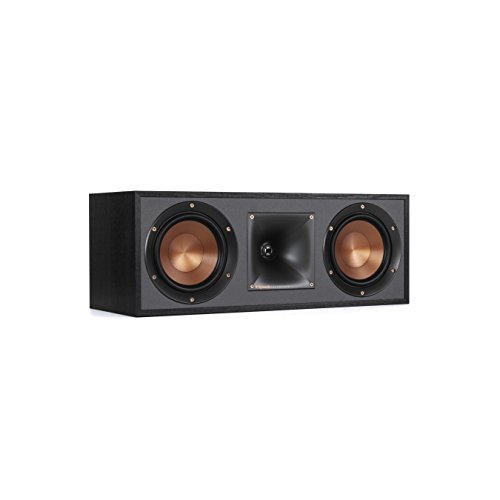
The R-52C is a dedicated center speaker designed to reproduce dialog with accuracy. It features dual 5.25″ spun-copper IMG woofers and a 1″ aluminum tweeter paired with a 90×90 square Tractrix horn, delivering clear, intelligible voices across a wide listening area. Frequency response extends roughly from 89 Hz to 21 kHz, offering strong midrange presence and seamless blending with front-channel towers or bookshelves. This center channel is engineered for precise localization and natural vocal reproduction, making it a staple for movie dialogue and streaming content alike.
Klipsch Reference Series 5.1 Pack
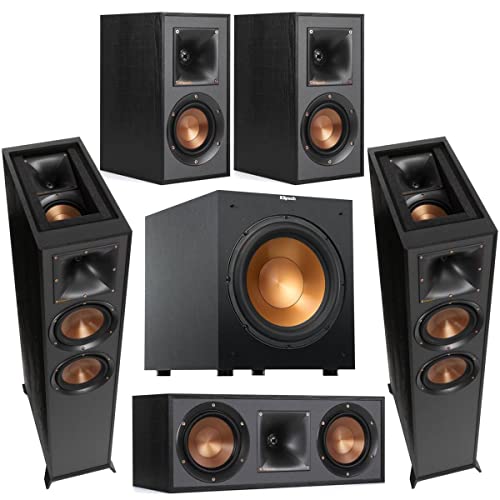
This 5.1 system includes two R-625FA floorstanding speakers, two R-41M bookshelf speakers, an R-52C center, and an R-12SW subwoofer. It also provides matched grilles, feet, and basic hardware. The R-625FA elevation channels add a Dolby Atmos-like dimension to the soundstage, while the combination of high-frequency and midrange drivers aims for expansive imaging and dynamic range. The subwoofer delivers deep bass to anchor the overall system, enhancing both cinematic effects and musical passages with authority. This package suits listeners seeking a complete Klipsch ecosystem with room-coverage and scalable power.
Polk Audio TL1 Center Channel
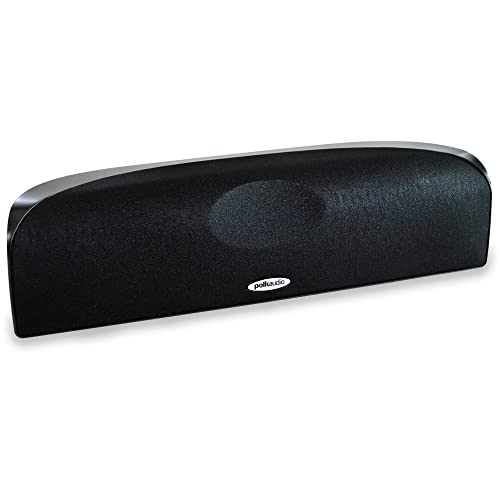
The Polk TL1 Center Channel is designed to improve soundstaging with Time Lens technology that aligns drivers for consistent imaging. It features a 1/2″ silk dome tweeter and dual 2-1/2″ Dynamic Balance mid/woofers, and a curved enclosure with a high-gloss finish to complement modern flat-panel displays. While primarily a center channel, its design emphasizes dialog clarity and tonal balance, making it a solid alternative for systems that prioritize intelligible speech and seamless integration with Polk bookshelf or tower speakers in a multi-channel setup.
Buying Guide
- Center channel considerations: Choose a model with a high-quality horn or dispersion control to maintain dialog clarity across seating positions. Look for drivers sized for midrange focus (around 5.25″ to 6.5″ woofers) paired with a solid tweeter for balanced vocal reproduction.
- Subwoofer considerations: A larger diameter driver (12″ or more) often delivers deeper bass, but room size and placement matter. Consider wattage and DynPower or dynamic headroom to handle action scenes without distortion.
- System matching: Ensure the center channel and subwoofer share tonal characteristics with any front left/right speakers to avoid sound imbalances. If you plan Atmos-like effects, look for packages that include elevation or upward-firing channels or compatible subwoofers that can be positioned for optimal bass response.
- Placement and room acoustics: Bookcases, walls, and furniture affect bass response. Use wall dampening, carpet, or acoustic treatments to reduce unwanted bass modes. Subwoofer crawl testing can help determine optimal placement for even bass distribution.
- Wiring and connectivity: Wireless subwoofers add convenience but may introduce latency or interference. If possible, test with your receiver’s bass management settings to achieve a tight, integrated feel with clear dialogue.
- Budget and scalability: Start with a solid center and sub combo, then add matching speakers as space and budget allow. Consider upgrade paths that maintain tonal continuity across all channels.