
Best Cheap Audio Interfaces for Mac: Budget Picks for Clear Sound
The best cheap audio interfaces for Mac deliver clean, reliable sound without breaking the bank. This guide highlights five affordable options that suit beginners, podcasters, and home studios. Each product is evaluated for who it’s best for, and why it was selected. The top picks emphasize low latency, good preamps, and easy setup on Mac computers. For quick comparisons, see the summary table below.
| Product | Best For | Why It Stands Out |
|---|---|---|
| Focusrite Scarlett Solo 3rd Gen USB-C | Home recording, vocals, and guitar | Excellent pre-amps, Air mode, solid 24-bit/192kHz conversion |
| Synido 2×2 USB Audio Interface | Streaming and multi-monitor setups | Three monitoring modes, low latency, clear indicators |
| PIYONE Audio Interface 2×2 | Mac users needing easy plug-and-play | Class-compliant USB-C, drivers not required, stylish |
| Focusrite Scarlett Solo 4th Gen USB-C | Vocal/guitar demos, portable studio | Air mode, 120dB dynamic range, strong converters |
| M-AUDIO M-Track Duo | Podcasts and dual inputs | Versatile outputs, zero-latency monitoring |
Focusrite Scarlett Solo 3rd Gen USB-C Audio Interface

Best for solo recording of vocals or guitar, the Focusrite Scarlett Solo 3rd Gen offers pro pre-amps and a switchable Air mode for brighter top-end on acoustic sources. It balances simplicity with high quality, making it suitable for beginners who want studio-grade results without complexity. The two instrument inputs handle guitar and bass cleanly, while Gain Halos help prevent distortion. Use this if you want reliable, easy Mac compatibility and a known brand name in your first home studio setup.
Who it’s for: solo musicians and podcasters who need straightforward setup with strong mic pre-amps and good converters. Why selected: Air mode and robust 24-bit/192kHz performance make it a solid, affordable entry point. Caution: The Solo 3rd Gen has limited I/O compared to two-channel interfaces, so plan around single-mic or basic guitar recording needs.
USB C Audio Interface for Recording Music, Synido 2×2

Better for streaming, live broadcasting, and Mac users who value easy monitoring diversity. The Synido 2×2 interface supports three monitoring modes—Stereo, Mix, and USB—allowing precise control over what you hear during recording or playback. The independent controls and LED indicators help manage levels to prevent clipping. Choose this if you want flexible monitoring without driver fuss, and you’re integrating computer audio with live performance.
Who it’s for: content creators who juggle recording and streaming. Why selected: versatile monitoring modes and user-friendly design. Caution:While feature-rich, users should confirm that the input/output layout aligns with their specific recording setup.
PIYONE Audio Interface 2×2

Best for plug-and-play Mac users who want a stylish, portable audio interface with 24-bit/192kHz fidelity. PIYONE emphasizes USB-C connectivity and driver-free operation, making it easy to start recording with minimal setup. The two-channel design is suitable for voice and instrument recording, while the illuminated gain knobs improve visibility in dim studios. Choose this if you want straightforward operation with a modern look and reliable Mac compatibility.
Who it’s for: beginners and travelers who need a compact, driver-free interface. Why selected: plug-and-play Mac compatibility and high-fidelity recording at a reasonable price. Caution: The build and features are simplified compared to larger multi-input interfaces, so plan for future expansion if needed.
Focusrite Scarlett Solo 4th Gen USB-C

The 4th Gen Scarlett Solo extends Focusrite’s proven design to a broader audience, offering a studio-like sound with a strong dynamic range and improved Air mode for brighter vocal and guitar presence. This model is well-suited for Mac users seeking high-quality converters in a compact package. It’s a good pick for those who want polished demos or podcasts with minimal setup. Best for: vocalists and guitarists who require portability without compromising on tonal balance.
Why selected: updated Air mode and high dynamic range provide a noticeable sonic edge. Caution: As a single-in, single-out device, it’s not ideal for complex multi-mic recording sessions unless you add more gear later.
M-AUDIO M-Track Duo USB Audio Interface
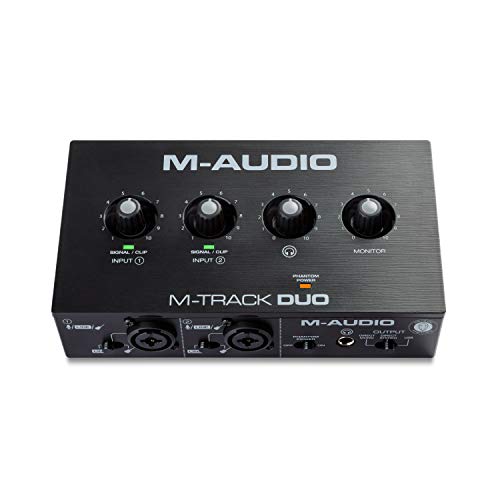
Best for podcasts and dual-input recording, the M-Track Duo provides 48kHz resolution with two combo XLR/Line inputs and a simple monitoring setup. It’s a practical choice for Mac users who want to capture multiple voices or instruments with straightforward monitoring options, including a direct USB/Direct switch for zero-latency listening. Choose this if you need reliable dual-input performance at a budget-friendly price.
Who it’s for: podcasters and small bands. Why selected: flexible input options and easy monitoring. Caution: Fewer advanced features than some competitors may be a consideration for advanced studios.
Jolgoo 2×2 USB Audio Interface
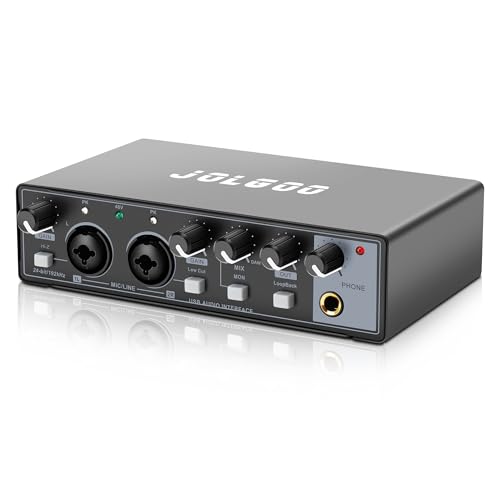
Best for studio-grade quality on a budget, Jolgoo offers 24-bit/192kHz audio with zero-latency direct monitoring and phantom power for condenser mics. The dual inputs and +48V phantom power make it a solid choice for home studios that require flexibility across mics and instruments. This model is suitable for creators who want crisp vocal and instrument capture without a large investment.
Who it’s for: independent artists and podcasters who need real-time monitoring and phantom power. Why selected: strong conversion and low-latency capability. Caution: Ensure your mic requirements align with the included phantom power as certain dynamic mics do not require it.
Buying Guide
What to consider when choosing a cheap audio interface for Mac
- Input/Output needs: Determine how many mics and instruments you plan to record simultaneously. If you only need one mic, a Solo-style interface may be enough; for two voices or guitars, a 2×2 model is better.
- Latency and monitoring: Look for zero-latency monitoring or direct monitoring options that help during recording and streaming. Three monitoring modes can offer flexibility for different tasks.
- Mac compatibility: Most of these interfaces are class-compliant or offer drivers that install quickly on Mac. Ensure your macOS version is supported and check for easy plug-and-play setup.
- Pre-amps and headroom: Good pre-amps reduce noise and distortion, especially in vocal or guitar recording. Air mode or similar features can enhance intelligibility and presence on acoustic sources.
- Converters and sample rate: A 24-bit/192kHz spec offers higher fidelity. For most home setups, 24-bit/96kHz is sufficient, but 192kHz can be beneficial for critical projects.
- Portability vs. expandability: If you travel or have a compact space, a smaller interface is advantageous. If you expect growth, consider models with additional inputs or expandability.
FAQ
Are these interfaces compatible with macOS without drivers?
Most listed models are class-compliant and work with macOS without additional drivers. Some may offer optional drivers for specific macOS versions; check the product page for details.
What is the difference between 24-bit/192kHz and 24-bit/96kHz?
Higher sample rates capture more detail, potentially improving fidelity on complex material. For casual use, 24-bit/96kHz is usually sufficient.
Is a 2×2 interface better than a 1×2 for beginners?
Yes, a 2×2 provides more inputs for two microphones or a microphone and an instrument simultaneously, offering more flexibility for future projects.
Do these interfaces provide direct monitoring?
Most do, with some offering dedicated zero-latency direct monitoring or a USB/Direct switch for real-time listening.
Can I use these interfaces with iPads or iOS devices?
Some models support iOS via USB-C, but check each product’s compatibility and power requirements before use with mobile devices.