
Best Budget Floor Standing Speakers for Big Room Sound
Looking for cheap floor standing speakers that still deliver clear highs, strong mids, and solid bass? This guide highlights five solid choice options, focusing on value without sacrificing core sound quality. The top picks are suited for home theaters, living rooms, and music setups where full-range performance matters. Each entry explains who benefits most, why it was selected, and a practical limitation to consider. A quick overview table follows to help you compare at a glance.
| Product | Best For | Key Strength | Limitations |
|---|---|---|---|
| Polk Audio T50 | Home theater and mixed-use listening | Balanced, room-filling sound with strong bass | Not the most compact; may need proper placement |
| Elimavi 120W Pair | Budget-oriented stereo setups | Deep bass from dual 6.5″ woofers | Finish and cabinet quality vary by batch |
| Sony SS-CS3 | TV and movie nights on a budget | Three-way design with multiple tweeters | Less bass than dedicated subwoofer setups |
| Dayton Audio Classic T65 | Room-filling dynamics at a low cost | Tall cabinet with strong bass capability | Heavier; larger footprint |
| BASAPUBU Dual 6.5″ 150W | Music lovers seeking bass-forward sound | High power handling and ported bass | Port noise possible at high volume in small rooms |
Polk Audio T50 Home Theater Floor Standing Tower Speaker

The Polk Audio T50 is a 150W floor-standing speaker designed for immersive home theater sound. It features a 1″ tweeter, a 6.5″ Dynamic Balance driver, and dual 6.5″ bass radiators to extend the low end for a warm, room-filling experience. Best for: midsize living rooms and mixed-use setups where bold movie audio and music playback are desired. Reason for selection: strong, balanced sonic profile and easy pairing with most AV receivers. Limitation: placement and room acoustics influence perceived bass depth.
Elimavi Floor Standing Tower Speakers Pair 120W Brown

Elimavi’s 120W floor-standing pair uses dual 6.5″ woofers and a 1″ silk dome tweeter for clear highs and deep bass. Best for: budget-conscious listeners who want room-filling sound in a living space. Reason for selection: strong bass capability for the price and a wide frequency response. Limitation: cabinet finish and build quality can vary by batch; ensure fit and finish meet expectations.
Sony SS-CS3 3-Way 4-Driver Floor-Standing Speaker
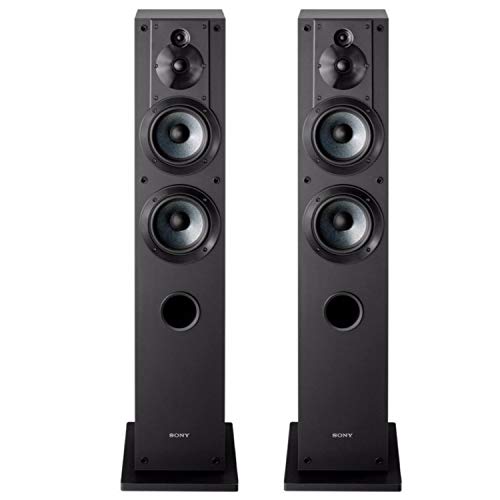
The Sony SS-CS3 uses a 3-way, 4-driver design, providing a broader frequency range and better dispersion for diverse listening. Best for: TV-centric rooms and media lovers on a budget who want fuller mids and highs. Reason for selection: the three-way design helps smooth treble and presence. Limitation: weaker bass response compared to larger floor-standing models; may benefit from a subwoofer for deep low end.
Dayton Audio Classic T65 Floor-Standing Tower Speaker Pair

The Dayton Audio Classic T65 is a full-size tower with a bass-reflex cabinet standing just over 39 inches tall. Best for: listeners who want a dynamic, room-filling sound across movies and music at a modest price. Reason for selection: dual 6.5″ bass drivers provide punchy bass and strong midrange. Limitation: may require careful placement for best bass integration in smaller rooms.
BASAPUBU Floor Standing Tower Speakers Pair 150W

BASAPUBU’s 150W floor-standing pair uses 4x 6.5″ woofers and 2x 3″ tweeters for a robust, wall-filling presentation. Best for: music and action-heavy content where bass punch matters. Reason for selection: high power capability and a ported bass design for enhanced low-end presence. Limitation: port-induced bass can become boomy in smaller rooms; placement matters.
Buying Guide: Key Purchase Considerations
- Room size and listening distance: Larger rooms benefit from taller towers and higher power handling; compact spaces may require closer listening and tighter bass management.
- Speaker design: 2-way vs 3-way vs multi-driver towers influence how highs and mids blend with bass. A 3-way design often yields smoother treble in budget models.
- Bass performance: If you lack a subwoofer, prioritize floor-standing models with larger woofers or dual/bass-reflex designs that emphasize low-end extension.
- Cabinet quality: Heavier MDF cabinets reduce resonance; finish quality can vary by batch, so check alignment and cosmetic details when possible.
- Amplification: Ensure your AV receiver or amplifier can comfortably drive the speaker’s wattage and impedance for clean dynamics.
- Placement: Position speakers away from walls to reduce bass boost or muddiness; a symmetrical setup helps imaging and soundstage.
- Use case: For home theater, prioritize a balanced sound with clear dialogue; for music, consider models with more extended highs and precise imaging.
FAQ
- Do budget floor-standing speakers need a subwoofer? Not always, but many will benefit from a sub for deeper bass in home theater or bass-heavy music.
- Are three-way floor-standing speakers worth it on a budget? They can provide smoother treble and better midrange, which helps overall clarity in budget models.
- How important is cabinet material? MDF-like cabinets reduce unwanted resonance and coloration, improving overall clarity.
- Can I use bookshelf speakers instead of floor-standers? Yes, but floor-standers offer more bass presence and a larger soundstage in bigger rooms.
- What’s the ideal seating distance from floor-standing speakers? Aim for 6–10 feet from listening position, with speakers ear-level or higher for best imaging.
- How should I test for bass in a store? Listen to a variety of content with dynamic range and ensure bass is tight, not boomy, and bass localization is cohesive with mids and highs.