
Best Budget Large-Diaphragm Condenser Microphones for Home Studios
Finding a budget-friendly large-diaphragm condenser that delivers clear vocals and versatile recording capability is essential for home studios, podcasters, and hobby musicians. This guide highlights five cost-effective options, explaining who they’re best for, and what trade-offs to consider. Use these selections to compare sound quality, noise levels, and feature sets without overpaying.
Summary of chosen products
| Product | Best For | Why It Stands Out |
|---|---|---|
| Mackie EM-Series EM-91C | Budget pro-grade studios | Affordability with professional-quality sound and rugged build. |
| RØDE NT1 Signature | Vocal recording with minimal noise | Whisper-quiet operation and complete vocal setup. |
| Audio-Technica AT2020 | Project/home studios on a budget | High SPL handling and versatile for many sources. |
| 512 Audio Skylight | Podcasting and streaming | Custom-tuned response with a modern sound. |
| AKG Project Studio P220 | Beginner-friendly studio mic | Cardioid, affordable entry to large-diaphragm sound. |
Mackie EM-Series EM-91C Large-Diaphragm Condenser Microphone

The Mackie EM-91C is positioned as an affordable option that does not sacrifice essential condenser performance. It is suitable for both small home studios and more formal setups where a sturdy, reliable mic is needed. Best for voice work and acoustic instruments where a clean, balanced sound is desired. A potential limitation is that its feature set may be simpler than more premium models, so highly specialized vocal processing may require additional gear.
RØDE NT1 Signature Series Studio Condenser Microphone
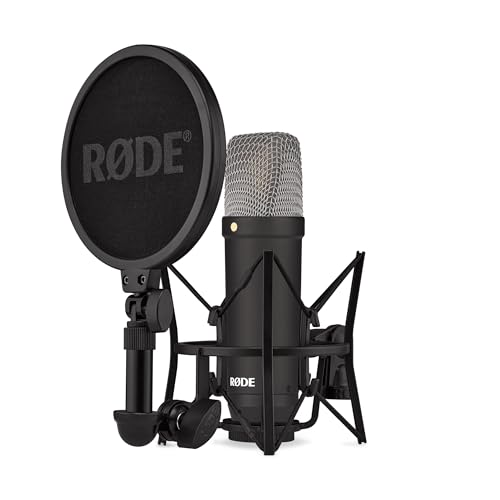
The RØDE NT1 Signature Series is best for vocalists and spoken-word creators who want minimal self-noise and a crisp, detailed vocal presence. This model is typically chosen for its whisper-quiet operation and inclusion of a complete vocal setup, including shock mount and pop filter. Choose this if you prioritize quiet recordings and an easy path to a polished vocal sound. A caution: higher-end noise reduction demands careful room treatment for optimum results.
AKG Pro Audio P120 Large-Diaphragm Condenser Microphone

The AKG P120 is a versatile, budget-friendly option with solid noise performance and high SPL handling. It’s well suited for vocal recording and instrument miking in beginner and home studios. Best for: projects needing a straightforward setup with reliable performance. Limitation: it may not offer the same ultra-fast transient response as pricier models, so some fast-picked instruments could require careful mic placement.
Melon Audio MA-87 Studio Condenser Microphone

The Melon Audio MA-87 offers a classic large-diaphragm vocal sound with a large 26mm capsule intended to deliver a balanced low end and detailed highs. It’s a solid pick for singers and podcasters who want a warm, present vocal character. Note that phantom power is required (48V), and an interface is recommended to manage gain and impedance properly. Best for: home studios seeking a vintage-voiced mic with modern convenience in a complete package.
Audio-Technica AT2020 Cardioid Condenser Studio Microphone
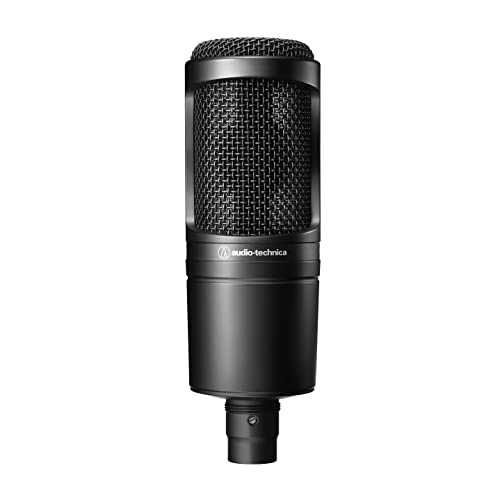
The AT2020 remains a staple for budget-conscious studios due to its straightforward design and broad compatibility. It handles high SPL and provides a versatile, balanced sound suitable for vocals, podcasts, and instruments. Best for: home project studios that need a reliable, easy-to-use mic with good overall performance. Limitation: it may sound less “airy” in some voice types compared with higher-end condensers.
512 Audio Skylight Large-Diaphragm Condenser Microphone

The 512 Audio Skylight emphasizes a modern, clear voice with warmth designed for podcasts and streaming. It’s a strong pick for creators who want a broadcast-like voice presence without breaking the bank. Best for: podcasting, voiceover, and streaming where a present midrange with smooth highs matters. Limitation: the exact tonal balance may favor spoken voice slightly more than aggressive musical transients.
Buying Guide
What should you consider when choosing a cheap large-diaphragm condenser?
- Primary use: Voiceover, singing, podcasting, or instrument miking will steer you toward different tonal balance and sensitivity.
- Voice or instrument response: Look for a microphone with a balanced low end and clear highs to avoid muddiness on vocals.
- Self-noise and SPL handling: Lower self-noise helps in quiet rooms; higher SPL handling is useful for loud sources without distortion.
- Phantom power and interface needs: Most large-diaphragm condensers require 48V phantom power; ensure your audio interface supports it.
- Room treatment: A budget mic often benefits more from proper acoustic treatment to reduce reflections and bleed.
- Inclusion and extras: Some models come with shock mounts, pop filters, or bundles that save setup time and improve sound isolation.
- Durability and build: A robust chassis reduces the risk of damage in small home studios or mobile setups.
- Connectivity and compatibility: Verify XLR outputs align with your interface or mixer and that software supports your chosen mic.
Frequently Asked Questions
- What is a large-diaphragm condenser microphone best used for?
They are typically favored for vocals, podcasts, and acoustic instruments due to their smooth, presence-rich sound across a wide frequency range.
- Do budget large-diaphragm condensers require phantom power?
Yes, most require 48V phantom power supplied by an audio interface or mixer.
- Is self-noise a bigger issue on cheap condensers?
Some budget mics may have higher self-noise than premium models, so recording in treated spaces is important for clean captures.
- Can I use these mics for streaming and gaming?
Yes, many offer a clear vocal presence ideal for streaming, podcasts, and voiceovers when paired with a suitable interface and software.
- What is the benefit of a complete vocal set included with some mics?
It reduces setup time and ensures you have essential accessories (shock mount, pop filter) to manage proximity effect and plosives.
- Should I buy a more expensive mic if I’m starting out?
Starting with a budget-friendly large-diaphragm condenser is common; you can upgrade later as your needs grow, especially when you know your primary use and room characteristics.