
Best Cheap Pianos for Beginners: Budget-Friendly Keys That Build Confidence
Answering the buyer’s search for affordable pianos for beginners, this guide highlights practical options that balance cost with learning value. Each top pick suits different beginner needs—from portable keyboards to learning aids and beginner-friendly songbooks. The list below focuses on devices and learning tools that help new players start confidently, without breaking the bank.
| Product | Best For | Why It Stands Out |
|---|---|---|
| RockJam 61 Key Keyboard Kit | Complete Starter Kit | Includes stand, bench, headphones, and teaching apps for structured practice. |
| KEYIVOX 33″ 61-Key Keyboard | Interactive Learning | Built-in teaching modes, 200 tones, microphone, and auto accompaniment. |
| Hal Leonard Easy Songbook | Song-Based Practice | Beginner-friendly collection with 60 popular tunes and simple notation. |
| Yamaha 61-Key Portable Keyboard | Portable Practice | Quiz mode for ear training and a portable grand piano sound option. |
| COYAHO Keyboard Stickers | Note Literacy Aids | Durable, removable letter stickers for quick note identification. |
RockJam 61 Key Keyboard Kit With Stand And Accessories

The RockJam 5061 keyboard offers 61 full-size keys in a portable, compact design. It can run on mains power or batteries, and includes a LED panel displaying 200 rhythms, 200 tones, a teaching function, and 30 demo songs. It also provides recording and playback to build layered sounds and an aux input for playing along with other music.
Best for: Beginners who want an all-in-one starter kit with built-in learning tools and the ability to practice with real accompaniment. The bundled stand, bench, and headphones make it a solid home setup for structured lessons.
Caution: Some learners may outgrow the 61-key keyboard as skills advance; consider future upgrades to a higher-key range if needed.
KEYIVOX 33″ 61-Key Keyboard For Beginners

The KEYIVOX 61-key electric keyboard provides 200 tones and rhythms, plus a built-in microphone and auto accompaniment. It includes integrated learning modes, a recording function, a metronome, and headphone jack for silent practice. This model supports step-by-step guidance and progress tracking.
Best for: Learners who want interactive lessons with immediate feedback and the option to practice with accompaniment and a microphone for vocal-integrated performances.
Caution: As a beginner device, the action may feel lighter than a full acoustic piano, which could affect technique transfer later.
Hal Leonard Hit Songs Easy Songbook For Beginners

This songbook compiles 60 easy piano tunes with straightforward melody lines, suitable for beginners who want recognizable pieces to practice rhythm and notes. It complements practice with a real musical repertoire.
Best for: Students who want a guided progression of familiar songs to build confidence and reading skills without needing a digital keyboard accompaniment.
Caution: It focuses on notation and melodies rather than full interactive learning or technique guidance.
Yamaha 61-Key Portable Keyboard For Beginners

The Yamaha YPT280 offers 61 full-sized keys and a built-in song library, plus quiz mode to train ear and memory. A portable design and a dedicated power adapter simplify at-home or on-the-go practice, with a grand piano-style sound at the press of a button.
Best for: Beginners seeking a recognizable brand with a simple practice flow and built-in learning features to reinforce listening and recognition skills.
Caution: The keyboard lacks some advanced features that later beginner models offer, such as more expressive controls or extensive connectivity options.
Hal Leonard Easy Songs For Piano Songbook

This beginner-friendly songbook features 210 pages of classic pop, jazz, and Broadway tunes. It focuses on accessible songs to build familiarity with keyboard layouts and reading simplified notation.
Best for: Players who want a curated collection of recognizable melodies to practice reading and fingering in a low-stress format.
Caution: It is a static sheet music resource and does not provide interactive practice features or digital accompaniment.
COYAHO Keyboard Stickers For Learners
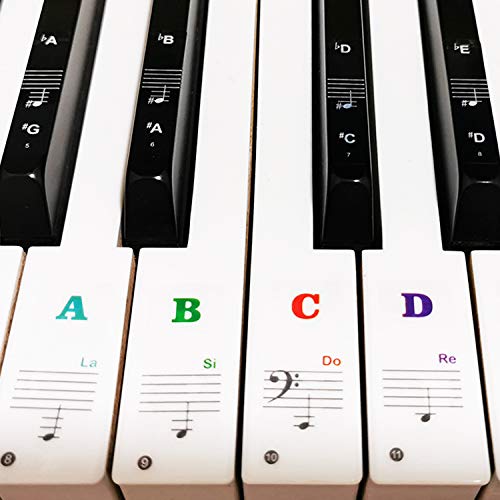
These bold, removable letter stickers fit 88/61/54/49/37-key keyboards to help beginners learn note names and finger positions quickly. The stickers are durable, waterproof, and designed to leave no residue when removed.
Best for: Absolute beginners or young learners who want quick, visual cues to support early reading and finger placement. Use to supplement any of the listed keyboards.
Caution: Stickers are a learning aid and do not replace regular practice or proper technique instruction.
Buying Guide: Key Purchases For First-Time Piano Buyers
What should you consider when buying cheap pianos for beginners? Start with your budget, space, and learning goals, then match them to the product features below.
- Key count and action: Most beginner pianos use 61-key keyboards. If you anticipate advancing quickly, consider models with 61 keys and growth potential to 88 keys.
- Learning features: Look for built-in teaching modes, metronomes, and accompaniment to keep practice engaging. Microphones can help with vocal practice alongside piano pieces.
- Portability and power: If practice spaces are limited, prioritize lightweight, battery- or mains-powered options with a compact footprint.
- Accessories: A stand, bench, and headphones can improve posture, focus, and self-contained practice sessions.
- Notation aids: Note stickers or color-coded layouts can accelerate initial learning, especially for kids.
Which setup is right for you?
- Best overall starter kit: A bundle with stand, bench, headphones, and learning features to support structured practice.
- Best for interactive learning: A keyboard with built-in tones, rhythms, and accompaniment for guided lessons.
- Best budget option: A basic 61-key keyboard paired with songbooks or sticker aids for quick entry into playing.
Practical buying checklist
- Decide between a standalone keyboard or a songbook-based approach depending on preferred learning style.
- Check if the device includes a metronome and recording features to track progress.
- Verify compatibility with headphones for quiet practice.
- Consider long-term needs; you may want to upgrade to 88 keys or better action in the future.
FAQ
- Q: Are 61-key keyboards sufficient for beginners? A: Yes, they are common starting points and suitable for early learning; upgrade later if needed.
- Q: Do learning features improve progress? A: They can help with rhythm, note recognition, and motivation when used consistently.
- Q: Is a songbook necessary if I buy a keyboard kit? A: Not necessary, but it complements practice by providing familiar tunes to play.
- Q: Should I buy stickers for a beginner? A: Stickers are helpful for early note recognition but should be used with proper technique guidance.
- Q: Is portability important for beginners? A: If you travel or practice in multiple rooms, portability is a key advantage.
- Q: Will a keyboard replace an acoustic piano in learning? A: A keyboard can develop essential skills, but long-term technique may benefit from a higher-quality keyboard or an acoustic instrument later.