
Best Class a Solid-State Amplifier for True Music Lovers
Answer: For a pure-class A solid-state experience, the BRZHIFI A1S Pure Class A Power Amplifier stands out as a compact yet warm, accurate option, best for listeners who want a traditional tonal signature with modern reliability. This article compares five solid-state amps to help buyers choose based on power needs, speaker impedance, and room size. The top picks cover classic-style Class A, flexible Class D, and performance across different budgets. The buyers most likely to benefit are music enthusiasts seeking clean, detailed amplification without tubes, home-studio users needing compact power, and car or desktop audio setups requiring compact form factors.
Summary table of selected products:
| Product | Type / Class | Power (approx.) | Best for |
|---|---|---|---|
| BRZHIFI A1S Pure Class A | Class A | 20W x 2 @ 8Ω | Classic warmth, two-channel stereo |
| Orange O-TONE 40 Solid State | Class A/B | 40W | Guitar/small combo with versatile tones |
| Skar Audio RP-1200.1D | Class D Monoblock | 1,200W RMS @ 1Ω | Subwoofer power and compact car audio |
| Fosi TB10D | Class D | 600W total (2 channels) | Desk or small-room stereo, flexible inputs |
| Skar Audio RP-800.1D | Class D Monoblock | 800W RMS @ 1Ω | Powerful single-channel sub/woofer |
BRZHIFI A1S Pure Class A Power Amplifier 20W×2

Type: Class A stereo amplifier delivering 20W+20W at 8Ω. The A1S uses a reference classic circuit with a British tonal signature—delicate, warm, and melodiously smooth—appealing to listeners seeking a refined, musical presentation. Best for music enthusiasts who want a compact, high-fidelity two-channel amp for desktop or small-room setups.
- Large-capacity main filter array: four 18,000μF/35V capacitors per channel, totaling up to 144,000μF. This supports fast dynamic response and deep penetration of transients.
- Omron relay protection and silver alloy contacts to prevent DC output on power-on shocks and extend service life.
Best for: audiophiles who prefer a classic Class A sonic character in a compact form. Choose this if you value warmth and detail over high-power headroom. Limitation: lower overall output power compared with higher-wattage Class D monoblocks or robust multi-channel amps, so it’s not ideal for demanding home theater or large rooms.
Orange O-TONE 40 Solid State Combo 1x12in 40 Watts

Type: 40W solid-state amplifier with guitar-oriented features. This model blends modern solid-state power with a compact guitar-friendly footprint, suitable for practice rooms or small studios. Best for players who need reliable clean tones and a straightforward signal path.
- Footswitchable tremolo and digital reverb provide classic modulated textures without external effects.
- Solid-state design emphasizes consistency across long playing sessions.
Best for: guitarists seeking a reliable, feature-rich practice amp with respectable headroom in a compact package. Better for bedroom practice or small gigs than for high-volume stage use. Caution: designed for guitar signals; not a general-purpose audio powerhouse for home theater setups.
Skar Audio RP-1200.1D Monoblock Class D
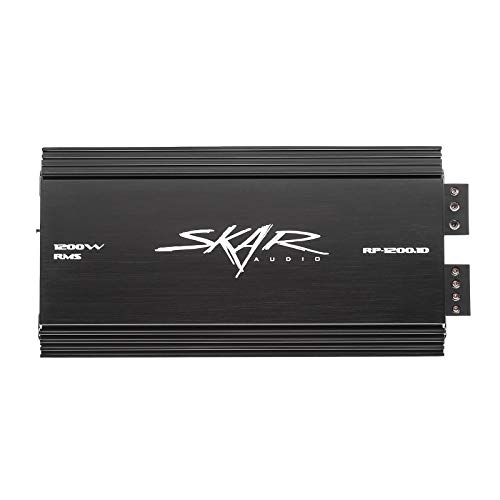
Type: Class D MOSFET monoblock with 1,200W RMS @ 1Ω. This amp is designed for subwoofers and high-demand bass applications, offering a compact footprint with robust power delivery and a built-in bass boost option (+6 or +12 dB at 45 Hz).
- Frequency response: 20Hz – 250Hz, focusing on low-end performance.
- Remote subwoofer level control for on-the-fly adjustments in-car or in-room setups.
Best for: car audio enthusiasts and home theater fans who need strong subwoofer amplification in a compact module. Choose this if you require high peak power for deep bass. Limitation: provides mono power for subwoofers, not a stereo two-channel solution for full-range speakers.
Fosi TB10D 2 Channel Stereo Amplifier

Type: Class D integrated stereo amplifier with 600W total power using the TPA3255 chip. It is a compact, flexible option designed to drive passive speakers with a wide impedance range from 2 to 8 ohms.
- Sound tailoring: bass and treble knobs allow user-defined tonal shaping.
- Integrated power switch and compact footprint for desktop or shelf setups.
Best for: readers wanting a versatile, budget-friendly amp for a desktop system, bookshelf speakers, or a small home audio zone. Better for smaller rooms where wattage needs are modest. Caution: as a Class D design, some listeners may notice switching noise in ultra-crisp high-frequency scenarios; proper placement helps mitigate this.
Skar Audio RP-800.1D Monoblock

Type: Class D MOSFET monoblock with 800W RMS @ 1Ω, designed for powerful subwoofer duty. Features a bass boost option (+6 or +12 dB at 45 Hz) for configurable impact.
- Frequency response: 20Hz – 250Hz, optimized for low-end extension.
- Remote bass level control facilitates in-car or room-based tuning without reaching for the amp.
Best for: buyers needing a robust single-channel solution for subwoofers, especially in compact spaces. Choose this if you want high bass output without multi-channel complexity. Limitation: single-channel design means it’s not suitable for stereo main speakers; you’ll pair it with a separate speaker setup for full-range audio.
Buying Guide
What should you consider when choosing a class A or solid-state amplifier?
- Power needs: For two-channel listening, higher-wattage Class D or multi-channel amps provide headroom in larger rooms. For near-field listening, Class A’s warm glow can outperform higher-power competitors in perceived tonal richness.
- Speaker compatibility: Check impedance and recommended load. Class A designs typically pair with higher-efficiency speakers; Class D monoblocks excel with subs or low-impedance loads when paired correctly.
- Application: Desktop hi-fi, home theater, or car audio each benefits from different designs—two-channel desktop amps for listening rooms, monoblocks for subwoofers, and all-in-one units for compact spaces.
- Tone shaping: Look for built-in bass/treble controls or EQ options. Some amps emphasize neutrality; others offer tonal adjustments to suit room acoustics or musical genres.
- Protection and reliability: Relay protection, DC offset protection, and robust heat management extend lifespan and reduce risk of damage.
Frequently Asked Questions
- What is the difference between Class A and Class D amplifiers?
Answer: Class A provides very linear, low-distortion amplification with a warmer, more musical sound but lower efficiency. Class D uses switching technology for high efficiency and power in compact packages, often with strong bass. - Is a higher wattage always better for home audio?
Answer: Not necessarily. Room size, speaker sensitivity, and listening distance determine needed headroom. Higher watts help in large rooms or outdoor spaces, but efficient speakers can sound great with moderate power. - Can I run multiple amplifiers in one system?
Answer: Yes, but ensure proper impedance matching, secure grounding, and adequate power supply. Avoid overloading channels or amplifiers beyond their ratings. - Are monoblock amps better for subwoofers?
Answer: Monoblock amps designed for subwoofers typically provide clean, dedicated low-frequency power and reduce channel crosstalk, which can improve bass performance. - What should I consider for a compact desktop setup?
Answer: Look for a compact form factor, built-in tone controls, and a stable 8Ω load compatibility. Class D designs often suit desktops due to efficiency and heat management. - Do I need a dedicated guitar amplifier?
Answer: For musical instrument amplification, guitar-specific amps provide instrument-level tonal shaping and EQ tailored to guitar pickups—these may not be ideal for full-range hi-fi listening.