
Best Mini Class D Amps for Home Audio Power
This guide helps buyers choose compact Class D amplifiers that power passive speakers in small spaces or portable setups. Best fits include apartments, bedrooms, home offices, patios, and small garages where space, efficiency, and easy setup matter. The top picks below balance output, size, and feature sets for various needs, from Bluetooth convenience to clean, low-noise amplification.
| Product | Best For | Why Pick |
|---|---|---|
| Fosi Audio BT20A | Rooms, patios, garages | Solid 100W x 2 power, easy setup, Bluetooth included |
| Fosi V1.0G | Budget-minded hi-fi fans | Efficient Class D with integrated protection and clear sound |
| Fosi BT10A | Small spaces, streaming basics | Bluetooth 5.0, compact and affordable |
| Lepai LP-2020TI | Bookshelf setups | 20W per channel, compact for limited spaces |
| Fosi TB10D | Flexible, bass-focused listening | 600W total, bass/treble controls, versatile integration |
Fosi Audio BT20A Bluetooth Stereo Amplifier
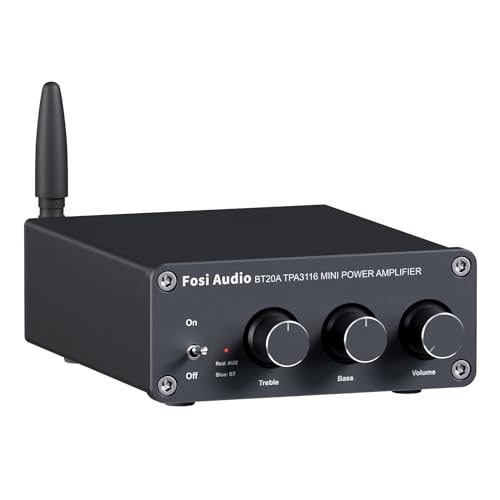
Best for: Small living rooms, offices, and outdoor patios where a simple Bluetooth connection and solid power are valued. This two-channel amp delivers up to 100W per channel to drive passive bookshelf or medium speakers. It features a straightforward setup with a one-touch power switch and tone controls to tailor bass and treble to taste. It is well suited for users who want a compact unit with reliable performance for everyday listening.
Why chosen: The BT20A offers reliable Class D efficiency, adequate headroom for typical home speakers, and easy Bluetooth streaming without complicated wiring. Best for buyers who prioritize plug-and-play use in cozy spaces.
Caution: For very efficient or low-impedance loads, ensure your speaker pair can handle the available power without strain. It lacks built-in streaming codecs beyond Bluetooth, so wired sources require an adapter if needed.
Fosi Audio V1.0G 2-Channel Class D Amplifier

Best for: Home hi-fi setups and small studios needing clean, efficient amplification without a large footprint. The V1.0G uses the TI TPA3116D2 for two channels and supports 12–24 V supply, making it versatile for different power sources. It includes built-in speaker protection and a solid aluminum chassis for cool operation.
Why chosen: It blends compact design with solid sonic clarity and protection circuitry, making it a reliable option for users who want a minimal, no-fruss setup with respectable sound quality.
Caution: Input options are limited by a compact desktop layout; plan your cabling to avoid clutter in tight spaces.
Fosi Audio BT10A Bluetooth 5.0 Mini Amplifier

Best for: Tighter spaces such as desks, small bedrooms, or dorm rooms where Bluetooth streaming is key. The BT10A offers 50W x 2 and a compact footprint with bass and treble controls, letting you tailor sound while keeping a minimal setup.
Why chosen: Its small size and built-in power supply make it a straightforward, energy-efficient choice for everyday listening with easy pairing to mobile devices.
Caution: Power output is more modest; avoid pairing it with very bass-heavy or demanding speakers if you need higher volume headroom.
Lepai LP-2020TI Hi-Fi Mini Class D Amp
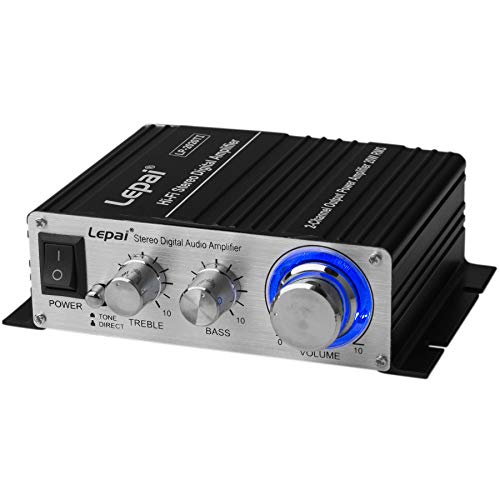
Best for: Bookshelf setups and compact living rooms that require a compact yet capable two-channel amplifier. The LP-2020TI delivers up to 20W per channel into 4 ohms, with a small footprint suitable for tight spaces and portable audio arrangements.
Why chosen: Its compact size and efficiency make it a good match for users who want simple, effective amplification without adding bulk to the room.
Caution: Power is modest; pair with efficient speakers to avoid sounding underpowered in larger rooms or with less efficient models.
Fosi TB10D 2-Channel Mini Amplifier

Best for: Users seeking high power with flexible integration, including bass shakers and gaming setups. The TB10D uses the TPA3255 chip to deliver up to 300W per channel when paired correctly for a total of 600W, accommodating demanding speakers and dynamic listening scenarios.
Why chosen: The transformer-friendly design and bass/treble controls enable substantial customization for a robust, immersive sound stage in compact form factors.
Caution: Requires careful handling of impedance and cooling when delivering high power; ensure proper ventilation and safe speaker matching to avoid overheating.
Buying Guide
What should you look for in a mini Class D amp?
Key considerations include output power, impedance compatibility, and the number of channels. For most home setups with passive speakers, 50–100W per channel is ample for bookshelf speakers, while larger rooms or harder-to-drive speakers may benefit from higher power models like the TB10D. Check speaker impedance compatibility (often 4–8 ohms) to ensure clean headroom.
Bluetooth vs. wired sources
Bluetooth adds convenience but can introduce latency or compression. If you plan to use a turntable or computer as a source, confirm whether the amp offers line-level inputs and whether you need a dedicated DAC or preamp. Some units include built-in protection and short-circuit safeguards for peace of mind in busy setups.
Size, cooling, and placement
Compact amps are easy to place on shelves or desks, but higher-power models may require better ventilation. Consider vertical or horizontal footprint and how cable management fits your space. Aluminum chassis often aids heat dissipation and durability in small enclosures.
Sound shaping and controls
Bass and treble knobs help tailor the sound to room acoustics and personal taste. If you frequently adjust EQ or use a subwoofer, ensure the amp supports suitable crossover settings or sub integration.
Which model fits which buyer?
- Best for beginners or casual listening: BT20A or BT10A for straightforward Bluetooth streaming and reliable power.
- Best for compact hi-fi setups: V1.0G or Lepai LP-2020TI for clean sound in limited space.
- Best for flexible, high-power needs: TB10D for dynamic rooms and bass-focused applications.
FAQ
- What is a Class D amplifier?
It is a highly efficient amplifier technology that uses switching to deliver power with less heat, suitable for compact, watt-dense designs.
- Can I use these amps with any passive speaker?
Most are designed for 4–8 ohm loads; confirm your speakers’ impedance and power handling to avoid overloading.
- Do these amps require a separate DAC?
Some models include line inputs that can accept digital sources; if not, you may need a DAC for optimal digital-to-analog conversion from certain sources.
- Is Bluetooth on these amps reliable for streaming?
Bluetooth 5.0 or similar versions are common, offering stable connections at typical room ranges, but performance can vary with interference.
- Which is the most space-efficient option?
BT10A and V1.0G are among the smallest, suitable for desks or tight shelves while still delivering respectable audio.