Best Class D Stereo Amplifier Guide: Top 5 for Clean Power and Optional Bluetooth
Answering the common buyer need for compact, efficient, and feature-rich Class D stereo amplifiers. This guide highlights five strong options ideal for homes, small studios, and hobbyist setups. Best for different uses: compact offices, small living rooms, outdoor small venues, or desktop setups. The top picks balance power, efficiency, and ease of integration with passive speakers.
Summary of chosen products
| Product | Best For | Key Benefit |
|---|---|---|
| Fosi Audio BT20A | Small rooms or patios | 100Wx2, simple setup |
| Fosi Audio BT20A Pro | Versatile outdoors or indoor spaces | 300W x2 with upgrade options |
| Fosi Audio ZA3 | Balanced, low-noise systems | 180W stereo / 235W mono, balanced input |
| Fosi Audio V3 (48V) | Desktop or bookshelf systems | Up to 600W, advanced cooling |
| Fosi Audio TB10D | Bass-heavy or gaming setups | 600W total, flexible bass/treble |
Fosi Audio BT20A Bluetooth Stereo Amplifier
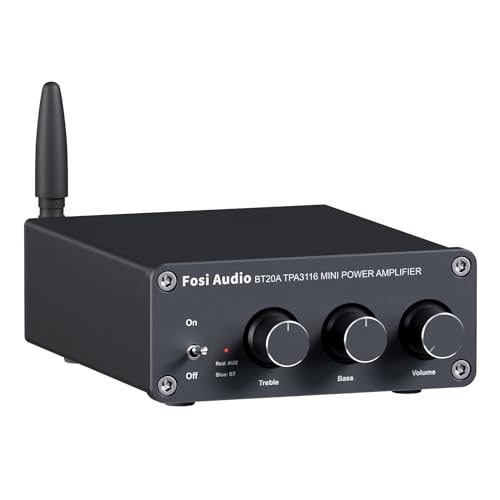
Features: 100Wx2 maximum output, compact design, simple two-channel setup, smooth bass and treble controls for tuning bookshelf speakers. Built for passive speakers in homes, small venues, or outdoor spaces.
Best for: Buyers seeking a straightforward, budget-friendly Bluetooth stereo amp for listening rooms, offices, or outdoor patios. The BT20A is chosen for its ease of use and reliable, no-frills performance.
Caution: Limited advanced tone shaping; best used with compatible passive speakers and a separate Bluetooth source if needed.
Fosi Audio BT20A Pro Bluetooth 5.0 Amplifier
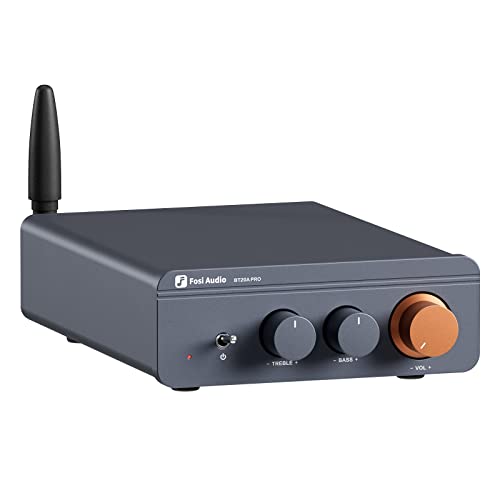
Features: 300Wx2 power with TI TPA3255 chip, high efficiency, switchable plug-in Op-Amps for customized sound, Bluetooth 5.0 with memory and alert tone. SNR ≥ 108dB, THD ≤ 0.005%.
Best for: Enthusiasts who want higher output and custom sound tuning, suitable for mid-sized rooms and outdoor setups where more power is beneficial.
Caution: Requires careful heat management in sunlit outdoor environments to prevent thermal throttling.
Fosi Audio ZA3 Balanced Stereo Amplifier

Features: Dual-mode with stereo and mono operation, up to 180W (stereo) or 235W (mono). Balanced XLR/1/4″ inputs, 12V trigger-in, premium components, SINAD up to 89dB, SNR up to 106dB, low noise floor.
Best for: Auditory purists seeking low-noise operation and balanced inputs to minimize interference in multi-component setups like home theaters or music desks.
Caution: More complex connectivity; ensure compatible balanced cables and preamps are in use.
Fosi Audio V3 Stereo Amplifier (48V)

Features: Up to 600W total output for 2-8Ω speakers, compact design, TPA3255 Class D chip, premium capacitors, SINAD up to 88dB, SNR up to 110dB, innovative cooling with top/bottom vents and a full heatsink.
Best for: Desktop or bookshelf setups needing robust amplification with efficient heat management in small spaces.
Caution: Higher power means attention to speaker matching; use appropriate 2-8Ω speakers to avoid impedance mismatch.
Fosi Audio TB10D 2 Channel Amplifier

Features: 600W total, TPA3255 based Class D, supports 2-8Ω loads, separate bass/treble controls, power switch for convenience, suitable for enhancing home theater or gaming audio.
Best for: Users who want a flexible amplifier to drive passive speakers with emphasis on bass and treble control, useful for living rooms or hobby setups.
Caution: Some users may prefer dedicated subwoofers to fully exploit bass adjustments in specific rooms.
Buying Guide
What should you consider before buying a Class D stereo amplifier?
- Power needs: Match amplifier wattage to your speaker’s impedance and target listening level. Higher power handles dynamic passages without clipping.
- Connectivity: Balanced inputs reduce noise in longer runs. Bluetooth built-in adds convenience but may limit input quality versus wired options.
- Cooling and size: Compact units can overheat in warm rooms. Look for efficient heat dissipation features if you plan long listening sessions.
- Speaker compatibility: Most of these amps support 2-8 ohms. Ensure your passive speakers fit within this range for best results.
- Sound customization: Some models offer adjustable bass/treble, or configurable Op-Amps for sound differences. Decide if you want this level of control.
- Budget vs. performance: Entry-level models are sufficient for small rooms; premium models provide higher SNR, lower THD, and improved noise performance.
Practical comparison notes
- Best for entry-level setups: BT20A, BT20A Pro (ease of use, Bluetooth)
- Best for balanced, quiet systems: ZA3
- Best for desktop/compact spaces with strong cooling: V3 (48V)
- Best for bass emphasis or gaming contexts: TB10D
FAQ
- Do Class D amplifiers save energy?
Yes, Class D amplifiers are generally more energy-efficient than traditional Class A/B designs, producing less heat at comparable power levels.
- Is Bluetooth on an amplifier reliable for hi-fi use?
Bluetooth is convenient for casual listening, but wired inputs (RCA, XLR) typically offer better signal quality for critical audio.
- Can I run these amps with multiple speakers?
Most listed models support two-channel stereo; some offer mono or multi-input options. Check speaker impedance (2-8 ohms) and power ratings for each setup.
- Do I need a preamp with these amps?
Many setups benefit from a preamp or source device, especially if using analog sources. Some amps include pre-out or balanced inputs for integration.
- What is SINAD and why does it matter?
SINAD measures signal-to-noise and distortion performance. Higher SINAD indicates cleaner sound, especially in quiet passages.
- Which amp is best for outdoor use?
Amp models with robust cooling and higher power (BT20A Pro, TB10D) tend to perform better in outdoor environments where heat and exposure can affect performance.