
Best Compensating 4-Valve Euphonium for Students and Professionals
The top choice for compensating 4-valve euphoniums is built around consistent intonation, smooth valve action, and a durable build that fits both learning and performance settings. This guide helps buyers choose the right model based on play level, tone preference, and reliability, with five solid options that suit students, intermediate players, and professionals alike. The table below summarizes key aspects of the selected instruments to aid quick comparisons.
| Product | Best For |
|---|---|
| BB Compensating Euphonium Silver Plated 4 Valve | Beginning to intermediate players seeking smooth action in a compact design |
| ROWELL Euphonium 4 Valves Bb Brass Lacquer Gold | Intermediate to advanced players who value durability and a premium finish |
| Besson BE165 Prodige Non-compensating 4-Valve | Students and ensembles needing a reliable, cost-conscious instrument |
| ROWELL Bb Euphonium 4 Valves With Case | Beginner to intermediate players who want a ready-to-play set |
| TSTS Euphonium 4 Pistons High Grade Silver Plated | Players seeking a bright tone and easy playability across levels |
Bb Compensating Euphonium Silver Plated 4 Valve
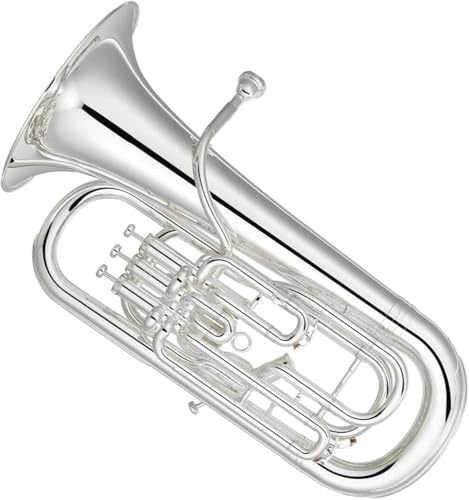
This instrument uses a compact Bb design with a bright brass body aimed at producing a rich, resonant tone and responsive blowing. The 4-valve mechanism is designed for smooth action, enabling quick articulation across styles. The brass body is fade-resistant, supporting long-term visual and tonal consistency. Best for beginners who want reliable, easy operation and for practice settings where space efficiency matters. A potential limitation is that some learners may outgrow a compact form if they pursue expansive orchestral repertoire.
ROWELL Euphonium 4 Valves Bb Brass Lacquer Gold

ROWELL emphasizes a well-designed, light instrument with quick valve response. The set touts a professionally standard Bb key and a durable brass body with an elegant lacquered gold finish. Pistons are tested for smooth action, and the packaging includes care items like a polishing cloth and gloves. Best for intermediate players who want a quality build and steady tone without sacrificing playability. Avoid if you need a non-lacquer silver-plated look or if you require a factory warranty that isn’t listed in the description.
Besson BE165 Prodige Non-compensating 4-Valve Euphonium

The BE165 Prodige offers a reliable 4-valve setup with a full 11″ yellow brass bell and silver-plated finish in a compact non-compensating design. It is suitable for students and ensembles seeking a dependable and affordable instrument with solid projection. Best for learners who want a straightforward instrument for school and band use. The lack of compensation means it may require careful intonation management in certain passages or ensembles.
ROWELL Bb Euphonium 4 Valves With Case
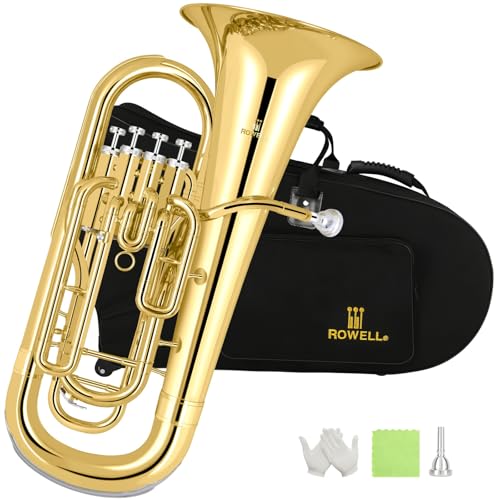
ROWELL presents a complete package with a case, mouthpiece, polishing cloth, and gloves. The instrument features a wide-mouth design for a professional tone and smooth stainless steel valve action for long-lasting durability. It’s well suited for beginners and intermediate players who want a ready-to-play kit. A caution: the included clip-on accessories should be checked periodically to ensure they remain securely fitted during transport.
TSTS Euphonium 4 Pistons High Grade Silver Plated

TSTS emphasizes a compact design paired with bright, resonant brass for easy blowing and solid tone. The piston action is described as smooth and fast, supporting flexibility for players at multiple levels. Silver-plated finish adds a classic look and potential tonal brightness. Best for players who value quick response and a clear, focused projection. Limitation: actual weight and balance can vary with the specific model, so try to assess comfort for longer playing sessions.
Jupiter 4 Valve Professional XO Model Silver Bb Euphonium 1270S

The Jupiter 1270 XO is designed for advanced and professional players, featuring a compensating 4-valve system for accurate intonation across registers. The graduated bore (.590-.660 inch) supports a robust tone with strong projection, ideal for solo performances and ensembles. Best for experienced players seeking precise pitch control and a broader dynamic range. Limitation: higher level use may require more maintenance and a higher price point than entry-level models.
Jupiter JEP1005 Intermediate Euphonium 4 Valve

The Jupiter JEP1005 targets the intermediate player with four front-action valves for smooth, responsive action and accurate intonation in Bb. It uses high-quality yellow brass for warm tone and strong projection. Best for advancing players who want reliable performance without stepping up to a high-cost professional model. Caution: as an intermediate instrument, it may require more personalized setup and care than some lower-cost beginner models.
Buying Guide: Key Purchase Considerations
- Intonation and compensation: Compensating valves help maintain accurate pitch across registers. Choose a fully compensated model for ensemble work and orchestral playing, especially in higher ranges.
- Valve action and maintenance: Look for smooth, quick valve response. Stainless steel pistons tend to offer durability; consider included maintenance items like lubricant and swabs.
- Bell size and tone: Larger bells typically produce richer projection; smaller bells offer quicker response and compact handling. Match bell size to your intended repertoire and venue sizes.
- Durability and finish: Lacquered brass and silver-plated finishes affect appearance and wear resistance. Consider your environment and transport conditions when selecting a finish.
- Accessories and case: A completion kit (mouthpiece, cloth, gloves) adds value, especially for beginners and students. A sturdy case protects the instrument during travel.
- Budget and intended use: For students, prioritize ease of play and reliability. For professionals, emphasize tone, intonation stability, and build quality.
FAQ
- What is a compensating euphonium? Answer: It uses a valve-operated compensating system to improve intonation across notes and registers, especially in the higher range.
- Is a lacquer or silver-plated finish better? Answer: Silver plating offers a brighter appearance and potential tonal brightness, while lacquer is durable and traditional; choice depends on preference and care.
- Should beginners choose a compact or larger bell euphonium? Answer: Beginners often benefit from a manageable weight and good projection; a mid-sized bell balances response and tone for early players.
- Are cases and accessories important? Answer: Yes. A protective case and basic maintenance tools help prolong instrument life and ensure readiness for performances.
- What should I consider for ensemble playing? Answer: Opt for precise intonation, solid sustain, and reliable valve action to blend well with other instruments and maintain tonal consistency.
- Do these models require professional setup? Answer: Some may benefit from professional setup, particularly for intonation alignment and valve alignment, to achieve optimal playability.