
Find reliable computer speakers that deliver improved low-end response and clear stereo imaging. Below is a quick comparison of the selected models to help you scan features at a glance.
| Product | Form Factor | Bass Solution | Power / Notes |
|---|---|---|---|
| Cyber Acoustics CA-3810 | 2.1 System + Subwoofer | 5.25″ Side-Firing Subwoofer | 80W Peak, Control Pod |
| Nylavee Hi‑Fi Stereo (B0F4DKZRGQ) | 2.0 Desktop Speakers | Dual Passive Radiators | 10W Total, LED Modes |
| Bluedee 5.3 Bluetooth Soundbar | Portable Soundbar | Bass Radiators + Tweeters | 20W, Rechargeable, Bluetooth |
| Sanyun SW102 | Compact 2.0 Speakers | Built-in Bottom Bass Radiators | 5W x2, Metal/Plastic Build |
| LIELONGREN USB Mini Sound Bar | USB-Powered Sound Bar | Dual Drivers + Passive Radiator | USB Power/Audio, Portable |
Cyber Acoustics CA-3810 2.1 Multimedia Speaker System

This 2.1 package combines two satellite speakers with a ported 5.25″ side-firing subwoofer designed for stronger low frequencies. The system lists 80W peak power and 40W RMS, desktop-friendly controls via a wired control pod, and a 3.5mm aux input with a headphone jack. The control pod lets you adjust volume and bass levels without reaching the subwoofer.
Key features include room-filling sound from the subwoofer, suggested source volume guidance for best fidelity, and compatibility with PCs, Macs, consoles and mobile devices with a 3.5mm connection. This setup emphasizes bass extension and adjustable tonal balance for movies, games and music.
Nylavee Computer Speakers – Hi‑Fi Stereo With Passive Radiators

These compact 2.0 speakers deliver 10W Hi‑Fi audio with two full-range internal magnetic drivers and two passive radiators to emphasize low frequencies. The listing highlights immersive stereo sound, built-in passive radiators for low-end reinforcement, and customizable lighting effects including dynamic and static modes.
The design targets desktop users who want better bass without an external subwoofer. The passive radiators increase perceived bass impact while keeping a small footprint, suitable for desks and monitors where space is limited.
Bluedee 5.3 Bluetooth Computer Soundbar With Bass Radiators

This portable soundbar offers 20W total power, two full-range units plus tweeters, and two bass radiators to increase low-frequency output. It supports Bluetooth 5.3, 3.5mm aux-in, TF card and USB flash disk playback, and contains a 3600mAh rechargeable battery for portable use.
Features emphasize versatility: wireless streaming, multi-source inputs, and a compact form factor. The bass radiators are intended to produce deeper impact than typical slim soundbars, making it an option for both desktop and portable setups.
Sanyun SW102 Computer Speakers – Deep Bass In Small Body

The Sanyun SW102 are small 2.0 speakers that highlight an internal bass diaphragm, closed cavity and low-frequency aid design to improve bass performance for their size. Rated at 5W x 2 with metal and high-quality plastic construction, they aim to reduce enclosure vibration while delivering clear mids and tighter low-end.
The listing notes positioning recommendations for best stereo effect and cautions that small speaker bodies still have limits compared to larger subwoofers. These are geared toward users who need compact desktop speakers with more bass than typical micro speakers.
[Upgraded] LIELONGREN USB Computer/Laptop Sound Bar
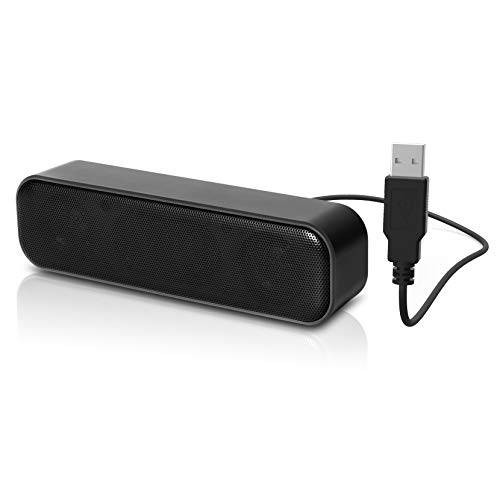
This USB-powered mini sound bar contains dual 3W high-excursion drivers and a passive radiator to increase loudness and bass response without an external power adapter. It uses a single USB cable for both audio and power, simplifying desk cable management. The product is positioned for Windows PCs and laptops.
Notable points include the lack of a physical volume knob (system volume is used) and its portability. The design targets users who want an easy plug-and-play upgrade over built-in laptop speakers with improved low-frequency presence.
Buying Guide: How To Choose Computer Speakers With Good Bass
When selecting computer speakers for stronger bass, consider several technical and practical factors to find the right balance for your space and use case.
Form Factor And Bass Method
- 2.1 Systems (With Subwoofer) — Include a dedicated subwoofer providing real low-frequency extension suitable for movies and gaming. Best for desks with available floor or shelf space for the subwoofer.
- 2.0 With Passive Radiators — Offer enhanced perceived bass without a separate subwoofer. Good for small desks and near-field listening where space is limited.
- Soundbars And Portable Units — Compact solutions that may include bass radiators; useful for minimal setups and portability but usually not as deep as a subwoofer.
Power, Drivers And Acoustic Design
- Power Ratings — Look at RMS power for realistic output capability. Peak numbers can be higher but are less meaningful than continuous (RMS) ratings.
- Driver Size And Type — Larger woofers generally move more air and produce lower frequencies. Passive radiators and dedicated subwoofers help extend bass without larger drivers.
- Enclosure And Porting — Ported or side-firing subwoofers can add punch and extension; closed-box designs can provide tighter, more controlled bass.
Connectivity And Controls
- Wired Inputs — 3.5mm aux is common and versatile for PCs and consoles. USB audio/power simplifies cabling but may rely on system volume controls.
- Wireless Options — Bluetooth adds flexibility for phones and tablets. Check codecs and latency if you plan gaming or video playback.
- On-Unit Controls — Physical knobs or a control pod for quick bass/volume adjustments improve usability compared with system-only controls.
Room Size, Placement And Acoustics
- Smaller speakers with passive radiators work well at close listening distances; larger rooms benefit from a subwoofer for added extension.
- Subwoofer placement affects bass: corners increase output but may muddy bass; experiment with placement for best balance.
- Desk reflections and monitor stands change perceived bass—raising speakers or isolating them reduces vibration and improves clarity.
Use Case Considerations
- Gaming & Movies — Prefer systems with a subwoofer or strong low-frequency radiators to reproduce explosions and cinematic impact.
- Music — Look for balanced systems with tight bass and clear mids; too much boom can mask vocals and instruments.
- Portable / Small Desk — Passive radiator 2.0 or compact soundbars provide improved bass without large footprints.
Comparative Trade-Offs
- Bass Depth vs. Size — Deeper bass usually requires larger drivers or a subwoofer. Passive radiators and acoustic design can help but have limits.
- Clarity vs. Loudness — Higher power and larger enclosures can increase loudness, but accurate tuning and build quality determine clarity at bass frequencies.
- Price vs. Performance — Consider whether you value compact convenience, wireless features, or true low-end extension from a subwoofer.