
Best Computer Speakers With USB Input for Clear Desk Audio
Answering your search for the simplest USB-powered computer speakers, this guide compares five top picks ideal for different buyers. Best for compact desktops, students, or work-from-home setups, these options deliver plug-and-play audio with minimal clutter. The list covers single-bar designs, compact 2.0 stereos, and versatile USB-powered sets that work with Windows, macOS, and Linux. Below is a quick snapshot to help you decide faster.
| Product | Best For |
|---|---|
| Amazon Basics USB-Powered Speakers | Very portable, simple use, headphone jack |
| Amazon Basics Stereo 2.0 Speakers | Two-speaker setup, inline volume control |
| Cyber Acoustics CA-2890 USB Speaker Bar | Monitor mount, clutter-free desk |
| Logitech S150 USB Speakers | Balanced audio, easy front-panel controls |
| FUNLOGY USB Powered 14W Stereo Speakers | More power, compact tilt design |
These selections emphasize ease of use, USB power, and compatibility with a wide range of devices. Read on to see which is best for your needs and why.
Amazon Basics USB-Powered Computer Speakers

Features: USB-powered (5V) speakers plug directly into your computer for portable convenience, one front-mounted control for power and volume, simple plug-and-play setup (no drivers), and a 3.5mm headphone jack for private listening. These compact speakers are best for: users who prioritize portability and a straightforward setup, such as students or mobile workers. Limitation: no separate subwoofer, so bass is modest for larger rooms or heavy gaming. The single control minimizes desk clutter, and the built-in headphone jack supports private listening without additional adapters.
Amazon Basics Stereo 2.0 Speakers for PC or Laptop

Features: A paired 2.0 external speaker set, USB-powered from the PC or laptop, with inline volume control for convenient access. Best for: users who want a fuller stereo sound from a compact setup without a separate subwoofer. Limitation: as a 2.0 system, it lacks dedicated bass enhancement compared with soundbars or 2.1 systems. Choose this if you desire reliable stereo expansion with simple controls and minimal setup.
XKX Computer Speakers for Desktop PC Monitor

Features: USB plug-in with a built-in USB-C adapter to support USB-C devices, compatible with Windows, macOS, ChromeOS, and Linux. It provides enhanced bass via dual drivers and passive radiators. Best for: users with USB-C devices or newer laptops who need consistent USB-powered sound from a compact bar. Caution: limited to USB power; performance depends on the host device’s power supply. Best when you need USB-C compatibility in a small footprint.
Cyber Acoustics CA-2890 USB Speaker Bar

Features: USB-powered single-bar speaker with clip-on monitor mounting, simple plug-and-play setup, and convenient volume, mute, and playback controls with LED indicator. Best for: monitor-centric desks where space is tight and a clean, integrated look matters. Limitation: as a speaker bar, it may deliver narrower stereo width compared to dual-speaker setups. Choose this for a minimal, integrated monitor audio solution.
Logitech S150 USB Speakers
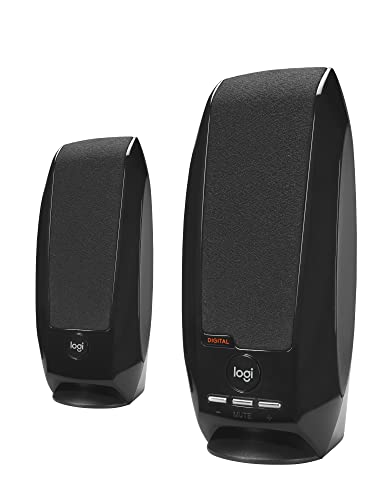
Features: Balanced 2-Watt peak, simple USB connection, inline volume and mute controls on the right speaker, LED indicator showing power. Best for: users who want a reliable, front-facing control layout and clear, compact sound. Caution: audio power is modest; not ideal for large rooms or heavy bass requirements. This option provides straightforward plug-and-play capability with predictable performance.
FUNLOGY Speaker – 14W Stereo PC Speakers

Features: 14W total output, compact palm-sized design with 30° tilt for direct listening, USB powered with 3.5mm input, volume dial control. Best for: users wanting higher volume and better bass in a small footprint, with a design that directs sound toward the listener. Limitation: not a full-sized 2.1 system; bass performance is enhanced but not as deep as larger subwoofer setups. Choose this if you need more punch without sacrificing desk space.
Buying Guide
What should I consider when choosing USB-powered PC speakers?
- Power and room size: USB-powered speakers range from 2W to 14W total output. For small desks, 2.0 or compact sound bars are usually sufficient; larger rooms may benefit from higher wattage.
- Speaker configuration: A 2.0 stereo setup provides wider spatial sound than a single-bar speaker. If you want edges of sound with minimal space, a monitor-mounted bar works well.
- Power source and compatibility: Ensure the device supports USB power (no external power brick required). Some models offer USB-C compatibility or adapters for newer laptops.
- Controls: Front-facing controls help quick adjustments. If you prefer private listening, check for a headphone jack on the model.
- Desk footprint and setup: Clip-on or monitor-mounted designs save space but may limit adjustability. Consider tilt or mount options when evaluating placement.
- Use case: For gaming or media, prioritize sound clarity and bass. For office tasks or calls, clarity and low noise may be more important than bass depth.
Practical comparison questions
- Which USB-powered speaker is best for a noise-conscious setup? The Logitech S150 offers straightforward controls with compact output, suitable for quiet environments.
- Which option is best for small monitors? The Cyber Acoustics CA-2890 monitor-mount speaker bar integrates neatly under the screen.
- Which model supports USB-C devices out of the box? The XKX USB speaker solution includes a built-in USB-C adapter for newer devices.
- Which is best for portability? The Amazon Basics USB-Powered set is extremely compact and easy to carry between locations.
FAQ
- Do USB computer speakers require drivers? No, most of these are plug-and-play and do not require drivers.
- Can USB-powered speakers work with macOS or Linux? Yes, all listed options are designed to work with Windows, macOS, and many Linux systems.
- Is a headphone jack necessary? If you want private listening or no speaker sound when headphones are plugged in, a front headphone jack is beneficial.
- Will USB-C only devices work with these speakers? Some models include USB-C adapters or built-in USB-C support; others require a USB-A port or adapter.
- Are higher wattage speakers louder? Generally, higher wattage enables louder playback with more headroom, but room acoustics and speaker quality also matter.
- Is a separate subwoofer essential for deep bass? For very deep bass, consider a 2.1 or soundbar with a dedicated woofer; compact USB speakers may not deliver room-filling bass.