
Best Condenser Microphones for Instruments: Top Picks and Practical Buying Guide
If you’re pairing a condenser microphone with musical instruments, you’re aiming for clear transient detail, wide frequency response, and usable SPL handling. The following five mics are among the most suitable for instrument capture, including studio overheads, acoustic ensembles, and individual instrument miking. The list prioritizes versatility, build quality, and practicality for home studios, project studios, and small-stage setups. The buyers below are best for: live or studio recordings, budget-conscious home studios, stereo or paired miking, and instrument-focused applications.
| Product | Best For | Key Benefit |
|---|---|---|
| AKG Perception 170 | Studio and live instrument miking | Captures detailed instrument recordings with a switchable pad for loud sources |
| Neewer 2-Pack Pencil Condenser | Acoustic instruments and ensembles | Interchangeable capsules for versatile pickup patterns |
| happymusic CM2 | Professional stereo instrument miking | Three capsules for rich stereo detail across instruments |
| AKG P120 | Entry-level instrument/vocal miking | Low-mass diaphragm for clear sound and high SPL handling |
| AKG C151 | Crisp instrument and voice capture | Small-diaphragm cardioid with detailed transient response |
AKG Perception 170 Instrument Microphone

The AKG Perception 170 is a small-diaphragm condenser with a cardioid polar pattern and a frequency response of 20 Hz to 20 kHz. It includes a switchable attenuation pad, making it suitable for high-SPL instruments without distortion. This mic is best for overheads, acoustic guitars, and other string instruments where fast transients and clear articulation matter.
Best for: studio overheads, intimate instrument recordings, and live applications where detailed capture of transients is critical. The pad helps when recording loud acoustic sources such as drum overheads or amplified instruments. A potential limitation is its smaller diaphragm, which may offer slightly less body on dense sources compared with larger-diaphragm models.
Key takeaway: Choose this if you need clean, detailed instrument recordings with a safety pad for loud sources and a compact, durable build.
Neewer 2-Pack Pencil Condenser Mic
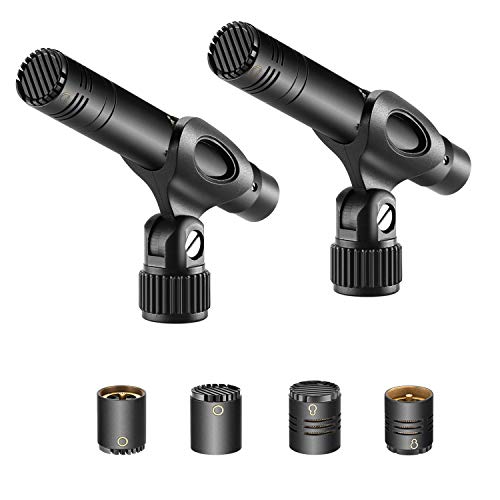
The Neewer 2-Pack provides interchangeable cardioid, omni, and super-cardioid capsules, enabling versatile pickup patterns for different instrument contexts. This makes it suitable for acoustic woodwinds, strings, horns, or ambient ensemble recording. It’s easy to mount and swap capsules, which helps in achieving either intimate or roomier captured sound.
Best for: studios needing flexible mic patterns for multiple instrument types and live setups where capsule changes are advantageous. Caution: capsule performance can vary between units, so test both mics in a session to ensure consistent results across your instrument set.
happymusic CM2 Pencil Condenser Microphone Set

The happymusic CM2 offers a professional stereo setup with interchangeable omnidirectional, cardioid, and super-cardioid capsules for capturing instrument details across a stereo field. Its low-mass diaphragm yields an ultra-wide 20 Hz to 20 kHz response, making it suitable for delicate acoustic recordings and orchestral miking.
Best for: stereo instrument capture and ensembles where precise spatial imaging matters. Limitation: as a pencil condenser, it benefits from proper mounting to minimize handling noise and may require a stable stand setup for optimal results.
AKG P120 Studio Condenser Microphone

The AKG P120 is an affordable 2/3-inch diaphragm condenser designed for versatile use with instrument recordings and vocals. It handles high SPLs up to 150 dB, helping capture loud instruments without distortion. It’s a practical option for beginner-to-intermediate studios seeking clear, balanced sound for guitars, drums, or vocals in a single mic.
Best for: entry-level instrument recording and home studios needing a reliable, no-frills condenser. Better for: straightforward instrument applications where simplicity and cost-effectiveness matter. Caution: as an affordable option, it may not deliver the same ultra-detail or air as premium models in very demanding sessions.
AKG C151 Small Diaphragm Condenser
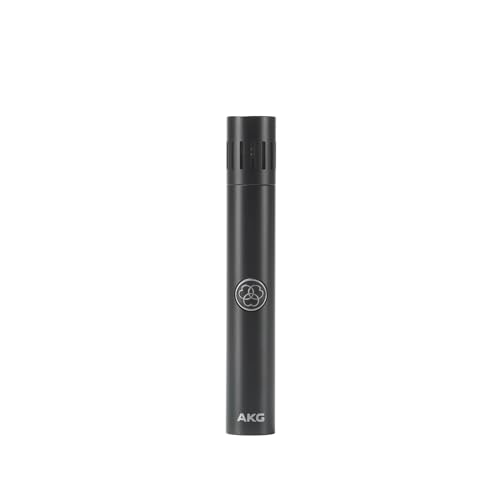
The AKG C151 is a small-diaphragm cardioid condenser known for precise instrument capture. It delivers clean, detailed sound with strong transient response, appropriate for podcasting, streaming, broadcasting, and music recording. Its high headroom (up to 143 dB SPL) allows loud sources to be captured with minimal distortion, making it well-suited for percussive instruments or amplified acoustic performances.
Best for: high-precision instrument and voice capture in compact miking configurations. Choose this if you need a compact, detailed mic with robust transient handling. Caution: small-diaphragm designs can demand careful placement to maximize room ambience and instrument interaction in some setups.
Buying Guide: Key Considerations For Condenser Mics And Instrument Miking
- Pickup Pattern: Cardioid mics minimize room noise and feedback for close-miking instruments. Omnidirectional or figure-eight patterns are useful for stereo or room-mics, but may require acoustic treatment.
- Diaphragm Size: Small-diaphragm condensers excel with fast transients and bright detail; large-diaphragm mics often deliver more body and warmth for instruments like guitars and brass.
- Frequency Response: Look for 20 Hz to at least 20 kHz for most instruments. Some mics list upper limits; ensure the mic can reproduce the upper harmonics of your instrument for brightness and presence.
- SPL Handling: High SPL ratings prevent distortion on loud sources such as drums, brass, or amplified guitars. If you frequently record loud instruments, consider mics with pads or higher SPL specs.
- Kids of Use: Overheads for cymbals or acoustic ensembles require wider stereo spacing and consistent replicas; pencil mics excel in spot miking or detailed instrument isolation.
- Build and Mounting: Stability matters in live settings or on stage. Cards, clips, and stands should accommodate your mic’s size and weight.
- Connection Type: USB mics suit quick setups but limit professional interfaces. XLR mics (like most of the options above) require an audio interface or mixer for best performance.
FAQ
- What is the best condenser microphone for acoustic guitar?
– For detailed guitar miking with transient clarity, small-diaphragm condensers like the AKG C151 or similar pencil mics tend to capture crisp string detail while preserving brightness. - Are pencil condensers good for overheads or stereo miking?
– Yes, their compact size and capsule designs make them suitable for stereo or overhead arrangements when paired correctly or used with matched units. - Do I need a preamp or audio interface to use these mics?
– Yes, most of the listed mics are XLR and require a compatible audio interface or mixer to provide power and preamplification. USB mics are plug-and-play but have different flexibility. - What is SPL handling and why does it matter for instrument miking?
– SPL handling measures how much sound pressure the mic can tolerate without distortion. Instrument miking often involves loud sources, so higher SPL ratings are advantageous. - Is a larger diaphragm better for instrument miking?
– Not necessarily. Large-diaphragm condensers can provide warmth, but small-diaphragm mics excel at fast transients and precise detail for many instruments. - Should I buy a multi-capsule mic?
– If you frequently record diverse instruments or need flexible room or stereo patterns, a multi-capsule mic (like the Neewer or happymusic CM2) offers broader sonic versatility.