Best Conductive Shielding Paint for Guitar Cavity Noise Reduction and Hum Elimination
For guitarists seeking quieter pickups and purer tone, conductive shielding paint offers an effective solution. This guide highlights five top options, explaining who each product is best for and why. Look for paints with graphene or nano-enhanced formulations for strong shielding, easy cleanups, and safe application in small cavities. The right choice depends on your guitar type, budget, and how precisely you need to shield tight corners like pickup slots and control cavities.
| Product | Best For | Key Benefit |
|---|---|---|
| Guitar Shielding Paint, YOTEBLE | Electric guitars with mixed-pickup setups | Stable conductive layer, water-based, good adhesion |
| WANJAO Shielding Paint | Small cavities and precise shielding | Water-based, handles tight spaces well |
| Mysora Nanotechnology Conductive Paint | DIY projects and studio work | Nano-enhanced conductivity, non-toxic |
| LANGXINST Graphene Shielding Paint | Thorough electromagnetic protection | Graphene-based, good heat dissipation |
| kuailaya Shielding Paint | Budget-friendly shielding | Effective noise reduction, good adhesion |
Guitar Shielding Paint, YOTEBLE

Best for: Electric guitar players who want a long-lasting conductive layer in a water-based formula. This paint uses graphene to form a stable conductive film after curing, with resistivity in the 10-90 ohms/cm range. It’s suitable for shielding pickup cavities, control pots, and other internal guitar areas where hum and RF noise tend to appear.
Why selected: It provides a reliable shielding barrier and easy cleanup when applying in damp conditions, reducing low-frequency hum and high-frequency hiss in your signal path. The adhesion is strong, helping it stay in place during instrument use.
Caution: As with all graphene-based coatings, ensure thorough drying before closing cavities to avoid trapping solvents. Ventilation is advised during application.
WANJAO Guitar Shielding Paint

Best for: Precise shielding in tight spaces such as pickup cavities and control compartments. This water-based formula is designed to tackle corners and irregular grooves where shielding tape may fail.
Why selected: It acts as a clear barrier that blocks hum, hiss, and RF noise, improving signal clarity in tight guitar electronics. The water-based nature makes cleanup straightforward.
Caution: For best results, ensure the coated area is clean and dry, and allow adequate curing time between coats if layering is required.
Mysora Nanotechnology Conductive Paint

Best for: DIYers and studio-focused players who want high conductivity with low toxicity. The nano-enhanced formulation aims to deliver low resistance on shielding work, including guitar cavities.
Why selected: The product emphasizes non-toxicity and safety for home workshops, while still offering fast drying and strong conductive performance that helps minimize interference in guitar electronics.
Caution: Although safe, users should follow standard painting precautions and ensure proper ventilation during application and curing.
Graphene Conductive Paint – LANGXINST
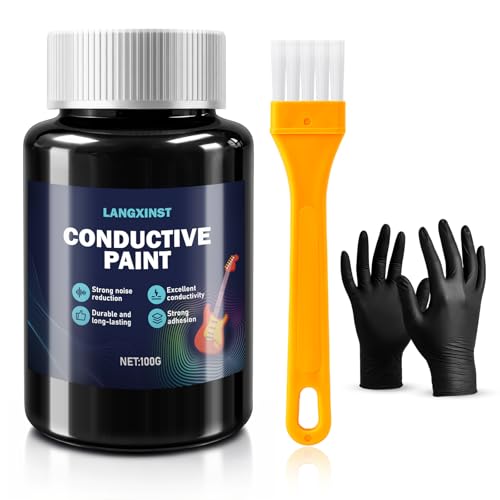
Best for: Guitarists seeking robust EMI shielding with added rustproofing and corrosion resistance. Graphene’s layered structure supports a dense protective barrier and efficient heat dissipation during play.
Why selected: The graphene formulation aims to reduce electromagnetic interference effectively while protecting the instrument’s finish and structural material. It’s a strong choice for players in high-electromagnetic environments.
Caution: Graphene coatings can be more viscoelastic; apply evenly in thin coats to avoid drips and ensure thorough curing for best results.
kuailaya Guitar Shielding Paint
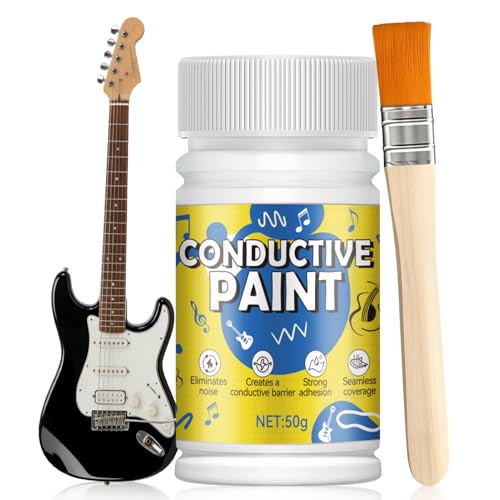
Best for: Budget-conscious players who still want meaningful noise reduction in electric guitars. This 50g option offers strong adhesion and effective shielding for standard cavities.
Why selected: It provides a practical balance between cost and performance, with enough shielding to reduce buzzing in common single-coil and humbucker setups. Multiple coats can improve coverage in complex cavity shapes.
Caution: For best performance, grounding and proper surface preparation are essential. Do not rely on coating alone for comprehensive shielding in high-gain rigs.
JAOJAO Guitar Shielding Paint

Best for: Players needing precise application with quick cure and stable conductive layer after curing. The resistivity target is 10-90 ohms/cm for solid shielding results.
Why selected: It emphasizes easy brush-on use and targeted coverage for delicate areas like pickup slots, ensuring long-lasting shielding while balancing ease of application.
Caution: Like other water-based paints, ensure adequate ventilation and allow full cure before reassembling the guitar to avoid trapping solvents.
Conductive Paint (Nanotechnology) – Generic

Best for: Multi-surface use across various projects, including guitar electronics DIY, with a focus on versatility and quick drying.
Why selected: Its multipurpose nature makes it a solid choice for hobbyists who want one paint for multiple tasks, including EMF shielding and simple repairs.
Caution: Do not expect professional-grade shielding on high-gain, RF-dense setups without additional grounding measures.
Black Conductive Shielding Paint

Best for: Players seeking a simple, easy-to-clean option with clear attenuation claims for two-coat application. It’s positioned as a budget-friendly shielding option.
Why selected: The product mentions an attenuation performance and two-coat approach, which can be effective for straightforward shielding tasks on common guitar cavities.
Caution: Specific resistivity or detailed performance claims are not provided; plan for cautious testing in your setup.
Buying Guide: Key Considerations For Shielding Paints
- What is the primary use? Decide if you need shielding for a single cavity, a full cavity set, or multiple instruments.
- Resistivity range matters: Lower numbers generally indicate stronger conductivity, but application method and curing affect results.
- Formula type: Water-based paints are easy to clean and safer for homes and studios; solvent-based options may offer different adhesion and durability.
- Application precision: For pickup slots and tight corners, look for products marketed as easy to paint in small spaces or with precision tools.
- Curing and grounding: Ensure proper curing times and grounding practices to maximize shielding and minimize hum.
- Safety and cleanup: Non-toxic formulations are ideal for home workshops; check drying times and ventilation needs.
FAQ
- What is shielding paint used for in guitars? It reduces hum, hiss, and RF interference by creating a conductive barrier inside cavities.
- Is graphene-based shielding better than standard paints? Graphene formulations can offer stronger conductivity and durability, but results depend on application and curing.
- Can I apply shielding paint over existing finishes? Yes, but surface preparation and compatibility with the finish are important for adhesion.
- Do I need to ground the shielding paint? Grounding is recommended to ensure effective shielding and to minimize noise.
- How many coats should I apply? Start with one thin coat, then assess coverage; additional coats improve shielding in complex cavities.
- Is shielding paint safe for beginners? Water-based and non-toxic options are beginner-friendly, but follow safety guidance and ventilation recommendations.