
Best Ways to Convert a Headphone Jack to USB
Looking to connect traditional headphones or headsets to a USB port? This guide highlights practical USB-to-3.5mm adapters that work with modern devices. Best for: Windows PCs, Macs, laptops, and some gaming consoles. The top picks convert a 3.5mm jack into USB or USB-C input for audio output and microphone input. This introduction compares five well-suited options and includes a quick buying table to help you decide at a glance.
| Product | Best For | Connection | Key Benefit |
|---|---|---|---|
| MOSWAG USB to 3.5mm Jack Audio Adapter External Stereo Sound Card | Users needing USB sound with mic support on Windows/Mac | USB A to 3.5mm (TRRS) | Broad compatibility with DAC for clear audio |
| Fidioto USB to 3.5mm Audio Jack Adapter | Audio enthusiasts seeking low-noise DAC | USB A to 3.5mm TRRS | Hi-Fi sound with EMI shielding |
| MCSPER USB to 3.5mm Jack Audio Adapter | Portable, plug-and-play use in office or travel | USB A to 3.5mm TRRS | User-friendly, automatic recognition |
| YGKSAA 2pcs USB C to 3.5mm Female Headphone Jack Adapter | USB-C devices needing 3.5mm audio | USB-C to 3.5mm | Hi-Fi DAC, compact design |
| Apple USB-C to 3.5 mm Headphone Jack Adapter | Apple devices with USB-C seeking simple 3.5mm audio | USB-C to 3.5mm | Broad compatibility with iOS/macOS devices |
MOSWAG USB To 3.5mm Jack Audio Adapter

Best for: Windows and Mac users who need a simple USB external sound card with microphone-in and audio out. This adapter integrates a 3.5mm TRRS port and uses a built-in DAC to deliver 16-bit/48kHz sound with noise reduction. It supports CTIA and OMOP standard headphones and works across many systems including Windows, macOS, Linux, Chrome OS, Raspberry Pi, and some gaming consoles. Caution: The 3.5mm microphone jack may not support TS or TRS connectors, so verify your headset compatibility before purchase.
Fidioto USB To 3.5mm Audio Jack Adapter

Best for: Users seeking EMI shielding and high-fidelity audio with a dedicated microphone input. This adapter adds a 3.5mm TRRS port, supports listening and speaking, and features a smart DAC for low-noise, high-quality sound. It is best for office or home use with PCs, laptops, and Macs. Limitation: It does not support TS or TRS standards, so ensure your headset uses TRRS plugs.
MCSPER USB To 3.5mm Jack Audio Adapter
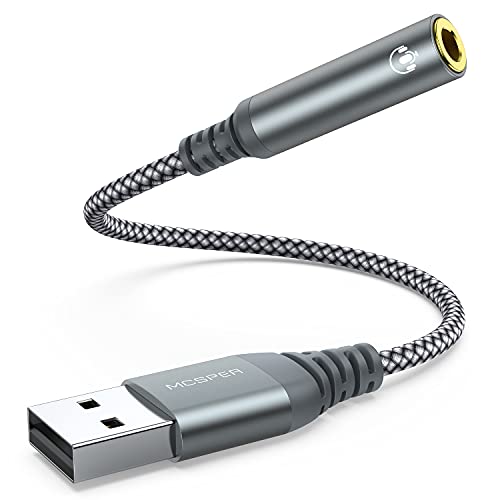
Best for: People who want a compact, plug-and-play USB audio adapter without software. It supports a 3.5mm TRRS port for combined mic and headphone use and is recognized quickly by most systems. The product highlights a premium DAC for better sound and noise reduction. Limitation: Some users may require driver updates on older systems for full compatibility.
YGKSAA USB C To 3.5mm Female Headphone Jack Adapter

Best for: USB-C devices needing 3.5mm output with solid DAC performance. This kit provides a plug-and-play experience without software, boasting a high-resolution DAC and shielding against interference. It is ideal for Android or some Chrome OS devices that lack a built-in headphone jack. Caution: Some phones with 3.5mm jacks may not support external DACs in certain modes, so check device compatibility.
Apple USB-C To 3.5 Mm Headphone Jack Adapter

Best for: Apple devices that rely on USB-C for audio output, offering broad compatibility with standard 3.5mm headphones or speakers. It enables quick connection for music, calls, or media playback on compatible iPads, Macs, and iPhones with recent USB-C accessories. Limitation: The adapter does not support newer USB-C implementations that require special drivers for some accessories; verify device compatibility before purchase.
Buying Guide: Converting A Headphone Jack To USB
What to consider when choosing a USB audio adapter
- Compatibility: Check whether your device’s OS (Windows, macOS, Linux, Android) and hardware (USB-A, USB-C) are supported by the adapter.
- Audio input and output: Decide if you need microphone input in addition to headphone output (TRRS) or just stereo output (TRS).
- DAC quality: A built-in DAC improves sound fidelity and reduces background noise. Look for devices advertising 16-bit/48kHz or higher.
- Power needs: Some adapters require bus power while others are self-powered. Ensure your device can supply the required power.
- Connectivity type: Choose USB-A or USB-C based on your device’s port availability and future-proofing.
- Build and EMI shielding: For stable performance, consider models with shielding against electromagnetic interference.
How to choose between USB-A and USB-C adapters
- USB-A: Broad compatibility with older desktops, laptops, and many gaming consoles. Best for devices lacking USB-C ports.
- USB-C: Ideal for recent laptops and mobile devices with USB-C or Thunderbolt ports. Often more compact and future-ready.
Usage scenarios
- Office and meetings: Plug-and-play adapters with clear mic input can improve voice pickup during calls.
- Gaming: A DAC-enabled adapter can deliver immersive sound and stable mic communication without latency issues.
- Travel: Portable units with lightweight design are convenient for laptops and tablets while on the go.
FAQ
- Do USB audio adapters work with all headsets? Most TRRS headsets will work, but some devices require specific microphone jack configurations. Check TRRS compatibility.
- Will these adapters charge my devices? No. These adapters primarily handle audio input/output and do not provide charging functionality.
- Can I use a USB audio adapter with a gaming console? Some consoles support USB audio adapters; verify compatibility for your specific model.
- Is driver installation required? Many adapters are plug-and-play, but older systems may require drivers for full functionality.
- Are USB-C adapters compatible with iPhones? iPhone compatibility depends on the model and iOS version; some USB-C to 3.5mm adapters work with newer iPad and Mac devices too.