
Best Courtroom Digital Audio Recording System for Clear, Reliable Interpreting and Hearability
Findings focused on courtroom use and large-room listening need practical, reliable digital audio systems. This guide highlights five Amazon-relevant options that balance range, channel options, and ease of use. Best fits include court staff, interpreters, and legal teams needing clear, simultaneous audio delivery to multiple listeners. The following selections are chosen for coverage, battery life, and ease of setup in formal environments. A quick summary table follows to compare core specs at a glance.
| Product | Best For | Key Strength | Limitations |
|---|---|---|---|
| Retekess TT106 Tour Guide Headsets | Courts with interpreters | Two transmitters simultaneously; long range | Consumer-tour focus; not a full courtroom kit |
| 128GB TCTEC Digital Voice Recorder | Meetings and depositions | Massive storage; high-quality noise reduction | Recorder, not a live hearing system |
| EXMAX EX-100 Plus | Small-to-medium courtrooms | 40 channels; multi-group support | 72MHz band may require licensing checks |
| Andrea SG-110M Shotgun Microphone | Evidence collection and courtrooms | Far-field pickup; directional | Not a complete wireless system |
| EXMAX ELGT-470 UHF System | Official interpreters and multilingual sessions | 100 channels; long range | Single transmitter/receiver setup limits some layouts |
Retekess TT106 Tour Guide Headsets, 2TX 30RX

The Retekess TT106 is designed for guide-style groups with two transmitters operating simultaneously. Best for courts with interpreters or multiple guides coordinating in a single session. It offers up to 150 m (492 ft) of open-area range, allowing movement without losing audio clarity. Battery life supports long sessions: transmitters run up to 25 hours after a 2-3 hour charge, while receivers last about 23 hours. This makes it suitable for multi-shift tours or long court events where interpreters need to switch frequently.
- Best for interpreters and co-guides in a single courtroom or courtroom-adjacent spaces.
- Better for larger rooms where participants may spread out.
- Limitations: Not a dedicated courtroom system; may require additional mics or integration for official records.
128GB TCTEC Digital Voice Recorder
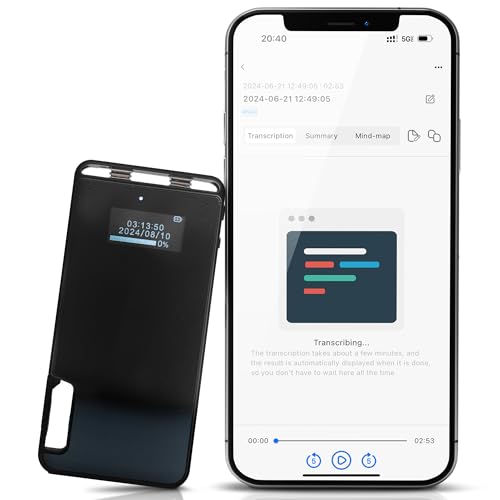
This digital voice recorder excels for depositions, witness statements, and courtroom note-taking. It provides up to 7000 hours of storage on 128GB, making it ideal for long sessions and archiving. It features high-quality audio capture at 1536 kbps and built-in noise reduction to minimize ambient noise during recordings. The device’s modern, durable design and intuitive controls support both legal staff and researchers needing reliable, standalone recording.
- Best for long deposition sessions and archival needs.
- Better for high-capacity storage and clear playback.
- Limitations: It is a recording device, not a live-mic distribution system for audience listening.
EXMAX EX-100 Plus 72MHz Wireless Tour Guide

The EXMAX EX-100 Plus supports up to 40 selectable channels (72MHz) and can pair 2 transmitters with 30 receivers in the same system, useful for medium-sized court sessions. It offers roughly 100 meters of transmission in open space and features a one-click synchronization for receivers and a mute function to cut background noise. A built-in mic/aux-in allows pre-recorded commentary or playback, which can help with structured courtroom briefings or interpreters’ material. Best for multi-language sessions, or when staff need immediate mute control.
- Best for groups requiring multiple language channels and easy control.
- Better for field or courtroom settings where quick channel changes are needed.
- Limitations: 72MHz licensing considerations may apply in some jurisdictions.
Andrea SG-110M Mobile Shotgun Microphone

The Andrea SG-110M is a unidirectional shotgun mic designed for far-field sound pickup. It is highly directional, providing focused audio capture with reduced off-axis noise. This makes it well-suited for courtroom reporting, witness audio capture, or feeding clear audio into a recording device. It includes a 30-inch shielded cable and a compact build for easy transport. It pairs well with existing recorders or camera setups, though it is not a complete wireless distribution system by itself.
- Best for focused courtroom audio capture and evidence recording.
- Better for minimizing ambient noise in a single-source recording.
- Limitations: Requires compatible recording or wireless setup for distribution to multiple listeners.
EXMAX ELGT-470 UHF 100 Channels System

The EXMAX ELGT-470 system offers broad channel capacity across 100 IDs and a robust UHF range (470–490 MHz). It supports simultaneous operations for up to several groups, with a long transmission range up to 120 meters (394 ft). The transmitter and receiver are lightweight, with long-lasting built-in batteries (1200 mAh transmitter, 950 mAh receiver) capable of powering sessions beyond 20 hours. It is suitable for courtroom interpreters, training sessions, and larger tours where multiple language streams are required.
- Best for large, multilingual courtroom sessions and conferences.
- Better for interchangeable groups and high channel density.
- Limitations: Requires attention to frequency management to avoid cross-talk between groups.
Buying Guide: Choosing the Right Courtroom Digital Audio System
What room size and layout will you cover?
For open courtrooms or large conference rooms, systems with long-range transmission (100–150 m) and multiple channels are advantageous. If the audience sits in fixed seats, a smaller, fewer-channel system may suffice.
Do you need simultaneous interpreters or multi-language support?
Systems offering 2–40+ channels allow interpreters to work in parallel without cross-talk. Confirm the channel plan and whether group IDs align with your court’s interpreter teams.
Should you prioritize battery life or portability?
Long-lasting batteries (20+ hours) reduce the need for frequent recharging during long sessions. For mobile courtrooms or traveling teams, lighter transmitters with extended run times are preferable.
Is recording or live listening the main goal?
If you mainly need to record proceedings, consider high-capacity recorders with noise reduction. If you need live audio distribution to multiple listeners, focus on wireless transmission systems with multiple receivers and robust channel management.
What about ease of use and setup?
One-click channel synchronization, intuitive mute controls, and simple pairing between transmitters and receivers reduce the risk of miscommunication during critical proceedings.
Are licensing and regulatory considerations important?
Some 72MHz and 470–490 MHz bands require compliance with local regulatory rules and licensing. Verify with your jurisdiction’s communications authority before purchase.
FAQ
- What is the best system for interpreters in a courtroom? A system with multiple channels and reliable grouping, such as models offering 40+ channels, supports simultaneous interpretation without interference.
- Can I use a voice recorder in court alongside a wireless system? Yes, but for live hearing distribution you’ll still need a wireless system to deliver audio to listeners; use a recorder for documentation or testimony capture.
- Do these require a license to operate? Some frequencies (especially 72MHz and UHF bands) may require regulatory compliance. Check local rules before deployment.
- Which feature helps reduce courtroom noise? Built-in noise reduction and a mute function help keep proceedings clear and minimize background chatter.
- Is longer battery life essential for court sessions? Yes, sessions can be lengthy. Look for devices with 20+ hours of operation on a single charge.
- Can two transmitters in one system work in parallel? Yes, many sets support two transmitters and multiple receivers for simultaneous coverage.