
Best Dac With XLR Output for Clarity, Balance, and Flexible Setups
Answering the question “which DAC with XLR output fits my needs?” this guide highlights five top options that pair well with home stereos, studio monitors, or high-end headphones. Each pick emphasizes balanced XLR connectivity, clear digital-to-analog conversion, and practical use cases. Best for audiophiles seeking pristine sound, best for budget-conscious setups, or best for multi-room systems—the selections cover a range of needs from desktop to living room use.
| Product | Brand | Why it’s a fit |
|---|---|---|
| Fosi Audio ZD3 Desktop DAC Preamp | Fosi Audio | Fully balanced output with HDMI ARC, versatile inputs |
| Fosi Audio ZH3 DAC Headphone Amp | Fosi Audio | Balanced outputs, high-res support, headphone ready |
| FiiO K13 R2R Desktop DAC & Headphone Amp | FiiO | R2R DAC with balanced XLR and multiple outputs |
| Topping DX5II | KGUSS | Dual ES9039Q2M DX5 II, strong XLR balanced output |
| Sabary 192KHz DAC Optical to XLR Converter | Sabary | Optical to XLR conversion for digital-to-analog paths |
Fosi Audio ZD3 Desktop DAC Preamp

The Fosi ZD3 is a fully balanced DAC preamp with multiple inputs and outputs, built around the ES9039Q2M digital-to-analog converter. It supports HDMI ARC alongside Bluetooth, USB, optical, coaxial, and other connections, with XLR and RCA outputs for professional-grade audio paths. Best for: home stereo enthusiasts and small setups needing HDMI ARC compatibility and balanced output. Limitation: HDMI ARC compatibility can depend on other equipment and may require settings adjustments.
blafili B3 Professional XLR Bluetooth 5.1 Receiver

The blafili B3 is a Bluetooth receiver with XLR outputs suitable for wired systems. It supports LDAC, aptX HD, and other codecs for high-quality wireless audio. Best for: venues or studios needing a Bluetooth path into an XLR-equipped amplifier, or for upgrading existing wired gear with wireless input. Caution: It is a receiver only and cannot drive passive speakers by itself.
Fosi Audio ZH3 DAC Headphone Amp
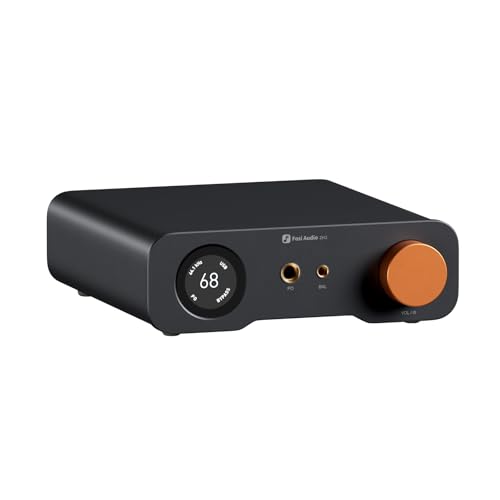
The ZH3 combines a high-quality DAC with a fully balanced preamp and robust headphone amplification. It uses the AKM4493SEQ DAC and XMOS XU316, offering multiple outputs including XLR and 4.4mm balanced. Best for: desktop users needing balanced outputs and strong headphone drive; better for sources that require up to 768kHz PCM and DSD512. Limitation: Some users may prefer larger devices for more inputs in complex systems.
FiiO K13 R2R Desktop DAC & Headphone Amp

The K13 uses a self-developed 24-bit R2R DAC with a dual power supply and balanced XLR output. It supports PCM up to 384kHz/32-bit and DSD256, plus LDAC Bluetooth streaming. Best for: users who want a tactile R2R DAC with flexible outputs; choose this if you value analog-like timbre and robust desktop performance. Limitation: R2R DACs can be more sensitive to source impedance; ensure your source matches the device’s input design.
Topping DX5II Fully Balanced DAC Headphone Amp
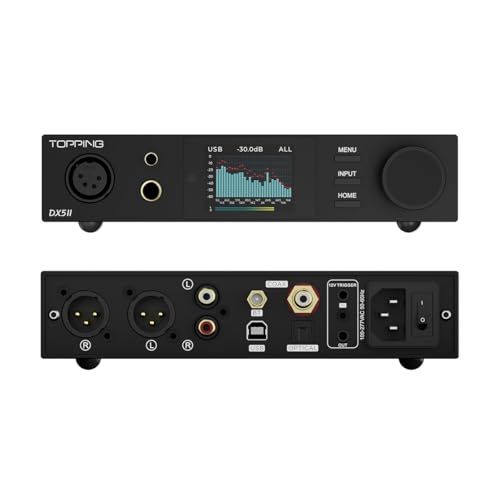
The DX5II uses dual ESS ES9039Q2M DAC chips and a hybrid amplifier circuit for balanced XLR outputs and 6.35mm SE jacks. It emphasizes high SNR, low distortion, and strong dynamic range, with up to 7600mW into 16Ω per channel. Best for: users needing top-tier balanced performance and high headphone drive; better for high-sensitivity headphones and demanding audio paths. Caution: Complex features require some setup to optimize the EQ and gain stages.
Buying Guide
- What to look for in a DAC with XLR output: balanced outputs reduce noise and crosstalk. Check DAC chip quality (ES9039Q2M and AKM4493SEQ are common high-performance options) and amplification capability to match your headphones or speakers.
- Inputs and connectivity: ensure the unit offers your preferred inputs (HDMI ARC, USB, Bluetooth, optical/coax) and that the output stage supports your amplifier or speakers.
- Output options and compatibility: balanced XLR outputs are ideal for studio-grade paths; consider whether you need both XLR and RCA or 4.4mm/6.35mm headphone jacks for versatility.
- Power and thermal management: desktop DACs may run warm with long listening sessions; verify fanless design or sufficient heat dissipation.
- Bluetooth vs. wired: if you need wireless streaming, confirm codec support (LDAC, aptX HD) and whether Bluetooth is a receiver, transmitter, or both.
- Software controls and EQ: some models offer built-in EQ (like 10-band or 12-band), which helps tailor sound to your room or headphones.
FAQ
- What is the benefit of a DAC with XLR outputs?
Answer: XLR balanced outputs reduce noise and crosstalk, providing cleaner audio for long cable runs and professional setups. - Can I use a DAC with XLR output with powered speakers?
Answer: Yes, connect the XLR outputs to the powered speaker’s XLR inputs if they require balanced signals. - Is HDMI ARC necessary for all DACs?
Answer: No. HDMI ARC is useful for TV/AV setups; some DACs focus on USB/Bluetooth/optical inputs for stereo systems. - What should I consider when choosing between R2R and delta-sigma DACs?
Answer: R2R DACs offer a timbre that many describe as more analog-like; delta-sigma DACs often provide lower distortion and higher overall noise performance at higher frequencies. - Do I need a built-in amplifier?
Answer: Some DACs include a preamp or headphone amp; if you need to drive passive speakers, ensure the device has robust XLR/line outputs or plan to use a separate amp. - Can a DAC with XLR outputs replace a traditional stereo preamp?
Answer: It can in many setups, especially where balanced paths and compact form factors are desired; verify output levels and gain staging for your system.