
Best DC to AC Chargers for Cars: Top Inverter Picks for Road Trips
If you’re searching for a reliable DC-to-AC charger for your car, you want devices that convert 12V DC from your vehicle into usable 110V AC power safely and efficiently. The top picks below are chosen for different use cases—from heavy-duty gear to everyday charging. Ideal buyers include road-trippers needing laptops on the go, parents powering small appliances, and commuters who want a compact unit for essential devices. The table summarizes key details for quick comparison.
| Product | Best For | Watt Range | Key Benefit |
|---|---|---|---|
| PiSFAU 200W Car Power Inverter | Light travel, multiple USB devices | 200W continuous | Two AC outlets plus USB ports |
| Czepa 12V Car DC Charger with 8 Connectors | Multiple devices with varied plugs | Dependent on load | 8 connector sizes, fuse protection |
| ALITOVE 110V to 12V 120W Inverter | Compact, reliable power for small devices | 120W | Safety protections, long reach cord |
| BESTEK 300W Car Inverter | Laptop/tablet charging on road trips | 300W continuous | 2 AC outlets, 2 USB ports |
| EPANEE 400W Car Power Inverter | Higher-power needs like vacuums or inflators | 800W peak | Dual 110V outlets, USB-C and USB-A |
PiSFAU 200W Car Power Inverter

Best for travelers who need laptop and USB charging on the go. This inverter converts 12V DC from the car to 110V AC, offering two standard outlets and four USB ports. It’s compact and lightweight, making it easy to store in a glove compartment or backpack. The device emphasizes quiet operation and high efficiency, helping minimize heat and noise during extended use.
Best for: road trips, camping, or daily commutes where you require multiple USB devices plus a couple of AC outlets.
Why selected: It balances power with portability and includes several USB ports for phones, tablets, and small accessories.
Caution: It may struggle with high-wattage devices like large CPAP machines for long periods. Plan loads to stay under continuous wattage limits.
Czepa 12V Car DC Charger Power Cord with 8 Connectors
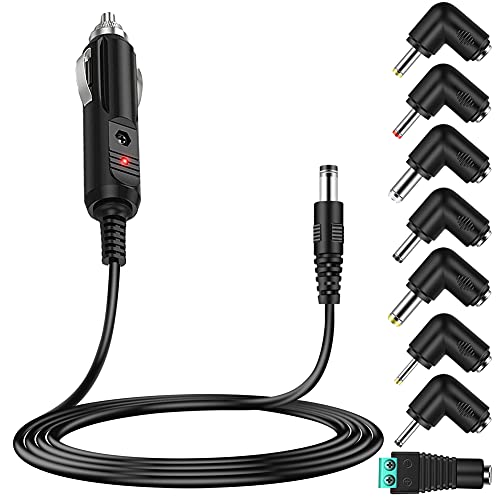
Best for devices requiring alternate connector sizes. This car DC charger includes eight connector options to fit a range of appliances from portable DVD players to GPS units and car refrigerators. A built-in fuse protects against surges, and the fuse is replaceable, allowing repeated use if a fault occurs.
Best for: users with multiple devices that require different barrel plug sizes, or when you need a versatile mid-range solution.
Why selected: The broad connector compatibility reduces the need for adapters mid-trip.
Caution: The overall output depends on the combined load; avoid running several high-wattage devices at once to prevent fuse trips.
ALITOVE AC to DC Converter 110V to 12V 120W
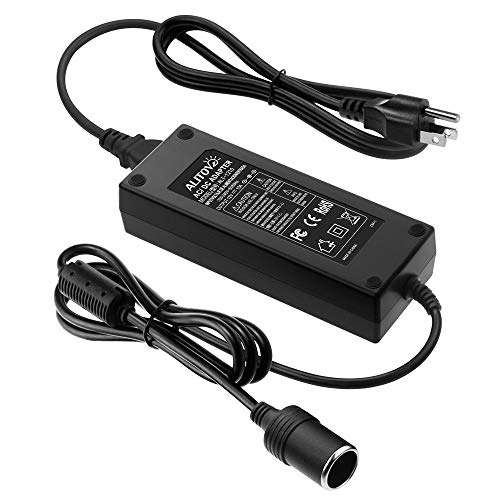
Best for compact, low-wattage needs. This converter handles 12V car electronics under 120W, including small appliances and devices with a cigarette lighter plug. It comes with an eight-foot power cord for easy reach and includes multiple built-in safety protections against overload, over-voltage, and short circuits.
Best for: powering small devices like compact refrigerators or fans without taking up much space.
Why selected: Reliability and safety protections help avoid damage during frequent on-the-go use.
Caution: Not ideal for high-power devices or long-running loads near the 120W limit.
BESTEK Power Inverter DC 12-17V to AC 110V

Best for longer trips requiring consistent power for laptops and larger devices. The BESTEK inverter delivers 300 watts continuous power with 700 watts peak, two AC outlets, and two USB ports. It focuses on compact design with a cigarette lighter plug, suitable for most standard vehicles and travel scenarios.
Best for: road trips where laptops, tablets, and small appliances need simultaneous charging.
Why selected: High continuous power plus USB charging options makes it a versatile all-around choice.
Caution: The unit is built for typical consumer devices; heavy-duty power draws should be avoided for extended periods to preserve longevity.
EPANEE 400W Car Power Inverter

Best for higher-power needs like operating a car vacuum, inflator, or other mid-to-large loads. This inverter offers dual 110V outlets, a PD 65W USB-C port, and a QC 18W USB-A port. It has built-in safety protections, plus a cooling fan to manage heat during longer sessions.
Best for: devices that draw higher wattage, such as inflators and portable vacuums.
Why selected: Higher peak and continuous power makes it suitable for demanding on-road tasks.
Caution: Higher power means more heat and potential utility draws; ensure adequate ventilation and avoid continuous max loads.
Buying Guide
What matters most when choosing a car inverter or DC-to-AC charger:
- Power needs: Match continuous wattage to devices you’ll run. If you need to power laptops or smaller appliances simultaneously, choose at least 150–300W continuous with some headroom.
- Number and type of outlets: Consider the mix of AC outlets and USB ports. If you often charge phones and tablets and also run a small appliance, prioritize models with at least two USB ports and two AC sockets.
- Connector compatibility: If you own devices with different DC plug sizes, a unit like Czepa’s multi-connector option can reduce adapters and simplify use.
- Safety protections: Look for overload, over-voltage, short-circuit, and over-temperature protections. Automatic shutoffs help prevent damage to the inverter and connected devices.
- Heat management: Inverters generate heat. Models with built-in cooling or fans perform better during longer sessions, but expect some noise in higher-load scenarios.
- Portability and installation: If space is limited, favor compact units with a 12V cigarette lighter plug. For frequent travelers, lighter-size units with long cords add flexibility.
- Compatibility with vehicle: Ensure the inverter’s input voltage range (12V typical, some accept 11–15V) fits your car’s electrical system and battery health.
Frequently Asked Questions
- Do car inverters affect battery life? Extended high-load use can strain the vehicle battery. Use within the inverter’s continuous wattage rating and provide adequate ventilation.
- Can I power a CPAP machine with a car inverter? Yes, but check the device’s wattage and ensure the inverter’s continuous power rating exceeds it. Consider a model with surge protection for startup spikes.
- What’s the difference between continuous and peak wattage? Continuous wattage is the steady power the inverter can deliver; peak wattage is the maximum it can handle for short bursts, useful for startup surges.
- Is sine-wave important for home devices? A pure/sine-wave inverter provides clean power suitable for sensitive electronics. Many automotive inverters use modified sine wave, which is adequate for most devices but can affect some equipment.
- What features provide the best value? A balanced mix of wattage, USB ports, safety protections, and heat management typically offers the best long-term reliability for car use.
- Can I run a car vacuum from an inverter? Higher-wattage models (250W–400W range) are better suited for this; verify the vacuum’s starting wattage to prevent overload.